


Key Summary Points
- Physician autonomy remains essential to patient care and treatment of retinal diseases. Both the American Society of Retina Specialists (ASRS) and the American Academy of Ophthalmology (AAO) emphasize that treatment decisions must be made by the physician in consultation with the patient—not directed by payer mandates or step-therapy protocols1,2.
- Utilization-management pressures are increasing in retina practice. With rising per-member-per-month (PMPM) costs for anti-vascular endothelial growth factor therapies (anti-VEGF), payers are extending cost controls used in other therapeutic categories such as oncology and immunology to ophthalmology. Prior authorizations (PAs), formulary restrictions, and nonmedical switching can delay care and complicate health outcomes and clinical workflows3-5.
- Anti-VEGF biosimilars offer promise with the potential for other challenges. Although biosimilars may reduce costs over time, coverage variability, reimbursement differences, and formulary placement can affect access and influence treatment patterns in ways that do not always align with clinical evidence3,6-8.
- Patient-centered care should remain the guiding principle. According to the retina specialists mentioned in this article, treatment selection must prioritize efficacy, safety, and individual patient response.
Ophthalmology Organizations Support Physician Choice in the Treatment of Retinal Diseases
Physician choice remains paramount in the management of retinal diseases, where treatment decisions must reflect the individual needs of each patient. The ASRS and the AAO both affirm that treatment selection should be made by the physician in partnership with the patient, rather than dictated by insurer policies.1,2 As the ASRS states in its position statement, it is “adamantly opposed to any insurer policy that mandates a certain treatment or series of treatments for retinal disease, regardless of whether the drug is an FDA-approved originator product, a biosimilar, or an off-label drug.”1 Similarly, the AAO underscores in its policy statement that “the choice of biologic product—reference, biosimilar, or interchangeable—should be that of the treating ophthalmologist and their patient.”2
For retina specialists, the most important prescribing factor for any treatment is its clinical efficacy and safety profile. However, the therapeutic landscape has expanded by the introduction of biosimilars and has been complicated by the subsequent rise of payer-driven utilization-management strategies, such as nonmedical switching (NMS), and by the acquisition of retina practices by pharmaceutical distributors.3,5,9 While biosimilars are a welcome addition, offering the potential for cost savings, their integration must not come at the cost of clinical autonomy.10 Other treatment considerations that must be weighed are factors influencing patient-centered care, including insurance coverage, out-of-pocket costs, and the possible psychological impact of forced treatment changes for patients.4,5 The practice itself also faces operational burdens related to drug pricing, reimbursement, and inventory management.6,11
How Biologics and Biosimilars Are Alike and How They Differ
Recognizing the similarities and differences between reference products and biosimilars is an important part of assessing relevance for patient care. A biosimilar is a biologic that is highly similar to another biologic that is already FDA approved, called a reference product. Clinically, biosimilars are highly similar to their FDA-approved reference biologics in that they have no clinically meaningful differences from the reference product in terms of safety, purity, and potency and have similar route of administration, strength, dosage form, and potential side effects.12 Some ways that biosimilars may vary from its reference products include the potential for immunogenicity differences, manufacturing processes, structure, and inactive ingredients.12,13 Rather than using switching studies, manufacturers can now use comparative analytical and clinical data to demonstrate that their biosimilar meets the standard of interchangeability with the reference product.14 This has the potential to reduce time and cost to bring biosimilars to market.
Payers’ Utilization-Management Mechanisms May Target Ophthalmology
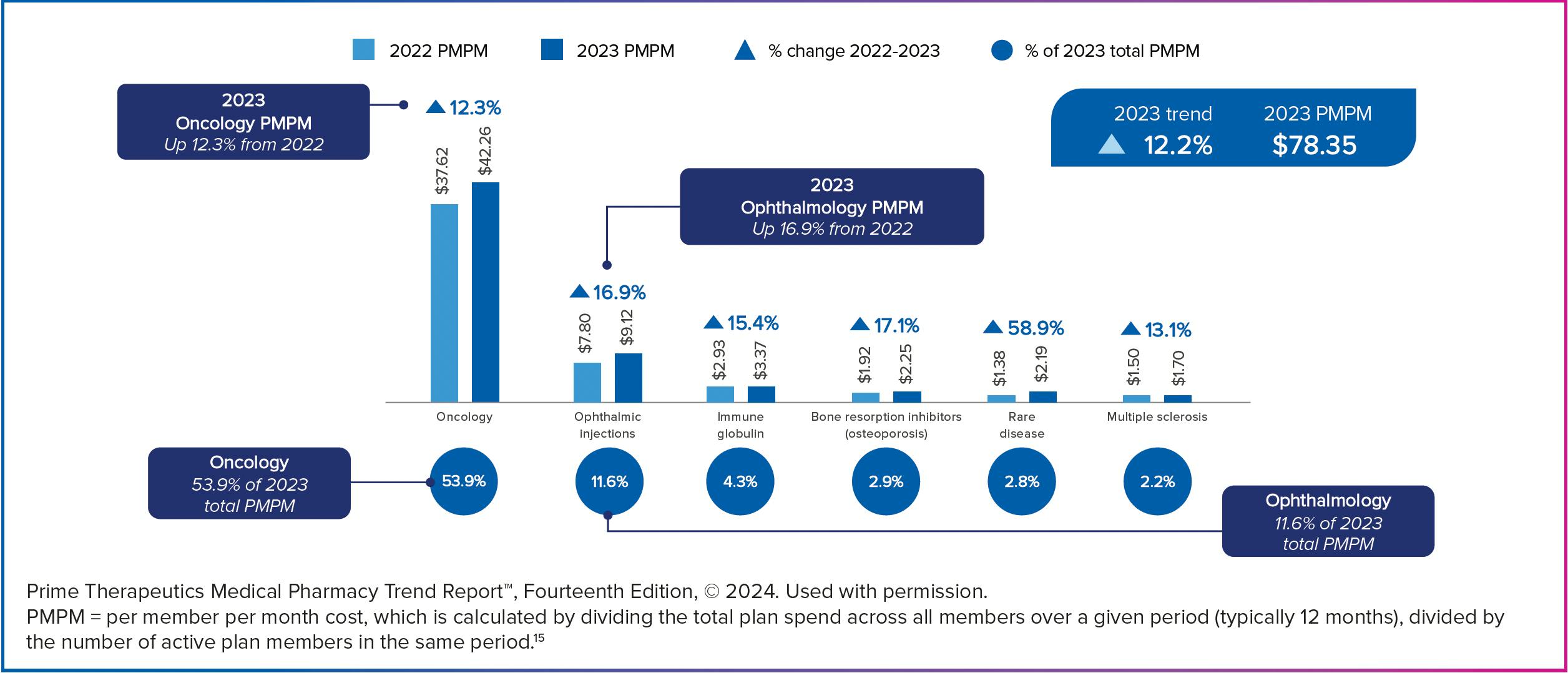
One way that health plans measure utilization is by per-member-per-month (PMPM) cost, which is calculated by dividing the total plan spend across all members over a given period, (typically 12 months), by the number of active plan members in the same period. This yields the average cost for an enrolled member each month.15 An analysis of recent market trends shows that PMPM costs for ophthalmic injections are on the rise. Medicare’s overall PMPM spending increased by 12.2% in 2023, with ophthalmic injections contributing significantly to this growth. In fact, the ophthalmic category now ranks second only to oncology, accounting for 11.6% of total PMPM spending, highlighting the substantial impact that these therapies have on overall healthcare expenditures (Figure 1). Payers are facing increasing margin pressure, which often leads to aggressive cost management through different mechanisms.3
Utilization-management strategies that were once primarily confined to the health plan’s pharmacy benefit are now increasingly applied more to the plan’s medical benefit. These include PA, step therapy, and quantity limits—all of which can directly affect patient access to therapies.16-19 Importantly, no therapeutic category with FDA-approved biosimilars has avoided some form of payer-imposed utilization management. In ophthalmology, rising margin pressures could accelerate aggressive cost-containment measures, leading payers to steer patients toward biosimilars over reference anti-VEGF agents.3,20 For retina specialists, this shift can have clear implications, as outlined in Table 1.4-7,16-19,21 Examining how other biotherapeutic categories—such as oncology and immunology—navigated these market dynamics may offer valuable insight into how anti-VEGF reference and biosimilar products may be managed in the future and the potential implications to physicians, their practice, and their patients.
|
Increased use of double-step edits (eg, requiring failure of compounded Avastin® [bevacizumab] followed by failure of biosimilar before allowing for physician choice of therapy)7,17 |
|
Disrupted care and delays in treatment initiation or retreatment (eg, from increased utilization of prior authorizations, step therapy, quantity limits, forced treatment switches)4,5,16,17 resulting in worsened visual outcomes (eg, formation of subretinal fibrosis)4,21 |
|
Complexity with individualizing care and treatment to a given patient (eg, patient counseling needed, additional scheduling/rescheduling of visits, explaining differences between biosimilars and reference products)4,5 |
|
Administrative burden and barriers (eg, extra paperwork and labor for prior authorization/reauthorization, appeals, billing and coding, and inventory management)4,6,18 |
|
Increased pharmacy benefit manager and payer formulary negotiations in retina space with influx of new biosimilar products17 |
|
More restricted physician treatment choice5,17,19 |
These trends highlight the growing focus on cost management—payers are paying close attention and are finding ways to contain rising costs via utilization-management mechanisms.3 Consequently, these mechanisms can limit what physicians can prescribe for their patients.3,20 With regard to anti-VEGF treatment, a survey of payers indicated that they are already applying some utilization mechanisms to this category (Side Bar 1).22
Side Bar 1. Payer Perspectives From Anti-VEGF Market Research Analysis (N=25; 192 million covered lives; 2024)22
- Most payers are utilizing PAs, quantity limits, and reauthorization criteria for anti-VEGF products22
- Most payers focus on cost when reviewing biosimilars, as these therapies are expected to be clinically equivalent to the originator22
- When reviewing anti-VEGF treatments from a clinical perspective, payers focus on visual acuity, adverse event frequency, and product dosing22
- Approximately 50% of payers continue to utilize a repackaged bevacizumab-first policy across anti-VEGF products22
- The use of a bevacizumab-step policy is unlikely to be impacted by the entrance of an aflibercept biosimilar22
- Payers are examining annual net costs, and average sales prices (ASP) may influence anti-VEGF biosimilar coverage decisions (ASP is defined as the weighted average of all manufacturer sales prices, including all price concessions (e.g., discounts) that are privately negotiated between manufacturers and purchasers, except Medicaid and specific federal discounts)22
- Higher biosimilar ASPs will likely limit access to those biosimilars22
- Payers are primarily focused on the cost of care for anti-VEGFs and are eager for potential cost reductions22
- Though individual physician preference has some influence, payers consider market shares as a proxy when making access decisions22
“It is unlikely that retina specialists will switch among biosimilars every quarter or every year. If the economic factors are the only differentiator, many doctors wouldn’t switch the therapy that they and the patient have confidence in and are comfortable with.”
– Dr. Stone
Managing Clinical and Economic Considerations in Treatment Choice
Biosimilar entry may lead to market and practice changes
In recent years, ophthalmic anti-VEGF biosimilars have entered the market, creating additional opportunities for payers to influence utilization in ways that directly impact physicians and patients. As discussed previously, payers may impose step edits that determine which therapies can be prescribed first and under what conditions, potentially limiting the retina specialist’s ability to choose the therapy best suited to an individual patient.6-8 Compounded bevacizumab is currently the lowest-priced treatment in the anti-VEGF category, and, consequently, many payers have a bevacizumab-first policy across the category.3,22
Furthermore, biosimilars may be launched at a lower wholesale acquisition cost (WAC), a strategy designed to secure favorable payer coverage. Manufacturers may also pursue aggressive provider contracting strategies—providing purchase discounts aligned to purchasing patterns—that can lead to significant reductions in the ASP over time across the market.6,10
“Doctors don’t want to believe that choice may be limited, but they need to be aware of the potential that treatments they want to prescribe may be restricted in the future.”
– Dr. Eichenbaum
Economic dynamics tied to drug acquisition and reimbursement may influence how retina specialists select anti-VEGF therapies, especially when certain agents offer lower net costs or practice-level savings that might reduce operational burden. These pressures may steer utilization even among clinically similar options, shaping formulary placement, PA requirements, and payer-driven treatment sequencing. Consequently, treatment decisions occur within a landscape where economic considerations often intersect with evidence and individual patient need. These economic dynamics can reshape the therapeutic category and practice economics, affecting reimbursement for providers over time.6 For retina specialists, understanding how these considerations could play out is crucial in making informed treatment decisions in the short term, with a long-term perspective that anticipates potential access challenges, maintains clinical and prescribing autonomy, and sustains practice viability while continuing to prioritize patient outcomes.
Whether to use a biosimilar is not solely a clinical consideration but rather a shared, multifactorial decision involving the patient and retina specialists, and it may also include practice dynamics. Yet there may be a retina specialist or patient preference for the reference biologic over a biosimilar. Deep clinical experience with a reference biologic may provide a high level of confidence with the treatment’s efficacy, safety, and administration.23
Impact of Reduced ASP on Reimbursement: A Review of Drug and Reimbursement Methodologies and Evidence From Analog Treatment Classes
Knowledge of how drug prices are defined and assessed is increasingly important as reimbursement dynamics continue to shift for office-administered therapies. Wholesale acquisition cost (WAC) represents the manufacturer’s publicly listed price for a product sold to wholesalers or direct purchasers and serves as a baseline pricing metric across the industry. WAC is not what practices or payers ultimately spend—it excludes any manufacturer-provided price concessions, or other cost-saving incentives and therefore does not reflect real-world purchasing costs. As a published figure, WAC can help frame pricing expectations, but it offers limited insight into the true economic landscape of anti-VEGF and other retina therapies.24
In contrast, average sales price (ASP) is designed to capture a more accurate picture of market pricing and reimbursement by incorporating the weighted average of actual manufacturer sales transactions. ASP reflects the net price after all privately negotiated price concessions (e.g., discounts)—except those required under Medicaid and certain federal programs—are applied. Because ASP is based on actual sales data submitted by manufacturers, its value changes over time with shifts in pricing strategies and market competition. The Centers for Medicare & Medicaid Services (CMS) recalculates ASP-based reimbursement quarterly for Medicare Part B drugs using data from the previous 2 quarters; therefore, today’s payment rates may reflect pricing decisions made months earlier. Consequently, ASP can lag behind current market conditions and may decrease as competitive pressures intensify.10,25
The relationship between these 2 pricing benchmarks is often evaluated using the ASP-to WAC-ratio, which compares a drug’s net average selling price to its list price.8,10A lower ratio—where ASP falls below WAC—signals deeper price concessions in the market and may indicate aggressive contracting or competitive discounting. This ratio can narrow further following biosimilar entry, as new products commonly launch at a 10% to 25% discount to the reference biologic’s WAC to gain early adoption.10,25 At the same time, reference product manufacturers may respond by increasing discounts or reducing WAC to maintain market share, which in turn lowers their reported ASP.
Reimbursement methodologies can compound these dynamics at the practice level. Under Medicare Part B, reimbursement is based on ASP + 6%, although sequestration reduces payment to ASP + 4.3%.24-27 Commercial payers vary widely in their approach, relying on ASP + X% or WAC + X% depending on benefit design and contracting strategies. As ASP declines, so does the reimbursement add-on, meaning practices may see diminishing margins over time despite no change in utilization. A biosimilar’s ASP may decline faster than a reference product’s ASP, leading to a more significant impact on reimbursement. For retina specialists, sustained downward pressure on ASPs may have broader consequences—including reduced economic viability for certain agents and, in some cases, eventual withdrawal of products from the market.25,27,28 Recognizing these pricing and reimbursement mechanisms can help practices anticipate financial shifts, support informed therapeutic decisions, and maintain continuity of care in an evolving anti-VEGF landscape.
With regard to analogue treatment classes, biosimilars can be prone to faster ASP decreases than the reference product, as was evident in the immunology category with infliximab. Since their launch, infliximab biosimilars have experienced sharper declines in ASP-to-WAC ratios compared to the reference biologic, which has stabilized at ~26% over the last 2 years, as shown in
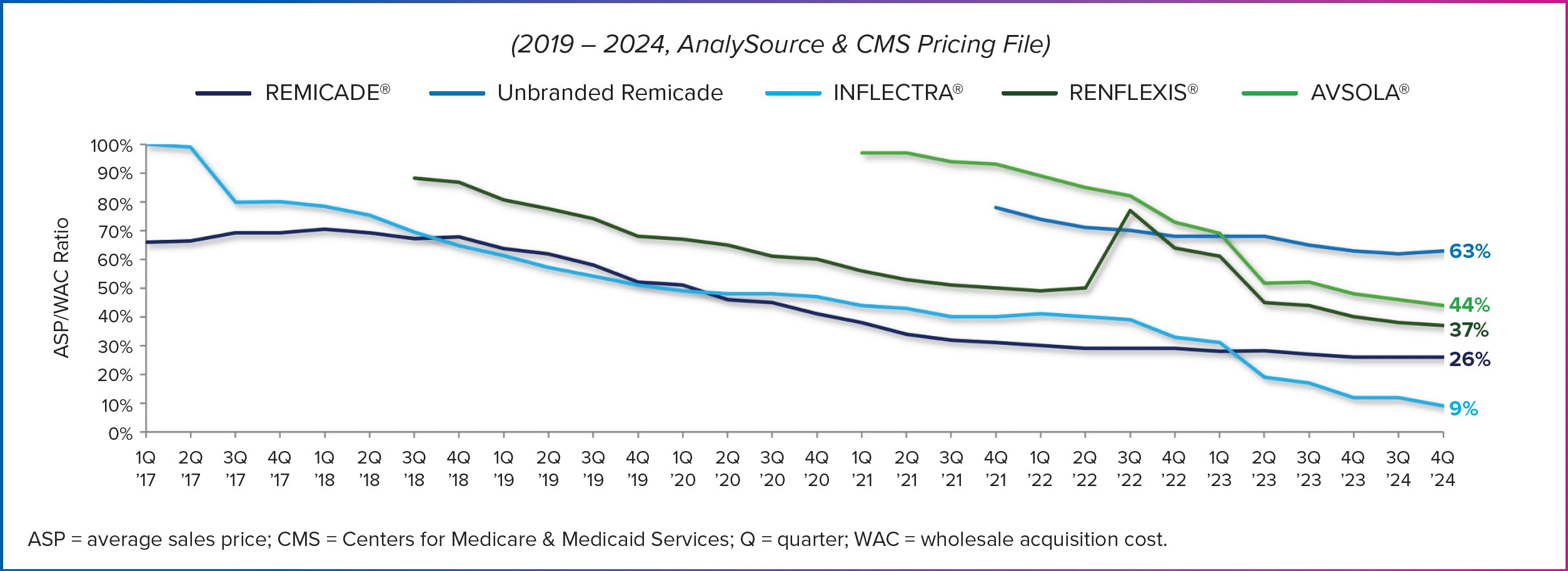
reimbursement. For instance, reimbursement for the infliximab biosimilar Inflectra declined over 3 years, while the acquisition cost remained constant. By the second quarter of 2024, reimbursement was almost $300 less than the acquisition cost, as shown in Figure 3.29
This analog class assessment suggests that increasing market penetration by biosimilars can lead to ASP declines and prompt tighter payer restrictions, as observed in the oncology category with trastuzumab. In this instance, 60% of payers restricted access to the reference product, Herceptin®, within 3 years of biosimilar entry.30To be competitive, biosimilar manufacturers may launch their product with aggressive programs, and reference product manufacturer may adjust their programs to keep up with the competition. A possible result of this is that ASP declines, and much faster for the biosimilar product, thereby affecting reimbursement for these products.28 Payers may prefer biosimilars because of the perception of lower costs (WAC); however, in practice, this value may be smaller than anticipated because reference product ASPs may already be low, resulting in lower reimbursement expenses compared to higher WAC biosimilars.31-33 As payers impose more utilization management, physician choice can be constrained (Side Bar 2).6,34
If you’re chasing short-term economics, how are you going to know that it will be there in the future? Are you going to be switching the patient to a different biosimilar at every office visit?”
– Dr. Stone
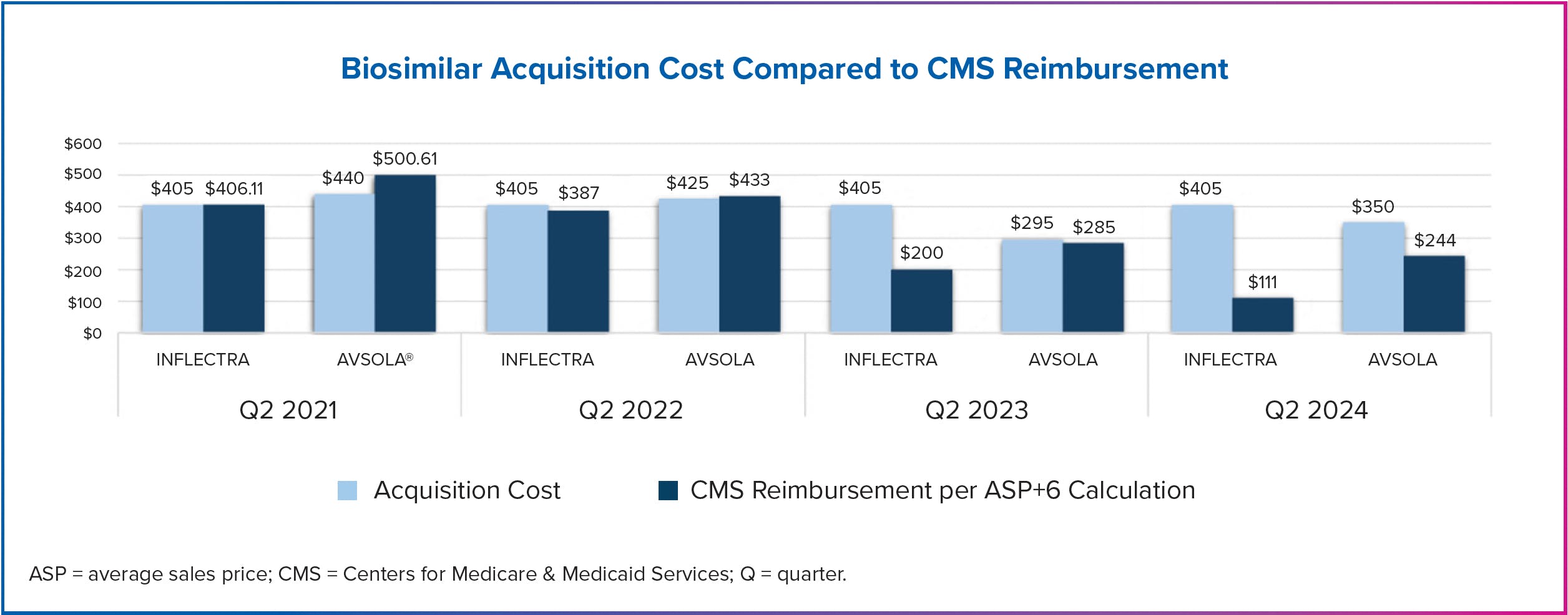
Figure 3. Example: Declining Infliximab-dyyb (INFLECTRA®) Reimbursement, American College of Rheumatology29
Side Bar 2: Practical Considerations for Retina Specialists
- Physician prescribing autonomy and patient access are paramount in the management of retinal diseases1,2
- Decisions about which anti-VEGF treatment to prescribe are primarily based on the product’s clinical efficacy and safety data, with further consideration of patient factors (eg, insurance coverage, out-of-pocket costs) and practice factors (eg, practice model and sustainability, drug pricing and reimbursement, and inventory management)6
- In the future, payer preferencing for different biosimilars may require offices to6,34
- Stock multiple products, depending on payer mix
- Manage inventory and logistics
- While offices may prefer a particular biosimilar, the payer might not cover the use of that biosimilar34,35
- Increasing drug and therapeutic category management by payers combined with economic factors can further impact physician ability to provide appropriate, timely care (See Table 1)4-7,16-19,21
- Not all ophthalmic drug manufacturers offer the same level of commitment as it relates to the support of physician choice, educational resources, and patient support services
Putting It All Together
From the Authors: Pragmatic considerations for retina specialists
As the retinal treatment landscape expands, clinicians face increasing pressure to navigate payer controls, pricing dynamics, and manufacturer purchasing and support programs while maintaining access and treatment flexibility across varied practice settings. The arrival of biosimilars may introduce meaningful competition and potential cost savings, yet there is the potential for economic shifts that could influence long-term market landscape, structure, and prescribing patterns. Retina specialists will need to balance immediate economic considerations with future implications for patient care when integrating any new entrants, including biosimilars. Insights from other therapeutic areas with biosimilar experience may help anticipate challenges and protect against unintended impacts. Ultimately, for complex retinal diseases, treatment decisions must remain grounded in efficacy, safety, and individual patient response—with choice centered on the physician–patient collaboration.
1. American Society of Retina Specialists. ASRS Support of Physician and Patient Choice in Treatments for Retinal Diseases. Published June 2022. Accessed October 13, 2025. https://www.asrs.org/content/documents/asrs-biosimilars-step-therapy-statement.pdf
2. American Academy of Ophthalmology. Policy Statement. The Use of Biosimilars in Ophthalmic Practice. Published February 2022. Accessed October 13, 2025. https://www.aao.org/Assets/6e7394af-eb67-4f3b-8189-54b82b3c4b25/637844277773870000/policy-statement-on-use-of-biosimilars-in-ophthalmic-practice-2022-pdf
3. Prime Therapeutics. Medical Pharmacy Trend Report. 2024 Fourteenth Edition. Accessed October 13, 2025. https://issuu.com/primetherapeutics/docs/2024-medical-pharmacy-trend-report?fr=xKAE9_zU1NQ
4. Hariprasad SM, Holz FG, Asche CV, et al. Clinical and socioeconomic burden of retinal diseases: can biosimilars add value? A narrative review. Ophthalmol Ther. 2025;14(4):621-641.
5. Mazzoni D, Vener C, Mazzocco K, Monzani D, Pravettoni G. The psychological risks associated with the non-medical switch from biologics to biosimilars. Front Psychol. 2021;12:605643.
6. Rodriguez G, Mancuso J, Lyman GH, et al. ASCO Policy Statement on Biosimilar and Interchangeable Products in Oncology. JCO Oncol Pract. 2023;19(7):411-419.
7. Kaiser P, et al. Navigating step therapy in nAMD and DME. March 8, 2024. Accessed October 13, 2025. https://www.ophthalmologytimes.com/view/navigating-step-therapy-in-namd-and-dme
8. Amgen. Amgen® 2022 Biosimilar Report. Accessed October 13, 2025. https://www.amgenoncology.com/assets/USA-CBU-80962.pdf
9. Cencora. Cencora Advances Specialty Leadership Through Acquisition of Retina Consultants of America. November 6, 2024. Accessed October 13, 2025. https://www.cencora.com/newsroom/cencora-advances-specialty-leadership-through-acquisition-of-retina-consultants-of-america
10. Samsung Bioepis. Biosimilar Market Dynamics. 8th Edition, Q1 2025. Accessed October 13, 2025. https://m.samsungbioepis.com/upload/attach/SB+Biosimilar+Market+Report+Q1+2025.pdf
11. Bressler NM, Kaiser PK, Do DV, et al. Biosimilars of anti-vascular endothelial growth factor for ophthalmic diseases: a review. Surv Ophthalmol. 2024;69(4):
521-538.
12. US FDA. Overview for Health Care Professionals. August 1, 2024. Accessed October 13, 2025. https://www.fda.gov/drugs/biosimilars/overview-health-care-professionals
13. Schreitmüller T, Barton B, Zharkov A, Bakalos G. Comparative immunogenicity assessment of biosimilars. Future Oncol. 2019;15(3):319-329.
14. US FDA. Considerations in Demonstrating Interchangeability With a Reference Product: Update. Guidance for Industry. June 2024. Accessed October 13, 2025. https://www.fda.gov/regulatory-information/search-fda-guidance-documents/considerations-demonstrating-interchangeability-reference-product-update
15. Venneri J, for CapitalRx. PMPM - Is It the Best Way to Measure or Track Anything? October 3, 2022. Accessed October 13, 2025. https://www.cap-rx.com/insights/pmpm-is-it-the-best-way-to-measure-or-track-anything
16. Linnerooth S, Penley B, Sauvageau G, et al. Methodology for conducting a comprehensive product review in managed care. J Manag Care Spec Pharm. 2023;29(3):237-243.
17. Greenwalt L. Payer Controls: Goodbye, Old Assumptions for Access and Uptake. September 28, 2021. Accessed October 13, 2025. https://www.iqvia.com/locations/united-states/blogs/2021/09/payer-controls-assumptions-for-access-
and-uptake
18. Struthers A, Chapman MA, Charles PD, Conschafter A, Cooper J, Clingham G. Utilization management and physician burnout. Am J Manag Care. 2024;30(11):561-566.
19. Centers for Medicare & Medicaid Services. Frequently Asked Questions. Inflation Reduction Act. Accessed October 13, 2025. https://www.cms.gov/files/document/biosimilar-faqs.pdf
20. Repasky C, et al, for McKinsey & Company. The future of Medicare Advantage. December 12, 2024. Accessed October 13, 2025. https://www.mckinsey.com/industries/healthcare/our-insights/the-future-of-medicare-advantage
21. Tenbrock L, Wolf J, Boneva S, et al. Subretinal fibrosis in neovascular age-related macular degeneration: current concepts, therapeutic avenues, and future perspectives. Cell Tissue Res. 2022;387(3):361-375.
22. Data on File. Regeneron Pharmaceuticals, Inc.
23. Taylor R. Biosimilars in ophthalmology. January 1, 2021. Accessed October 13, 2025. https://www.aao.org/eyenet/article/biosimilars-in-ophthalmology
24. Academy of Managed Care Pharmacy. Glossary of managed care terms. Accessed October 13, 2025. https://www.amcp.org/about/managed-care-pharmacy-101/managed-care-glossary
25. Nguyen NX, et al. Inflation Reduction Act Research Series. Medicare Part B Drugs: Trends in Spending and Utilization, 2008-2021. ASPE Office of Health Policy. Issue Brief June 9, 2023. Accessed October 13, 2025. https://aspe.hhs.gov/sites/default/files/documents/fb7f647e32d57ce4672320b61a0a1443/aspe-medicare-part-b-drug-pricing.pdf
26. Centers for Medicare & Medicaid Services. Medicare Part B drug average sales price. Last updated July 9, 2025. Accessed October 13, 2025. https://www.cms.gov/medicare/payment/fee-for-service-providers/part-b-drugs/average-drug-sales-price
27. HealthTrust Performance Group. Understanding drug reimbursement in pharmacy. Accessed October 13, 2025. https://healthtrustpg.com/thesource/ihp-pharmacy/understanding-drug-reimbursement-in-pharmacy
28. Mehr S. The Implications of the Freefall in Ranibizumab ASPs. Biosimilars Review & Report. March 28, 2025. Accessed October 13, 2025. https://biosimilarsrr.com/2025/03/28/the-implications-of-the-freefall-in-ranibizumab-asps
29. “Underwater Biosimilars”: Physicians and Patients Sinking to the Bottom. American College of Rheumatology. Accessed October 13, 2025. https://assets.contentstack.io/v3/assets/bltee37abb6b278ab2c/blt002f42b1daae4aaa/underwater-biosimilars.pdf
30. Verrilli C, et al, for Certara. Boost of Bust? Evaluating the Impact of the IRA’s Enhanced Reimbursement on Uptake of Biosimilars. 2024. Accessed October 13, 2025. https://www.certara.com/wp-content/uploads/2024/08/IRA-Biosimilars-white-paper-FINAL.pdf
31. Gallagher A. Study: Sales Price of Originator Declines After Introduction of Biosimilars. Pharmacy Times. August 12, 2024. Accessed November 12, 2025. https://www.pharmacytimes.com/view/study-sales-price-of-originator-declines-after-introduction-of-biosimilars.
32. Brill A. Biosimilar Market Opportunities in Ophthalmology. Matrix Global Advisors. July 2022. Accessed November 12, 2025. https://getmga.com/wp-content/uploads/2022/05/Ophthalmology_Biosimilars.pdf
33. Beinfeld MT, LaMountain F, Wong W, Kim E, Chambers JD. US commercial plans increase choice of biosimilar and originator products; market net prices decrease. Health Aff (Millwood). 2024;43(9):1290-1295.
34. National Alliance of Healthcare Purchaser Coalitions. Employer Playbook on Biosimilars. Accessed October 13, 2025. https://www.nationalalliancehealth.org/wp-content/uploads/NationalAlliance_Biosimilars-Playbook_FINAL.pdf
35. Mott M. Step Therapy: Clinicians’ Concerns and Challenges. American Academy of Ophthalmology. April 1, 2022. Accessed November 12, 2025. https://www.aao.org/eyenet/article/step-therapy-clinicians-concerns-and-challenges
© Regeneron Pharmaceuticals Inc. All rights reserved. 12/2025 US.OPH.25.10.0018
All trademarks referenced herein are the property of their respective owners.
Supplied by Regeneron Pharmaceuticals Inc. The views and opinions expressed here may not reflect those of Bryn Mawr Communications or Retina Today.
