
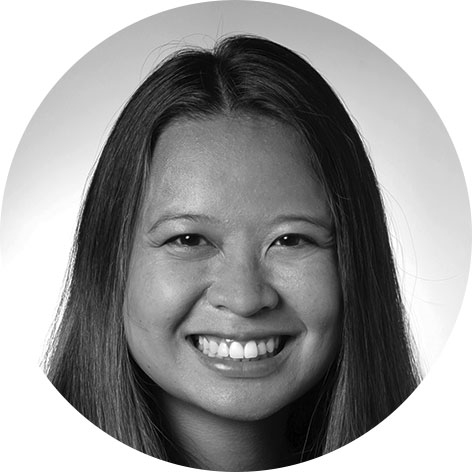
Retina Today (RT): When did you know that you wanted to be a retina specialist?
My interest in vitreoretinal surgery developed throughout my undergraduate education, medical school, and residency, but my earliest exposure came during college. Through a volunteer experience, I met one of the first patients to receive the Argus II retinal prosthesis (Cortigent). Seeing firsthand how emerging technology could meaningfully affect a patient’s visual function and quality of life introduced me to the innovation-driven nature of retina and left a lasting impression.
As my training progressed, I became increasingly drawn to the combination of complex decision making, surgical precision, and scientific innovation that defines the field.
RT: Who do you look to as mentors?
I have been fortunate to work with outstanding mentors who have shaped my career path and my approach to surgery, teaching, and lifelong learning. Many of these mentors have become close friends. Durga Borkar, MD, MMCi, and Xi Chen, MD, PhD, guided me through my very first retina surgeries. I have been inspired by Lejla Vajzovic, MD, Dr. Chen, and Cynthia Toth, MD, for their passion and leadership in pediatric retina. Yannek Leiderman, MD, PhD, and Jason Fan, MD, PhD, taught me invaluable lessons about surgical training, encouraging me to refine my skills and explore new techniques. Sharon Fekrat, MD, and Dr. Toth challenged me to think critically and strive for excellence in research, and Glenn Jaffe, MD, and Dilraj Grewal, MD, provided foundational training in uveitis and the management of complex surgical cases.
I am grateful for these mentors who continuously push me to be better, encourage curiosity and critical thinking, and support me in every stage of my professional development.
RT: What was one of the most memorable experiences of your fellowship?
One of the most rewarding aspects of fellowship was teaching residents and medical students. Guiding trainees through their first endolaser treatments, fluid-air exchanges, secondary IOL placements, and scleral-depressed examinations was incredibly meaningful. There is nothing like witnessing the “aha” moment when a resident truly understands a new technique.
Teaching has been a defining and fulfilling part of my training, and I look forward to continuing to work with trainees and contributing to surgical education throughout my career.
RT: What advice can you offer to residents who are considering retina?
First, welcome to the best specialty in all of medicine. Second, start early. Build relationships, get involved in research, and spend as much time as possible in clinic and the OR. Retina is a small world, and the connections you make during residency will follow you throughout your career. Finally, say yes to everything. Be enthusiastic, reliable, and willing to work hard. Take on opportunities, learn from every experience, do a good job, and your efforts will be noticed.
