


AT A GLANCE
• In the distinguished guest speaker lecture at the Retina Fellows’ Forum, Donald D’Amico, MD, offered a number of professional pearls to second-year retina fellows.
• Comfort with OR equipment and staff are as important as skill and knowledge.
• Although fellows are the next generation of experts, they stand on the shoulders of giants. Keeping in touch with the people who mentored them will yield dividends throughout their careers.
In the era of mobile devices, ubiquitous WiFi access, and social media, everyone has a forum to spout his or her opinions—whether credible or erroneous. We are empowered to learn at a pace previously unimaginable, but the same tools allow an overwhelming dilution of the quality of available information. Once in a while, however, we have the honor of hearing a strong voice of reason and experience that cuts through the noise and resonates with us.
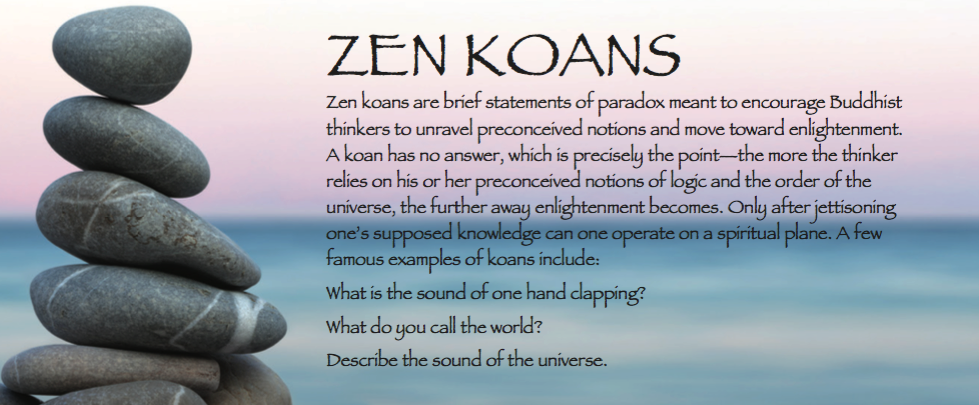
Eighty second-year vitreoretinal fellows attended this year’s Retina Fellows’ Forum in Chicago, and attendees (myself included) had the pleasure of listening to one of the great surgeon-orators of our time: Donald D’Amico, MD. As the Retina Fellows’ Forum distinguished guest speaker, Dr. D’Amico delivered a lecture geared toward novice retina surgeons using a combination of personal vignettes and quotes from Yogi Berra that resembled Zen koans (see below).
THE DISTINGUISHED GUEST LECTURE
Below is a summary of Dr. D’Amico’s distinguished guest lecture at the Retina Fellows’ Forum. It follows the talk’s structure, relying on Berra’s quotes as a skeleton for discussion. It is my sincere hope that this distillation and paraphrasing of Dr. D’Amico’s presentation does him justice.
Little things are big.
The microscope is the most important instrument in the OR, so spend some time in advance learning how to use it—know what the pedals do and how to make small adjustments. For that matter, become familiar with the nuts and bolts of all the equipment in the OR. Because they are uncomfortable, fellows often underperform maneuvers, which is more dangerous than overperforming them. Sometimes, fellows sort of get a retrobulbar block, they sort of drape correctly, they sort of have the pupil dilated, and they build up a pyramid with shaky layers until it all falls down when it comes time to perform the final maneuver.
You don’t have to swing hard to hit a home run. If you’ve got the timing, it’ll go.
We are all appropriately concerned with how to perform surgery, but we often neglect whether our posture is correct and comfortable, whether we have good rapport with our OR staff, whether we are psychologically in a good place, and all the other “little” things that surround us.
We made too many wrong mistakes.
A “right mistake” is something from which you can learn, such as grabbing the white ridge of axoplasmic stasis when trying to initiate an internal limiting membrane peel. But there are two mistakes a retina surgeon should never make: operating on the wrong eye and sending a patient out of the OR with a hypoperfused optic nerve.
Baseball is 90% mental, and the other half is physical.
Fellows are tense. Be relaxed. It is hard to yell at your staff, scream into a cellphone, and be generally angry with life and then sit down at the table and perform a great operation.
It ain’t the heat. It’s the humility.
You have to approach every case as though it’s going to fail because humility is one retina away.
When you come to a fork in the road, take it.
When you are confronted with an uncertain situation, be active and engaged. Do something. Whether in the OR or in life, there are many instances in which you are uncertain and do not know why things are happening a certain way. Make the most of the good and the bad and you will grow tremendously as a doctor and a person.
If the world were perfect, it wouldn’t be.
Because the world is not perfect, it permits us a certain kind of striving. We should work hard to engage our world, near and far. There are many places beyond our comfort zones where our skills can be a tremendous force for good.
You can observe a lot just by watching.
The retina community is a small one, full of colleagues, teachers, and friends, so stay connected and engaged. Share your ideas, attend meetings, and keep learning from one another.
CLOSING THOUGHTS
Dr. D’Amico offered a few more professional and personal pearls before concluding his talk. He encouraged the fellows at the meeting to be open to the influences that enter their lives. He advised that fellows think of themselves as part of a sharing continuum because doing so will allow them to discover that they are connected to greater currents than those that are involved in peeling a membrane.
Staying in touch with mentors is important because they will never run out of things to teach you. It is one of the most satisfying things for a teacher to hear back from his or her trainees and know that they are doing well. Also, fellows should learn to manage their energies wisely. This will prevent them from burning too brightly, which, when not combined with relaxation, results in burning out. n
Section Editor Bryan Kun Hong, MD
• second-year retina fellow at Wills Eye Hospital in Philadelphia, Pa.
• bhong@midatlanticretina.com
Section Editor M. Ali Khan, MD
• second-year retina fellow at Wills Eye Hospital in Philadelphia, Pa.
• akhan@midatlanticretina.com
Section Editor Jayanth Sridhar, MD
• second-year retina fellow at Wills Eye Hospital in Philadelphia, Pa.
• jsridhar@midatlanticretina.com


