


Here, several physicians from the lesbian, gay, bisexual, transgender, and queer or questioning (LGBTQ) community share their experiences seeking mentorship, navigating patient interactions, disclosing their sexual orientation to colleagues, and finding representation in leadership.
–Rebecca Hepp, Editor-in-Chief
OPEN FROM DAY 1
By Daniel Churgin, MD
Writing an article like this is complicated. Every time an LGBTQ person discloses their sexuality, it’s intimidating and opens them to vulnerabilities. Putting this out there makes me fearful about my practice, referrals, patients, and online reactions. In the spirit of holding a torch that has been passed down by others, here is my story.
Until now, no one has ever asked me about my experience as a gay ophthalmologist, but it’s an important question because it’s not often discussed. I came out as an undergraduate and was active in LGBTQ groups. To disclose or not to disclose is an ever-present question for LGBTQ applicants, regardless of the level of training. I decided to apply to medical school as openly gay, and, while there, I fought uphill battles to advocate for LGBTQ inclusion in our curriculum. Those in charge of the curriculum weren’t exactly anti-LGBTQ, but we were invisible in the curriculum nonetheless.
When I decided to apply for ophthalmology in 2011, I started seeking LGBTQ mentors in the field, and I could find only one. It was important to me to learn from him, so I flew across the country to do a rotation with him. Support from your own community can be an enormous bolster, and his strong letter of support helped me to match successfully.
I made the decision, again, to be openly gay in my application to residency—a risky decision I didn’t take lightly. I had a few awkward experiences on the interview trail, but mostly interviewers skipped over my sexuality. However, I vividly remember one residency director who pulled me aside and told me that I would be at home and accepted in their residency as a gay man—a gesture that brought me to tears, privately, after my interview. I had 18 interviews, and almost everyone danced around my sexuality, except this one person.
As time went on and the acceptance of LGBTQ people in society increased, I became more vocal about being gay and made an effort to mention my same-sex partner during fellowship interviews. Over time, it had become a litmus test to make sure I was a good fit. I had an overwhelmingly positive experience, and the retina community was accepting.
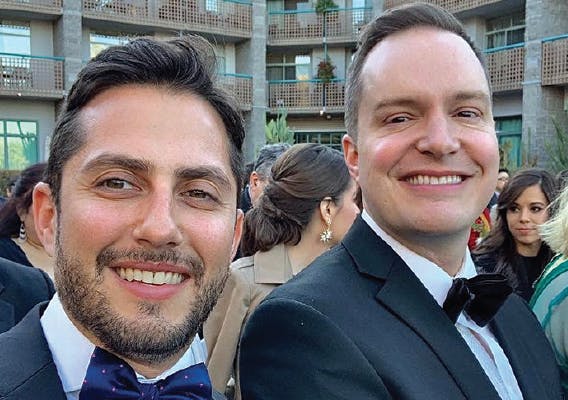
I was open about my LGBTQ status when I applied for my first job as an attending, and I sought out a practice where diversity is celebrated as an advantage. In my practice, I am openly gay, but I rarely talk about it with patients. I don’t lie if patients ask, but I avoid talking about myself. Most of the time I am an invisible minority, still hiding to some degree—still a work in progress.
I have knowingly experienced outward discrimination due to being gay only once as a medical student. But how many times have I been the recipient of unspoken discrimination or microaggression? In my gut, I know I have experienced avoidance, bias, or being passed over for an experience.
To those who are LGBTQ and applying for retina positions: Be honest about who you are, and find a work family that celebrates you.
As for the patients, it can be hard to identify LGBTQ patients in ophthalmology. But, most importantly, if the patient discloses that they are in an LGBTQ relationship, following up with a positive remark such as, “That’s great, how long have you been together?” can be very empowering.
Another piece of advice: Don’t be afraid to ask about their experience because it will make them feel accepted, seen, and supported. It’s not off-topic, and it is important. Remember that when an LGBTQ person shares their sexuality with you, they are probably experiencing fear, and it is your opportunity to alleviate that fear.
Another way to support patients or colleagues is to address national events. During my third year of residency, the Pulse Nightclub shooting occurred in Orlando, and I was devastated by the slaughter of men and women within my community. The day after the shooting, a colleague came in early and plastered a rainbow flag on our door. I walked in and was speechless on seeing this act of solidarity.
Ophthalmology is not a place where people often discuss sexuality. Most of us live quiet, private lives. Hidden is a good term for most LGBTQ ophthalmologists. This atmosphere, I think, is why we don’t have an organization of LGBTQ ophthalmologists or any obvious LGBTQ representation in leadership and at academic meetings. I would love to see a shift in this paradigm, and we need to organize a network of support. For the vast majority who aren’t a part of the LGBTQ community, hopefully these stories start a conversation.
Did You Know?
A recent Gallup survey found that 5.6% of American adults—an estimated 18 million people—identify as lesbian, gay, bisexual, transgender, or queer (LGBTQ), a significant increase from the 4.5% recorded in 2017.1 The researchers speculate that the rising numbers are due, in part, to society’s increasing acceptance of the LGBTQ community and younger generations choosing to live openly with a sexual orientation other than heterosexual. They also suspect the unwillingness of older generations to identify as LGBTQ means this percentage may actually be an underestimate.
1. Jones JM. LGBT identification rises to 5.6% in latest U.S. estimate. Gallup. news.gallup.com/poll/329708/lgbt-identification-rises-latest-estimate.aspx. Accessed February 24, 2021.
BAY AREA SUPPORT
An Interview with Steve Sanislo, MD
I’ve been in the San Francisco Bay area for more than 25 years, so my experiences with LGBTQ situations are probably different from those of a lot of people because of the incredible tolerance here. Much of what I say here will no doubt vary from other people’s personal experiences.
Retina Today: As a member of the LGBTQ community, what has been your experience seeking mentorship in retina?
I basically had zero LGBTQ mentors. I’ve certainly had wonderful mentors, and I wouldn’t be as successful as I am had they not taken me under their wing—they just weren’t LGBTQ. In medical school, residency, and fellowship, I didn’t know anyone who was openly LGBTQ in ophthalmology, much less in retina. But for me personally, it wasn’t that important because in some ways I was compartmentalizing my existence.
I didn’t come out until after I was in my current academic position. It might have been different with different mentors or role models, people who were out in high-profile positions, so that I felt more comfortable being out myself.
But I had to accept who I was first. Once I accepted myself, I came out quickly and had wonderful experiences. At work, probably the first person I came out to was my mentor, and then some of my colleagues, and I honestly never had a negative reaction professionally. Once you have positive experiences, you want to make sure everyone knows because it’s so much better when you can be yourself.
RT: How has being gay affected your approach to patient interactions?
For a long time, that was the biggest area where I felt uncomfortable in my workplace—figuring out what to share with patients. The most awkward incidents were when patients tried to set me up with their daughters. After I was married, patients would ask about my wife, and I didn’t know how to handle that well. I would never talk about my personal life at that point in time, but if someone did bring up my “wife” I usually let it slide or even went along with it. But I always felt bad. It wasn’t the right thing to do, and it isolated me from the patients. When I finally started gently correcting them by stating I have a husband, not a wife, I was surprised with how people were OK with it.
In retina, we have so many older patients who have their own views, and I was worried they would feel differently about me. Honestly, I never experienced that.
Eventually I started discussing my private life with patients regularly. I have seen some patients every month for 15 years now, so I know them well, and it’s nice that they know me too. They might ask if I have kids, and I tell them I have two kids and what I do with my husband on the weekends. I can casually talk about my husband and family the same way a heterosexual person would, and I find that incredibly liberating, to feel like I can have the same interaction with a patient that a straight person does.
RT: How do you feel the LGBTQ community is represented in retina meetings and leadership?
I don’t think it is. I’m sure there are LGBTQ people on the podium at retina meetings and in leadership positions, but I don’t know who they are.
But is it necessary? Maybe, in terms of role models for younger physicians. I remember a while back when a medical student asked for help with his application, and he asked if he should include his leadership positions in LGBTQ advocacy programs. Back then, I advised him against it. I felt that not everywhere is the Bay area, not all programs are inclusive, and I was worried one homophobic person on an application committee would reject him because of that.
But now, if I had a student ask the same thing, I would say yes, you should. First—and most important—it’s really essential to be yourself and be in an environment where people are OK with that. That outweighs the possibility that you might not get a position somewhere, and that’s not a place where you want to be anyway. Second, I think the pendulum has actually swung in the opposite direction. Academic medical centers are valuing underrepresented minorities, including people who are LGBTQ. In some ways it can be an advantage to disclose that.
The more people can be open about who they are in their workplace, the better. You can feel wholly part of something—you don’t have a feeling that you are holding back. I’m happy to see that things are changing a great deal. Nowadays, I have fellows and residents who are openly gay, and it’s not an issue. It makes for a better situation for them.
A GLOBAL EXPERIENCE
By Wandsy Velez, MD
I have been in practice for 30 years now—10 in a multispecialty practice and 20 in a solo practice. I didn’t disclose my sexual orientation when I was applying for a fellowship or when I was looking for a job because I didn’t think it was relevant to my skills and knowledge as a retina surgeon.
Because I live on a small island with conservative religious beliefs, I disclose my orientation only to those I know or those I believe will not discriminate or judge me. These are often people from the United States.
At the same time, my partner for 20 years was not keen on disclosing her orientation mostly because of family issues. I respected her wishes but also supported her once she was ready to open up to her family in her own time, which was just a few years ago.
In Puerto Rico, everyone in the lesbian community mostly knows each other, and now I see more lesbian and gay patients than ever before. Unfortunately, the same is not true with the transgender community. There is now one center in Puerto Rico, Centro Ararat, that serves the transgender community by offering the necessary hormone therapies and treating underlying disease.
To move our medical community further toward inclusion, we must ensure that our office personnel are highly educated about discrimination laws.We must also change our electronic health record systems and become more inclusive regarding gender.
The LGBTQ community is not well represented within the field of retina, but at 59 years young I am willing to challenge these stereotypes.
A BALANCING ACT
By Scott Walter, MD
In the competitive specialty of ophthalmology, and the hypercompetitive subspecialty of retina, the question has always been how much of yourself to put out there if it isn’t relevant to your qualifications as a retina surgeon. Being open about your sexual orientation gives dimensionality to who you are as a person and may help others connect better with you; but it’s also a liability, opening the door to potential discrimination.
At every stage of my schooling and career, I knew I had to be careful about how I expressed my sexual orientation in my applications. I carefully buried hints in my residency application, which only one faculty interviewer picked up on. But it really meant something when that person told me the institution was open-minded and was actively recruiting a gay faculty member; sure enough, that’s where I matched. It was nice to join an institution that not only values diversity on paper but also would place someone like me in a position of authority and influence.
By the time I was applying for fellowships, I was engaged, and it was becoming more important to be out during the application process. I made a point of mentioning my fiancé to test the waters, to make sure I would be able to include my fiancé in the life of the department.
I was married by the time I was applying for retina jobs, and it was incredibly important to find a good fit for both of us. Most private retina practices understand that the spouse is an important factor, but few have experience with gay applicants. It was interesting to see how practices handled that. Those that went out of their way to make sure we would both be happy were obviously much more attractive to me than practices that were more hesitant to meet my husband.
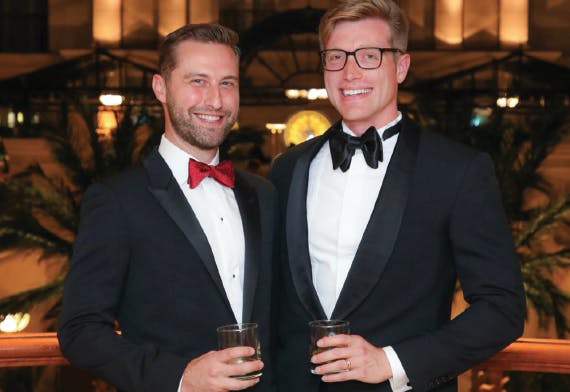
Joining a practice out of fellowship isn’t just another 2- or 3-year commitment—it’s a marriage. You’re joining a group with the intention of being a long-term partner, and you need to be sure there isn’t any internal homophobia or prejudice that would jeopardize your happiness and the success of the partnership.
Leading the Way
LGBTQ mentorship in retina is an important aspect that I underestimated as I worked my way through training. There weren’t any visible LGBTQ people in the field of retina ahead of me. Of course I had many wonderful academic mentors throughout residency and fellowship, but I didn’t have anyone as a social mentor in that respect, so I had to figure out a lot on my own.
But the truth is, I wasn’t alone. When I matched in ophthalmology, a mutual friend introduced me to a gay medical student 2 years below me, and that friendship ultimately influenced him to apply to Bascom Palmer, where we both did our residency; he is also a successful retina surgeon now. Another retina fellow in my year was gay, and now we share many patients who snowbird between Connecticut and Florida, where he practices.
Mentorship and personal connections can be very powerful for advancing one’s career. Whether it’s securing a competitive residency position or building your own productive practice, it’s helpful to learn from others who have gone before you. It’s important to have visible LGBTQ mentors out there, so that people working their way through the ranks have someone to turn to for help.
Connecting with Patients
In clinic, I focus primarily on what’s happening in my patients’ lives, not mine. When I’ve established a good rapport with my long-term patients, I usually come out naturally in the course of conversation, and this openness often serves to further the doctor-patient relationship. Through my interactions with thousands of patients in my community, I am slowly weaving threads of LGBTQ awareness and acceptance into the social fabric of medicine and of society as a whole.
I have also come to realize that there are a lot of LGBTQ patients in retina. Sometimes we just don’t see it unless we are a part of that community. A lot of older patients have lived their entire lives in the closet or don’t express their sexual orientation freely. But many older patients have come out to me, and for them it’s liberating to finally have a provider with whom they can identify. It’s important to have providers out there who represent the diversity in our communities, and that goes for gender, race, sexual orientation, and every other category of diversity.
A Long Way to Go
Women in ophthalmology have come so far now, and they’ve organized well to promote subsequent generations of women. As a result, they’ve become a visible contingent of the academic retina world. But we still have a long way to go on the LGBTQ side. I don’t know of any openly LGBTQ leaders in retina, and it would be great to have a few of us who are frequent presenters at meetings and in positions of influence, whether in academia or in the American Society of Retina Specialists (ASRS) leadership. I have tried to participate in online fellows’ forums and stay involved in state and local societies, as well as in ASRS. I’m not doing it specifically to be “the LGBTQ person,” but I am there so that when someone’s looking to connect, I’m visible enough that people can find me.


