


The COVID-19 pandemic had a profound impact on patient volume and revenues for most retina practices. To help regrow your practice, now is the time to focus on building a differentiated practice brand. Couple this with the adoption of measurable online growth strategies, and you have a long-term recipe for continued success.
At a Glance
- The greater the overlap between what you say you’ll do and what you actually do, the greater the trust you build with patients.
- Your differentiated practice value, once clarified, provides direction for every other aspect of your business development process.
- Between 50% and 65% of a practice’s web traffic comes from mobile devices, yet many practices have outdated websites that are not mobile-friendly.
This article discusses how to discover your practice brand distinction, grow your referral base, and improve your visibility to patients. In addition, a how-to diagnostic included here will help you assess the effectiveness and optimization of your medical practice website. Part 2 of this two-part series will be a deeper dive into how search engines work; the role of content; and the importance of paid online media, patient nurturing, and strategies for assessing return on investment (ROI).
At the core of any successful practice growth initiative are three key components:
- Differentiate
- Get found
- Convert
This article focuses on the first two; Part 2 of the series will focus on conversion.
DIFFERENTIATED PRACTICE VALUE
To grow your patient base and revenue, your practice must offer patients something that other practices do not. After all, differentiation is how Starbucks can sell specialty coffee for $6.00 while the coffee at your local gas station is only a fraction of that.
I often hear ophthalmologists and practice administrators say, “We are not really different, we do the same things as the practice across town.” However, your practice is different. It has its own vibe, its own culture, its own look. It has a different reason for existing, and you and your fellow retina specialists are at the core of that difference. Everything is centered on how what you say you’ll do (your promise) matches up with what you actually do (your performance). The greater the overlap between what you say you’ll do and what you actually do, the greater the trust you build with patients (Figure 1).
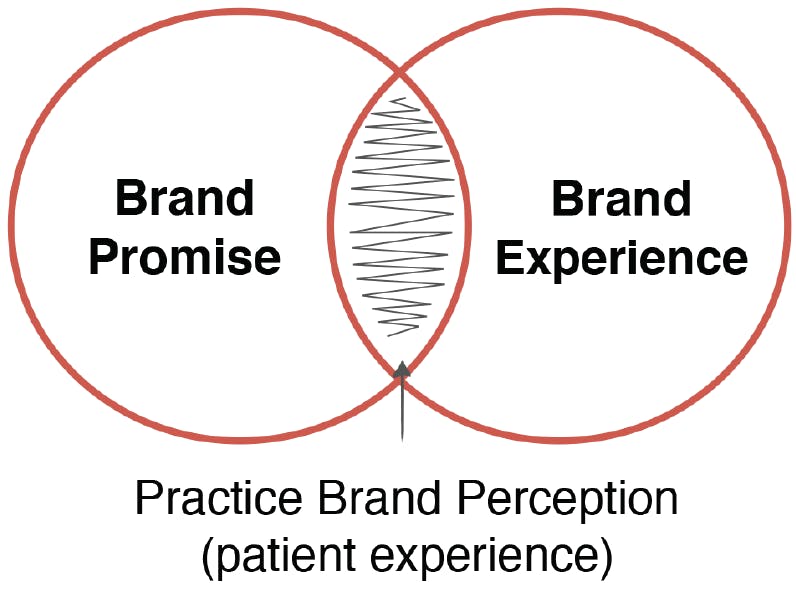
Figure 1. The greater the overlap between your differentiated practice brand promise and the performance of your brand, the greater the trust will be with patients and referral partners.
To find the truth behind your practice differentiation, take a close look at the inner workings of your practice. The differentiated practice value—what sets your practice apart from others—will be your practice brand.
To help with this discovery process, you can plan a summit of your team, led by an outside moderator. The discovery session will look different depending on your practice type—whether a solo practice or a multispecialty group—but the objectives should always include these four questions.
- Who are you today?
- What makes you different?
- Why do you do what you do?
- What are you capable of becoming?
Your differentiated practice value, once clarified, provides direction for every other aspect of your business development process.
BECOME A VALUED RESOURCE
Unless you are part of a multispecialty practice, a large percentage of your new patients likely comes from referrals, including primary care providers, other ophthalmologists, and optometrists. They value your expertise on the retina; use this to your advantage by being available for phone and, more important, e-consults. Patients no longer need to be in your chair to have an initial consultation. With fundus cameras, OCT, and ultra-widefield imaging, you can assist your fellow practitioners in making critical diagnoses. Some practices take this outreach and relationship-building a step further by conducting continuing education classes or other seminars for optometrists and general ophthalmologists on evenings or weekends.
These steps can help to differentiate your practice and build your referral pipeline. They also position you well to become a valuable expert in the area. Some practices provide a resource section on their website for referring physicians, where they post unusual and interesting pathology, commonly asked questions, and other pearls of wisdom.
SERVE PATIENTS ALONG THEIR JOURNEY
Today’s patients are much more educated on medical conditions and available treatment options than were previous generations. According to one survey, 80% of adult internet users have researched at least one major health topic online.1 Half of this research is done on behalf of family members. This is particularly important for retina practices, considering that the adult children of your patients are likely the ones doing that online research.
This trend has a clear impact on the way patients and family members seek information and choose a provider. For example, we have found that most health care practices that we work with have between 50% and 65% of a their web traffic coming from mobile devices, yet many practices have outdated websites that are not mobile-friendly.
It’s a brave new (mostly digital) journey that patients take today, and understanding what that journey looks like for prospective patients can affect the growth and success of your practice in important ways (Figure 2).
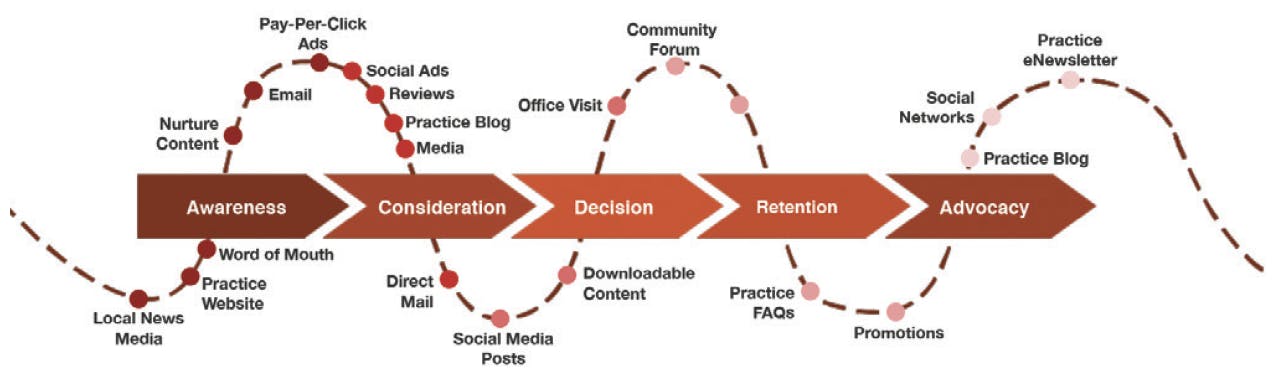
Figure 2. The journey patients take to find your practice is often a serpentine path that includes many online touchpoints; being visible at those touchpoints drives success.
Many practice owners and administrators know that their websites are outdated but neglect to update them. But if you compare your website to those of other practices in your region, you might be surprised by how much a dated look and poor usability are damaging to your web presence.
Rate Your Websie Performance
Rate each metric on a scale from 1 to 5; 1 = not at all, 5 = very well.
- Demonstrates clear differentiated practice value compared with competitors.
- Provides content and visuals that help the visitor understand your narrow and unique expertise.
- Includes fresh and relevant content for patients. The Google algorithm gives content that is fresh a higher quality score, which helps with your ranking on the search engine results page; Relevent content is judged based on the keywords in the content that are being searched for and when people stay on a page to read the content.
- Presents enduring (evergreen) content on key procedures.
- Uses a responsive design and is mobile- and tablet-friendly.
- Performs well in organic search (ie, it appears on page 1 using keywords that patients would use, not including your practice name).
- Effectively integrates with social media channels to drive engagement and traffic.
- Is easy to navigate, with no outdated or confusing navigation elements.
- Uses persona targeting (content, offers, and visuals targeting a specific type of patient) to help users identify themselves as prospective patients.
- Has a clear strategy to convert visitors to patients.
- Effectively uses calls to action (ie, “Schedule an Appointment” button).
- Drives content and other offers to landing pages, rather than pages on your website.
- Includes HIPAA-compliant customer relationship management database integration to capture prospective patients as leads.
- Incorporates automated marketing tools to foster ongoing engagement with users.
- Has a clear return-on-investment strategy (ie, the marketing dollars spent to get a visitor to the website and converted to a patient are outweighed by the lifetime value of the patient).
FISH WHERE THE FISH ARE
During my childhood, my family would take summer vacations to Lake Van Auken near Hartford, Michigan. Every day we would get up early and go fishing, and usually we came home with hardly a fingerling. Joe, the old fisherman next door, always came home with a full basket. After days of returning without fish to cook, Joe finally shared his secret, “You need to fish where the fish are.” Joe taught us where the fish were, why they were there, and how to use bait the fish actually liked.
The same concepts that shaped our fishing experience apply to building a pipeline of new patients. Part 2 of this series will focus on unpacking those lessons.
1. Internet Health Resources. Pew Research Center. July 16, 2003. Accessed August 5, 2021. www.pewresearch.org/internet/2003/07/16/internet-health-resources


