


When did you know you wanted to be a vitreoretinal specialist?
I became interested in medicine during undergrad as an engineering major at the University of Miami. I was accepted into the accelerated BS/MD Junior Honors Medical Program at the University of Florida, and was intrigued by the pathophysiology seen in the ophthalmology clinic with my mentor, Sonal S. Tuli, MD.
I was not exposed to vitreoretinal surgery until my second year of residency, when I assisted with my first vitrectomy and membrane peel on a patient with a complex diabetic tractional retinal detachment. My attending took a complex-appearing situation and meticulously and skillfully peeled the membranes off the detached and damaged retina, allowing the detached retina to be anatomically repaired. At that moment, I knew that I wanted to be a vitreoretinal specialist.
I read that you have an interest in clinical trials. What about them interests you most?
Clinical trials have played a pivotal role in establishing the standard-of-care treatment options we are able to offer patients in our clinics. I am most interested in how clinical trials help advance medical knowledge and help retina specialists improve patient care. By participating in trials, we potentially allow our patients to be the first to benefit from a novel treatment for their retinal condition.
Shortly after I joined the practice, I initiated the clinical research department at Florida Retina Institute. One of the more exciting trials we have participated in was the Kingfisher trial, which compared brolucizumab (Beovu, Novartis) with aflibercept (Eylea, Regeneron) for the treatment of diabetic macular edema. We continue to expand our research efforts and are actively enrolling in new studies. Benjamin J. Thomas, MD, has initiated our research efforts in Jacksonville, Florida, and continues the research mission.
How do you juggle practicing at multiple locations and spending time with your family?
A healthy work-life balance is critical in our specialty; it keeps us grounded and makes us better physicians. Spending quality time with my wife and daughters helps to keep things in perspective. I enjoy being outdoors biking, golfing, and coaching my daughter in soccer.
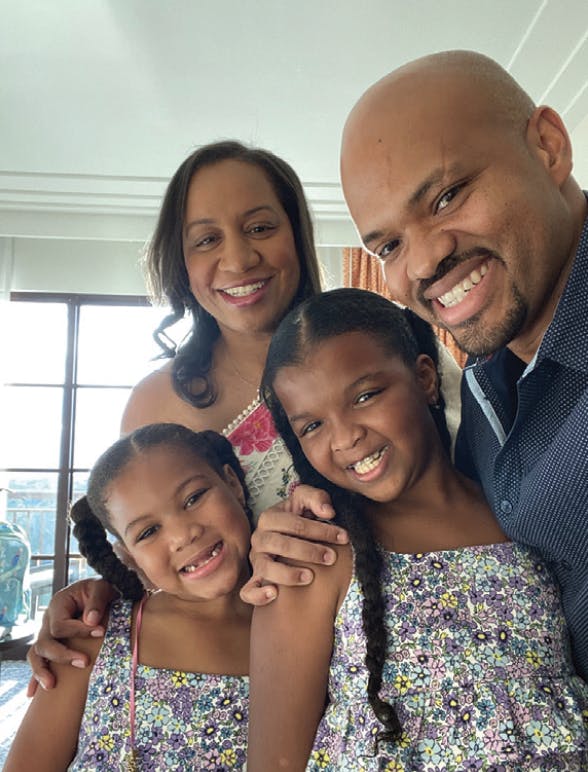
Four years after joining Florida Retina Institute, my partner, Elias Mavrofrides, MD, and I spearheaded an initiative for an annual company-wide retreat for the physicians and their families. Events like these allow us all the time to recharge and bring our families together.
Back in 2018, you did an article for Retina Today about your work in Jamaica. Do you still travel there to provide eye care?
During the past several years, the Eye Health Institute has partnered with the University of Michigan’s Third Century Initiative to create a place for eye examinations and storage of equipment in rural areas. The initiative retrofitted a climate-controlled shipping container and shipped the pod to Jamaica. The initial pod was sent to Hanover, and we examined patients there during the mission trip.
I have not been able to participate in a mission trip since the pandemic started. However, I truly enjoy playing a role in the retinal care for the Jamaican population who do not have easy access to routine eye care.
In the future, I’d like to take part in vitreoretinal surgical mission trips for underserved populations. To make it a success, this requires integration with local Jamaican ophthalmologists. I have make some local connections with general ophthalmologists during previous trips, which I hope develop into partnerships. As COVID numbers start to improve, there have been talks of returning to Jamaica in 2022.
What advice do you have for aspiring vitreoretinal specialists?
1) Ensure that you have learned all of the fundamentals of general ophthalmology. As a retina specialist, you will be frequently asked about general ophthalmology topics that patients will expect you to answer.
2) Stay up to date with the literature. Management for various retinal conditions is everchanging with novel therapies and surgical techniques/devices.
3) Foster your relationships with mentors. Vitreoretinal surgery is humbling and having mentors to discuss challenging cases with is extremely helpful, especially during your first few years after fellowship.


