



AT A GLANCE
- Research shows that prompt treatment of diabetic retinopathy can prevent blindness in more than 90% of cases when the right treatment is administered after a timely diagnosis.
- A prospective study demonstrated that elderly patients with wet AMD and diabetic macular edema are willing and able to comply with daily self-testing using their mobile device.
- Home monitoring may provide clinicians more reliable follow-up to help them provide proper treatment at the proper time.
AMD and diabetic retinopathy (DR)/diabetic macular edema (DME) are the most frequent causes of blindness in elderly people and working-age adults, respectively, and the incidences continue to rise as life expectancy increases.1,2
Although regular ophthalmic examinations are recommended for all patients with diabetes, those with this condition often present for an eye examination only once vision loss has occurred. This lack of proper screening and care is particularly concerning because prompt treatment of DR can prevent blindness in more than 90% of cases when the right treatment is administered following timely diagnosis.3
A similar trend plagues the AMD patient population. Early detection of macular neovascularization in patients with AMD is paramount to preserve long-term visual acuity. In real-world conditions, patients start anti-VEGF treatment with a delay of about 2 months from onset of symptoms.4,5 This lost time often leads to permanent visual impairment.
Early detection of AMD and DR/DME relies on frequent visits to a retina specialist’s office for examination and retinal imaging.6 However, as the COVID-19 pandemic has made abundantly clear, these visits can pose a significant burden on patients and health systems. Added to that, changes that take place between regularly scheduled visits may indicate progression long before the patient presents to the clinic.7
The ability to monitor patients at home with objective tools offers a new level of care with the promise of reduced visits, early detection of treatable conditions, acquisition of high-quality patient data, and personalization of treatment regiments. Thus, researchers and clinicians have been exploring at-home tools that can capture ophthalmic data.
PHONE-BASED TOOLS
A prospective study demonstrated that elderly patients with wet AMD and DME were willing and able to comply with daily self-testing using their mobile device.8 Thus, several smartphone applications are available or are currently under investigation for at-home vision tests.9,10 One smartphone application is myVisiontrack (Vital Art and Science/Genentech), which tests shape-discrimination hyperacuity.11,12 A second application, Alleye (Oculocare Medical), has several similarities with myVisiontrack, but examines a larger central visual field. Both applications are FDA approved for prescription use only.
OdySight (Novartis/Tilak Healthcare) is a mobile medical video game, available by prescription only, that contains a puzzle game and a monocular vision test, including near visual acuity, contrast sensitivity, and a digital Amsler grid.13 The test results are sent via a secure server to an online dashboard that can be accessed online by the physician. Any vision decline triggers alerts sent to both the patient and physician. Results from a prospective study demonstrated good agreement between the near visual acuity and Amsler grid modules of OdySight compared with current standards. The application remains under investigation and might offer additional benefit after implementation of technology to ensure the tests are performed at a standardized distance and with adequate ambient light, as measured by the device.14
Online Amsler grids are available for mobile devices (amslerapp.com). Although the Amsler chart has the benefit of being straightforward and easily understood by patients, its usefulness as a monitoring tool is limited by a high false negative rate.
AT-HOME MEDICAL DEVICES
The preferential hyperacuity perimetry (ForeseeHome, Notal Vision) is an artificial intelligence-enabled device for patient self-testing for AMD.6 It was designed to detect progression from intermediate to wet AMD. The ForeseeHome is an FDA-approved medical device that uses macular perimetry based on hyperacuity (Figure 1).15 The randomized controlled Age-Related Eye Disease Study 2-Home Monitoring of the Eye study of the ForeseeHome device showed that early detection of wet AMD resulted in better visual outcomes compared with standard monitoring of wet AMD.16 The instrument is intended to be used at home for patients with stable fixation and visual acuity of 20/60 or better.
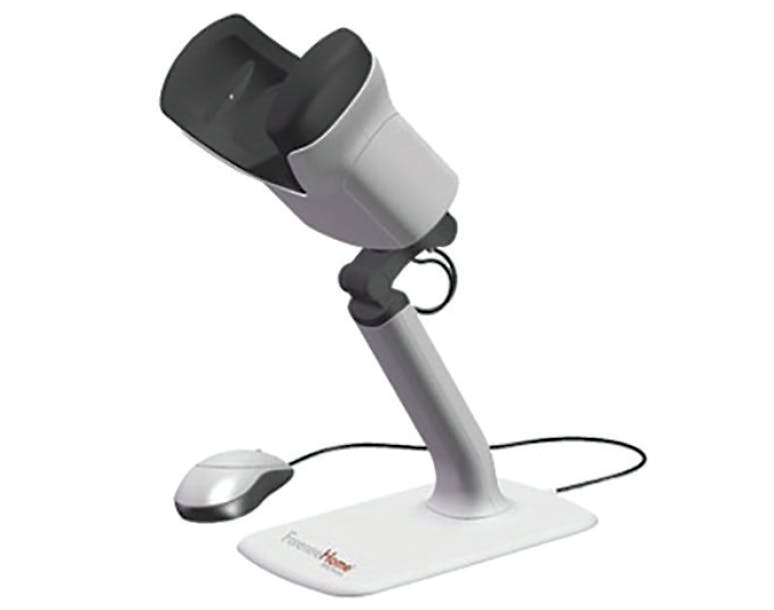
Figure 1. The ForeseeHome monitoring system includes an in-home preferential hyperacuity perimetry device that sends data to a remote monitoring center.
Image courtesy of Notal Vision
Today, the ForeseeHome AMD Monitoring Program is available by physician referral to the Notal Vision Monitoring Center, a digital health care provider, and covered by Medicare insurance in the United States. It is intended to be used in addition to regular dilated eye examinations in patients with at-risk intermediate AMD. A real-world data analysis showed that the home monitoring system helped to detect wet AMD conversion at a VA of 20/40 or better in 81% of patients.17
Exudative maculopathies are mostly managed in two ways: prn or treat-and-extend regimens. Both approaches require regular office visits with OCT imaging to dictate the decision to treat or extend. The ability to monitor the macular status by home OCT represents a novel paradigm of disease monitoring and may allow truly customizable retreatment decisions. The Notal Vision Home OCT system includes an OCT device for patient self-imaging and a dedicated remote monitoring center to support and monitor patient adherence (Figure 2). The system uses a deep learning-based algorithm for automated and quantitative evaluation of the OCT scans, and a telemedicine infrastructure to enable secure transmission and storage of the personal health information.18
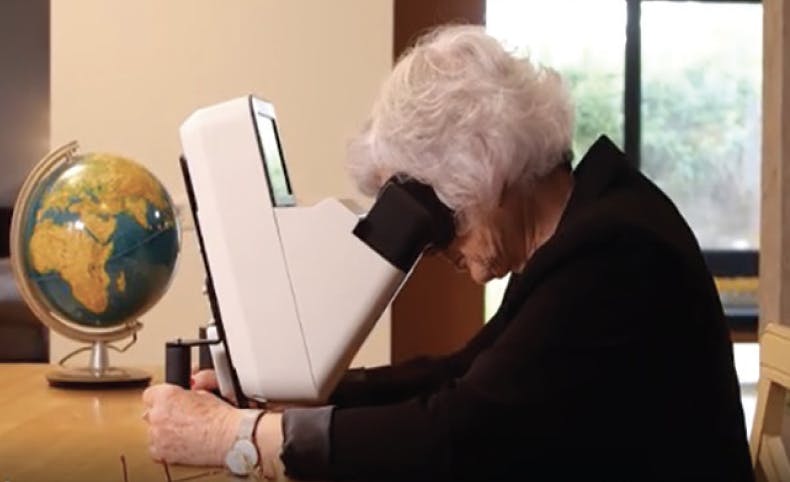
Figure 2. Notal Vision’s home OCT device remains under investigation for at-home imaging for patients with AMD.
Image courtesy of Notal Vision
A prospective pilot study showed that patients with wet AMD were generally able to perform daily self-imaging with the home OCT.19 The integrated system showed high agreement with human expert grading for the presence and quantity of retinal fluid and permitted detailed characterization of fluid dynamics.
FINAL THOUGHTS
With today’s advances in digital image processing and communications, we strongly believe that these tools can become viable screening options for patients at risk for developing wet AMD, or referrable/vision threatening diabetic eye disease, no matter their location or distance from the clinic.
Smartphone applications and at-home monitoring systems may enable alternative paradigms of disease management. Home monitoring may provide clinicians more reliable follow-up to help them provide proper treatment at the proper time. Moreover, it may reduce unnecessary office visits and ease the burden on patients. Still, larger prospective trials are required to determine patient uptake, compliance, and use rate, as well as reliability of home monitoring tools.
1. Guariguata L, Whiting DR, Hambleton I, Beagley J, Linnenkamp U, Shaw JE. Global estimates of diabetes prevalence for 2013 and projections for 2035. Diabetes Res Clin Pract. 2014;103(2):137-149.
2. Yau JWY, Rogers SL, Kawasaki R, et al. Global prevalence and major risk factors of diabetic retinopathy. Diabetes Care. 2012;35(3):556-64.
3. Fong DS, Aiello L, Gardner TW, et al. Diabetic retinopathy. Diabetes Care. 2003;26(1):226-9.
4. Rauch R, Weingessel B, Maca SM, Vecsei‐Marlovits PV. Time to first treatment: the significance of early treatment of exudative age‐ related macular degeneration. Retina. 2012;32:1260-1264.
5. Canan H, Sızmaz S, Altan-Yaycıoğlu R, et al. Visual outcome of intravitreal ranibizumab for exudative age-related macular degeneration: timing and prognosis. Clin Interv Aging. 2014;9:141-145.
6. Loewenstein A, Malach R, Goldstein M, et al. Replacing the Amsler grid. Ophthalmology. 2003;110:966-970.
7. Centers for Medicare and Medicaid Services. Medicare coverage database. national coverage analyses (NCAs). Decision memo for ocular photodynamic therapy with verteporfin for macular degeneration (CAG-00066R3). Accessed December 3, 2021. www.cms.hhs.gov/mcd/viewdecisionmemo.asp?id=101
8. Korot E, Pontikos N, Drawnel FM, et al. Enablers and barriers to deployment of smartphone-based home vision monitoring in clinical practice settings. Preprint. Published online December 16, 2021. JAMA Ophthalmol.
9. Islam M, Sansome S, Das R, et al. Smartphone-based remote monitoring of vision in macular disease enables early detection of worsening pathology and need for intravitreal therapy. BMJ Health Care Inform. 2021;28(1):e100310.
10. Khurana RN, Hoang C, Khanani AM, Steklov N, Singerman LJ. A smart mobile application to monitor visual function in diabetic retinopathy and age-related macular degeneration: The CLEAR Study. Am J Ophthalmol. 2021;227:222-230.
11. Kaiser PK, Wang Y‐Z, He Y‐G, et al. Feasibility of a novel remote daily monitoring system for age‐related macular degeneration using mobile handheld devices: results of a pilot study. Retina. 2013;33:1863-1870.
12. Wang YZ, He YG, Mitzel G, et al. Handheld shape discrimination hyperacuity test on a mobile device for remote monitoring of visual function in maculopathy. Invest Ophthalmol Vis Sci. 2013;54:5497-504.
13. At-home app helps patients stay engaged and adherent to vision monitoring remotely [press release]. Novartis. May 12, 2021. www.novartis.us/stories/education-awareness/home-app-helps-patients-stay-engaged-and-adherent-vision-monitoring
14. Brucker J, Bhatia V, Sahel J-A, Girmens J-F, Mohand-Saïd S. Odysight: A mobile medical application designed for remote monitoring-a prospective study comparison with standard clinical eye tests. Ophthalmol Ther. 2019;8(3):461-476.
15. Loewenstein A, Malach R, Goldstein M, et al. Replacing the Amsler grid a new method for monitoring patients with age-related macular degeneration. Ophthalmology. 2003;110:966-970.
16. AREDS2-HOME Study Research Group, Chew EY, Clemons TE, et al. Randomized trial of a home monitoring system for early detection of choroidal neovascularization home monitoring of the eye (HOME) study. Ophthalmology. 2014;121(2):535-544.
17. Ho AC, Heier JS, Holekamp NM, et al. Real-world performance of a self-operated home monitoring system for early detection of neovascular age-related macular degeneration. J Clin Med. 2021;10(7):1355.
18. Lally DR, Kim JE, Elman MJ, et al. Performance of a novel deep learning algorithm for automatic retinal fluid quantification in home OCT images. Invest Ophthalmol Vis Sci. 2020;61:2571.
19. Keenan TDL, Goldstein M, Goldenberg D, Zur D, Shulman S, Loewenstein A. Prospective, longitudinal pilot study: daily self-imaging with patient-operated home OCT in neovascular age-related macular degeneration. Ophthalmol Sci. 2021;1(2):100034.


