


If a person’s heart rate, blood pressure, or IOP falls outside the normal range, it signals that something could be wrong and that further action is needed. Similarly, an annual staff turnover rate higher than 25% in a practice signals that poor hiring decisions are being made, nonoptimal onboarding processes are in place, or ongoing staff supervision is lacking.
An extremely low rate—5% or 10%—can also signal that change is needed. Approximately 25% of staff leaves an average private practice each year for any number of reasons—termination due to acute performance failures, termination due to failure to thrive over time, friction with colleagues, relocation, a new job, family needs, etc. A turnover rate of 15% to 20% is usually the sweet spot, indicating that a practice has optimized its hiring, onboarding, and other human resources processes.
This article outlines how practice owners and managers can address an extremely low turnover rate that may be the product not of superior hiring and supervisory practices but of low standards and/or complacency in the continued employment of subpar staff members.
STANDARDIZE THE MANAGEMENT OF POOR PERFORMANCE
The foundational document to optimize hiring and managing processes in your practice is the human resources manual. This manual is usually approximately 30 to 50 pages long and consists largely of boilerplate language describing the basic workplace policies for staff, such as when to arrive, how to clock in and out, time off policies, and generally how to behave on the job. The manual should also prohibit certain behaviors such as smoking and drinking on the job and other gross infractions.
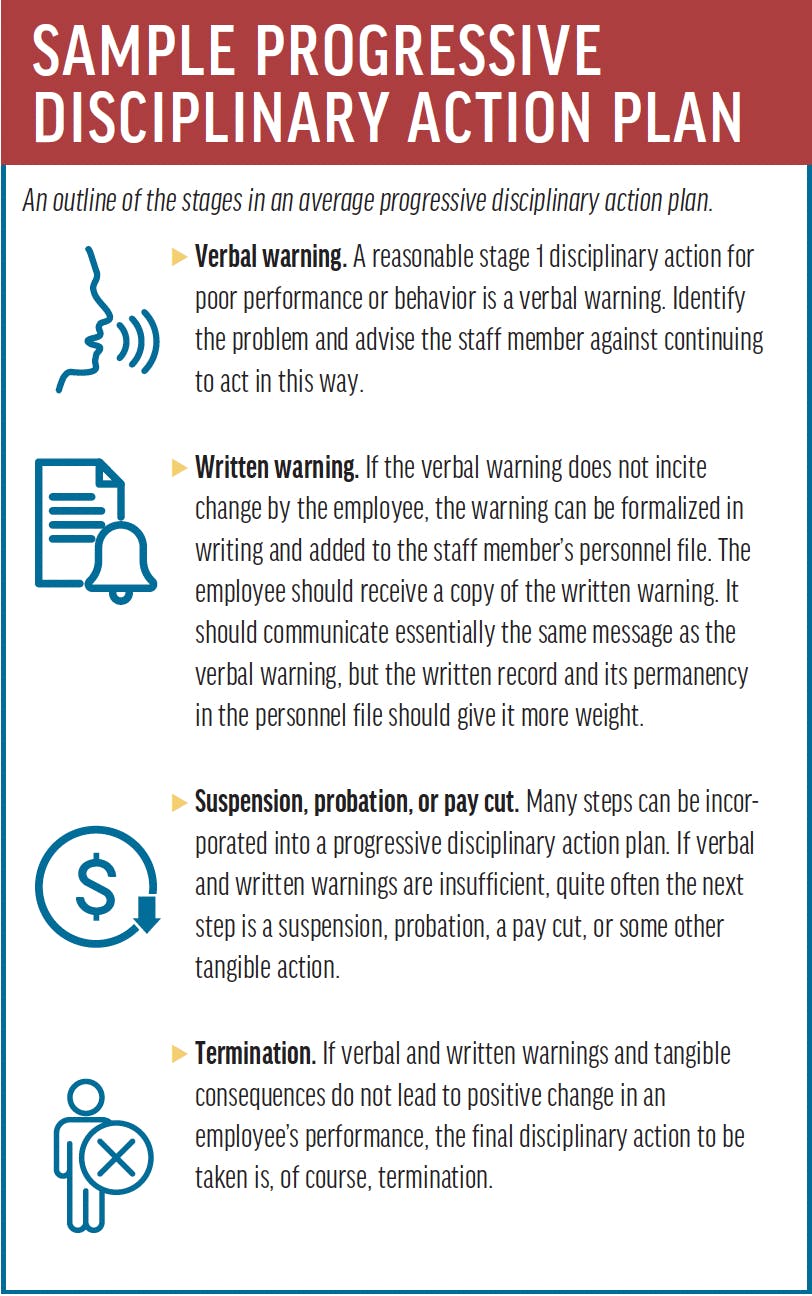
In addition to laying out commonsense standards of performance and behavior in the practice, the human resources manual should outline the progressive disciplinary actions that are taken to address poor performance or inappropriate behavior (see Sample Progressive Disciplinary Action Plan). Occasionally, a transgression may warrant circumventing this linear progression of discipline. For example, action is unlikely to start with a verbal or written warning for a staff member who is caught stealing from the practice.
DON’T BE AFRAID TO LET AN EMPLOYEE GO
The job of a practice administrator is difficult for many reasons, but one of the most stressful aspects is evaluating the performance of staff members and responding appropriately when it falls short. For this reason, it is important for practices not to be overly reticent about disciplining staff. This can create a pattern of accepting poor performance and profoundly affect the success of the practice. Ultimately, practice administrators and leadership must be willing to make some difficult choices.
Don’t go it alone. If you are the supervisor of an employee who is just not getting it, you don’t have to carry the burden and responsibility of addressing it on your own. Consult the practice administrator or your peers at the mid-level/department management level. These colleagues can serve as your sounding board and share insights from their own experiences or advice on how they would handle a given situation. The human resources manual can guide decision-making in these difficult situations, and consulting it before acting helps to ensure that you are following the appropriate processes.
Consult your attorney. Terminating employees carries the risk of triggering legal action in response. Consulting with the practice’s attorney or a separate labor specialist attorney before taking action is prudent.
Learn from it. Perform an exit interview with a staff member who is terminated or leaving for any reason. It is a wonderful way to learn what you and the practice are doing right and wrong in the eyes of a departing employee who is more likely to be honest than current employees. Learn from unsuccessful hires. Find out if you could have identified this poor performance or behavior earlier and avoided getting entangled in it so you can guard against a similar problem.
When you learn something useful, pass it along to your fellow managers and ensure that the practice’s documents are adjusted if necessary.
CONCLUSION
Terminating an employee is an unpleasant task. However, your decisions must be based not on what is important to one individual but on what is best for the collective. If terminating a staff member or doctor will make your practice materially better, it is well worth doing.
It is also worth noting that terminating an employee often carries with it the seed for something better for the practice and the individual. It is not uncommon for termination to prompt someone to reassess their work ethic or chosen career path. Many veterans of this business can share stories in which a terminated employee reports years later that, in the end, they were better off for having lost the job.


