


There are some days when everything goes well, but then there are days when everything seems to go wrong, and you find yourself falling behind schedule by 1 or 2 hours. By the end of the day, you may be wondering whether the wrong turn was due to your actions or staffing issues.
Running a medical practice requires more than just providing quality care to your patients. It also involves ensuring that your office runs smoothly and efficiently, which allows you to provide the best possible care to your patients while also maximizing productivity and profitability.
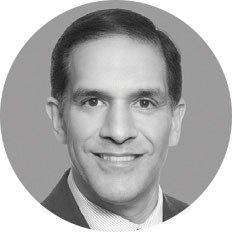
In this article, Omesh Gupta, MD, MBA, shares his insights on the most effective ways to streamline office operations, optimize patient flow, and manage staff for maximum efficiency.
ABTIN SHAHLAEE, MD: WHAT IS YOUR GENERAL WORKFLOW ON A GIVEN CLINIC DAY?
Dr. Gupta: My schedule is fairly unstructured in terms of new patients, established patients, and injection slots. There are sometimes variations in the overall format depending on the office location. For example, some offices can handle higher volumes, while other offices have lower volumes to accommodate for last-minute patients or teaching.
The unstructured schedule template improves the scheduling efficiency and flexibility for the call center as well as the front desk. The more restrictions in your schedule, the more time it takes to find an open spot. This is a common issue at the front desk on busy office days. Another reason I keep my schedule unstructured is due to the efficiency of my offices. The staff works well as a team, and each member has a designated function that allows the team to handle any patient that has an appointment.
DR. SHAHLAEE: WHAT ARE THE THREE MOST COMMON MISTAKES THAT YOU SEE MADE IN TERMS OF THE INEFFICIENCY IN PATIENT FLOW?
Dr. Gupta: The biggest issue that affects efficiency is doctor distractions. Inevitably, physicians are pulled in many different directions. Personal phone calls, informal meetings, and responding to nonurgent emails can throw you off schedule. I try to limit these types of distractions almost to the point of eliminating them completely during clinic hours. You should not be interrupted when you are seeing patients. These distractions can occur frequently throughout the day, and each occurrence takes valuable time away from your patients.
Another common issue is seeing patients late from the start. It is easy to fall behind with unexpected issues, especially on busy days. However, if you are starting the day late, it is going to be a challenge to get back on time and then stay on time for the rest of the day.
Lastly, the responsibility of running an efficient office does not fall on one person, and the culprit for an inefficient office is usually not only one issue. It is crucial to recognize that running an efficient office requires a team effort and a multifactorial solution.
DR. SHAHLAEE: WHERE IS THE MOST COMMON BOTTLENECK IN THE OFFICE?
Dr. Gupta: Often, managing lunch breaks and simultaneously ensuring that the floor is covered can be a challenge in many offices. In my opinion, the unhealthy solution is to take a shorter lunch break or to not take a break at all.
This is detrimental in two ways. First, from a nutritional standpoint, staff members and doctors should each have a chance to eat. Second, but equally important, everyone needs a mental and physical break from the clinic flow. Lunch breaks also provide a chance for staff to connect with each other about their life outside of work. It makes the day-to-day busy office volume more sustainable and enjoyable.
Building a lunch break into the template is essential. It allows the office to finish the morning workload before the afternoon patients arrive. The lower volume of patients during this time allows for staff to take a lunch break either simultaneously or stagged, depending on the volume of patients at that time.
DR. SHAHLAEE: HOW HAS TECHNOLOGY AFFECTED PRACTICE EFFICIENCY?
Dr. Gupta: Technology has definitely helped my efficiency. We converted to electronic health records (EHR) many years ago, and patient care is much easier since the conversion—a fact that I do not take for granted. I have much more useful information at my fingertips, and documentation has been dramatically improved. In addition, the front-office and back-office functions have advanced, making it much easier to navigate the increasingly complex world of health care insurance.
However, when converting from paper to EHR, there was definitely some transition cost. We down-scheduled patients to accommodate for loading the patient’s information into the EHR. We also converted to the EHR over an extended period of time to minimize patient down-scheduling.
DR. SHAHLAEE: WHAT ARE SOME TIPS FOR KEEPING THE PATIENT-DOCTOR RELATIONSHIP BUT MAINTAINING EFFICIENCY?
Dr. Gupta: This is an excellent question that I think is often overlooked. I intentionally and purposefully greet every patient without looking at a screen or piece of paper. Then, after looking at the chart, examining the patient, and going through imaging, I make another concerted effort to have an unobstructed interaction with the patient before leaving. I answer any remaining questions with as much eye contact as possible.
DR. SHAHLAEE: ANY FINAL PEARLS OR TIPS?
Dr. Gupta: Becoming more efficient takes experience and develops over time. As I say to fellows all the time, “Value patient care over speed. Speed will come with time in the office and the OR.” Put patient care first, and the rest will fall into place. Those that place a priority on speed often make mistakes or eventually regret their misdirected priorities.
In today’s health care landscape, the efficiency of you and your office is crucial for the successful practice of medicine. It is important to take the time to identify any scheduling and efficiency challenges that your practice may be facing and then implement the necessary changes to address them. By doing so, you can ensure that your practice remains financially successful and on track to provide quality care to your patients.


_1784132761.jpg?auto=compress,format&w=75)


