


Scedosporiosis apiospermum is a mold often found in polluted water that can cause several types of infections in humans, with immunocompromised patients being the most susceptible.1,2 Potential ocular infections associated with S. apiospermum include keratitis, chorioretinitis, and endophthalmitis.3
THE CASE
A 57-year-old White man who was on chronic immunosuppression presented to our ophthalmology clinic with right eye pain, redness, and visual changes 1 month after a liver transplant. One week prior, his optometrist had difficulty visualizing his optic nerve and observed an “internal filminess,” for which he was prescribed oral NSAIDs and erythromycin ointment and was advised to follow up with an ophthalmologist. Additional ocular symptoms included photophobia, blurred vision, floaters, and mild swelling of his right eye.
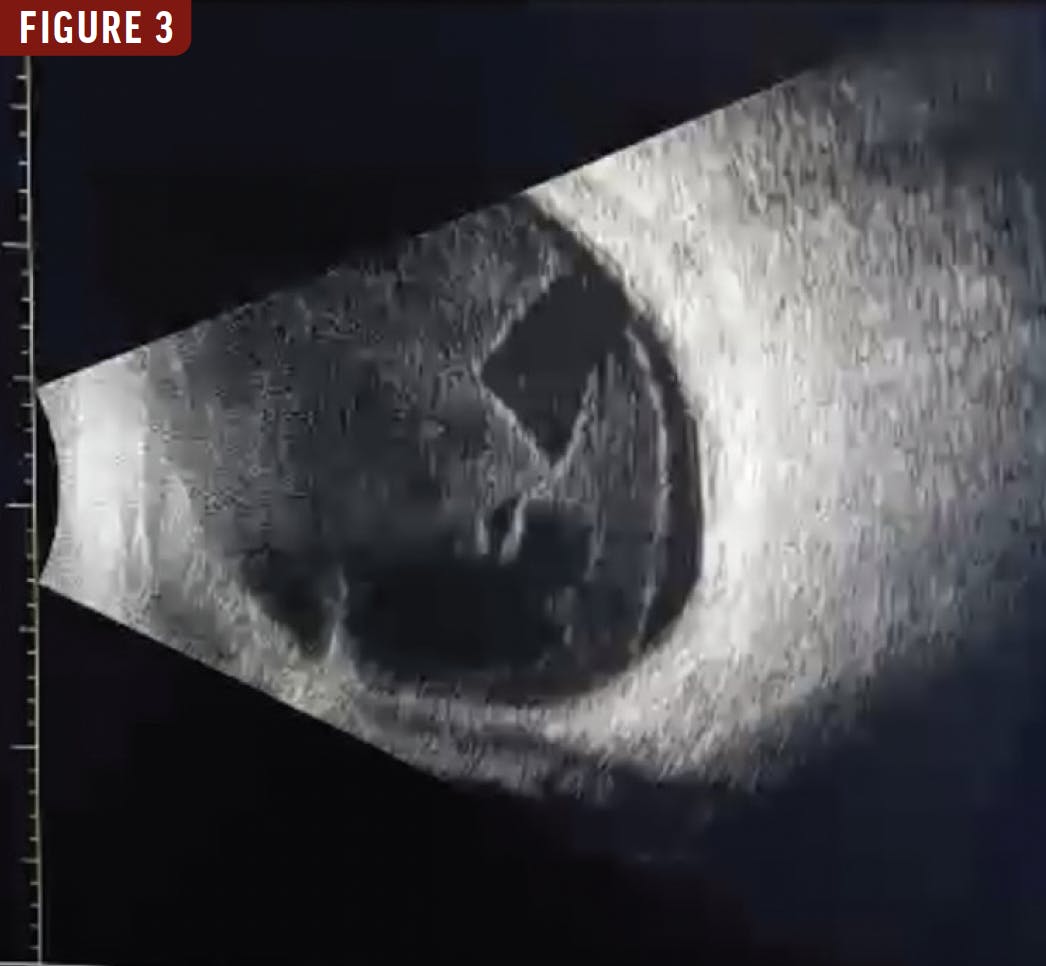
The patient’s initial VA was hand motion OD and 20/40 PH 20/25+ OS. His IOP, pupils, and extraocular muscles were within normal limits in each eye. His right eye was noted to have 1+ conjunctival injection, 4+ anterior chamber cell, and flare with a dense yellow-brown material protruding from the posterior chamber into the anterior chamber, limiting the view of the retina (Figure 1). A dilated fundus examination of his left eye revealed a flat, white, creamy intraretinal lesion with satellite lesions with no overlying vitreous debris (Figure 2A). B-scan ultrasonography of the right eye revealed diffuse heterogeneous, fibrinous, septated vitreous debris (Figure 3).
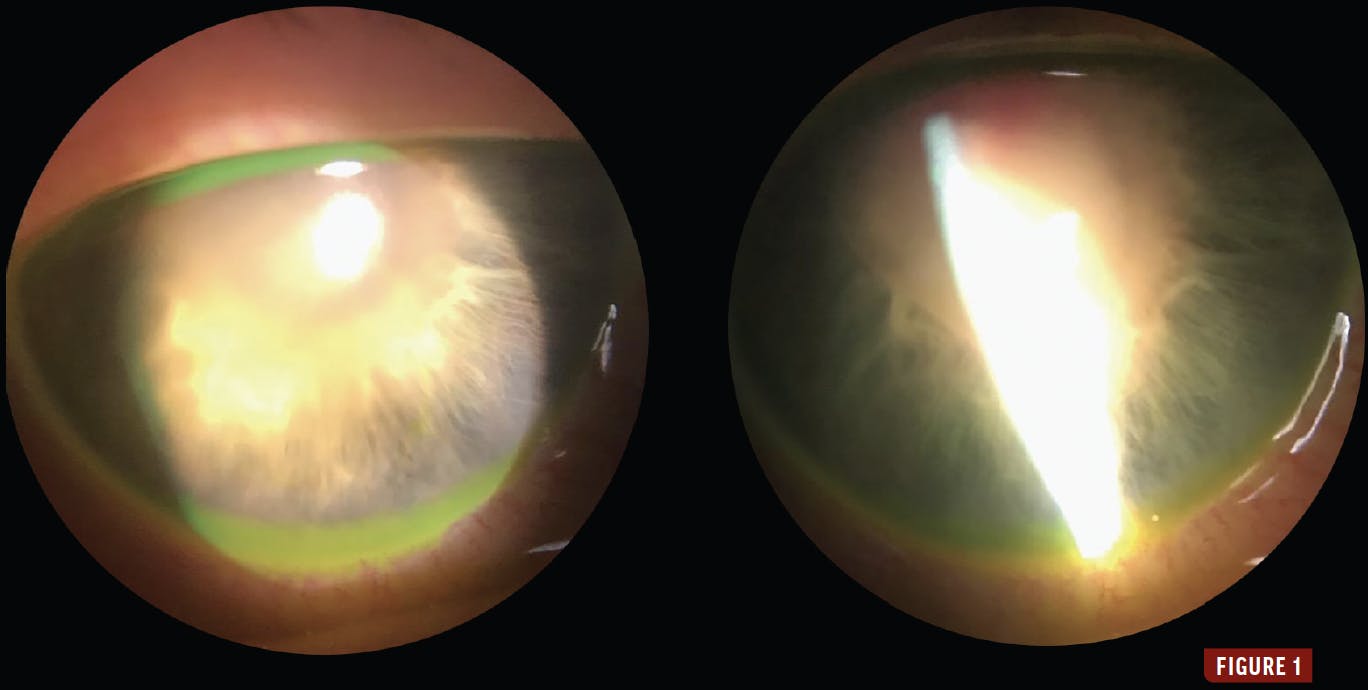
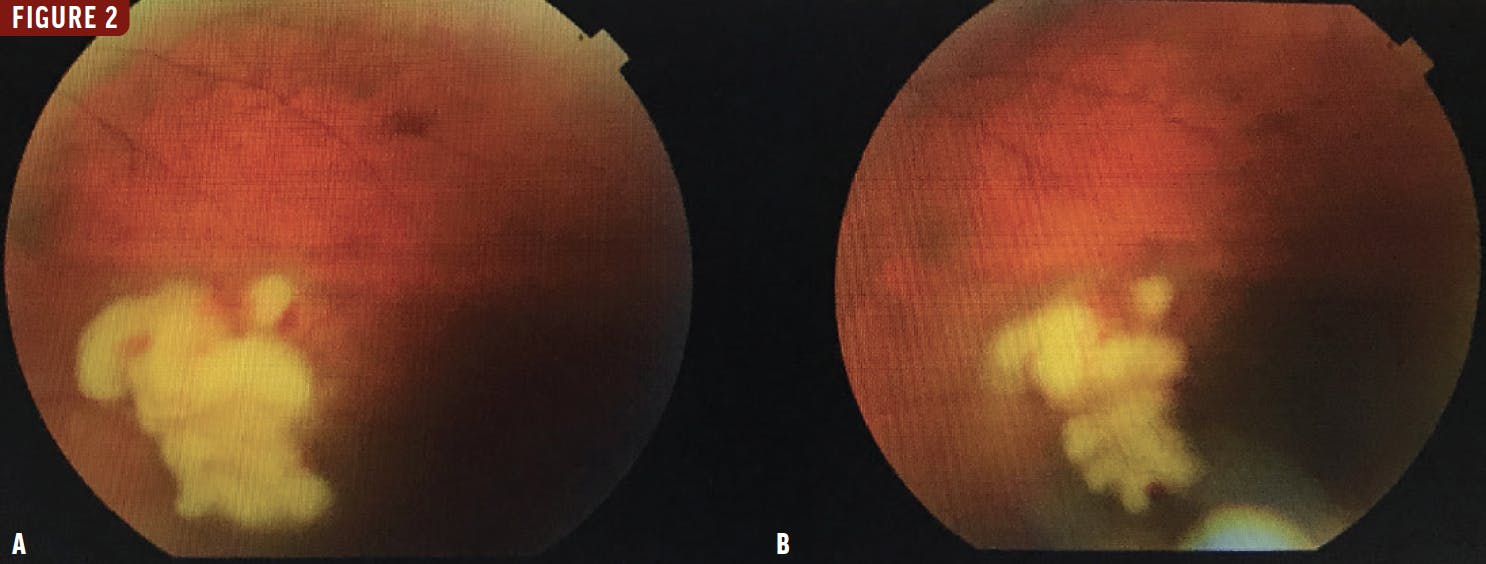
At this time, we suspected fungal endophthalmitis in the right eye and fungal chorioretinitis in the left eye but could not rule out bacterial etiologies. The patient was advised to stop the immunosuppressants and was placed on intravenous voriconazole, amphotericin B, and cefepime and was admitted to the hospital for further workup. Three rounds of anterior chamber paracentesis and four intravitreal injections of antibiotics and voriconazole were administered in each eye, but no organisms grew in culture (Figure 2B, left eye). A limited core pars plana vitrectomy with vitreous biopsy was ultimately performed in the right eye, which grew mold that speciated to S. apiospermum.
The patient was then placed on oral voriconazole, and over the next month, five rounds of intravitreal voriconazole were administered in each eye. The right eye progressed to no light perception despite treatment. Further intravitreal injections were deferred in his right eye to prioritize preserving visual acuity in his left eye, which experienced mild improvement in the size of the intraretinal lesion.
1. Goldman C, Akiyama MJ, Torres J, Louie E, Meehan SA. Scedosporium apiospermum infections and the role of combination antifungal therapy and GM-CSF: a case report and review of the literature. Med Mycol Case Rep. 2016;11:40-43.
2. Shinohara MM, George E. Scedosporium apiospermum: an emerging opportunistic pathogen that must be distinguished from Aspergillus and other hyalohyphomycetes. J Cutan Pathol. 2009;36(Suppl 1):39-41.
3. Cortez KJ, Roilides E, Quiroz-Telles F, et al. Infections caused by Scedosporium spp. Clin Microbiol Rev. 2008;21(1):157-197.


_1784132761.jpg?auto=compress,format&w=75)


