


The advent of chimeric antigen receptor-T (CAR-T) cell therapy in the late 2010s heralded a new era in the treatment of hematologic malignancies and provided new hope in refractory cases. To date, the FDA has approved CAR-T cell class therapies for B-cell acute lymphoblastic leukemia (B-ALL), B-cell non-Hodgkin lymphoma, mantle cell lymphoma, and multiple myeloma.1-5
Leukemia can affect nearly any structure of the eye either due to direct tissue infiltration or, more commonly, secondary to anemia, thrombocytopenia, blood hyperviscosity, or immunosuppression.6,7 Treatment options for ocular disease in the setting of systemic leukemia include systemic chemotherapy, intrathecal chemotherapy, radiotherapy, and bone marrow transplantation.7 In cases of isolated ocular disease, intravitreal methotrexate and adjunct intrathecal chemotherapy are alternative management options.8
ABOUT CAR-T CELLS
CAR-T cells are manufactured from autologous T-cells that have been isolated and genetically modified to express cancer-specific antigen recognition domains on their cell surface.9,10 This is typically achieved via DNA transfection or transduction via a viral vector into an isolated T-cell population to express CAR-T molecules.10 These consist of an extracellular domain, an attached transmembrane domain, and an intracellular domain.10 An effector cellular response can be activated by these CAR-T cells in response to malignant cells expressing specific antigens independent of major histocompatibility complexes, which may be downregulated by malignant cells.11 The process of manufacturing CAR-T cells takes 2 to 5 weeks, and patients are lymphodepleted prior to the readministration.12,13
The effects of CAR-T cell agents on the eye, both therapeutic and deleterious, have been increasingly described in the literature since the initial approval of tisagenlecleucel (Kymriah, Novartis) in 2017. Herein, we present a review of the ocular therapeutic benefits and adverse effects related to CAR-T cell therapies.
THERAPEUTIC POTENTIAL
While the systemic benefits of CAR-T cell therapy are promising, comparatively little is known about the efficacy of CAR-T cell therapy in cases of ocular involvement of hematologic malignancy or in primary malignancies arising in the eye. Prospective studies remain limited due to the infrequency of primary ocular malignancy compared with systemic malignancy.
Preclinical investigations have determined a possible role for CAR-T cell therapy in the treatment of retinoblastoma; in one study, use of chimeric receptors against CD171 and GD2 resulted in destruction of nearly all retinoblastoma lines in vitro.14 In addition, in vitro assays and mouse models of uveal melanoma have shown promising responses to CAR-T cell agents targeted to HER2.15
A key determinant in the efficacy of CAR-T cell therapy for ocular disease is its ability to penetrate the blood-aqueous and blood-retina barriers. There is single-case evidence demonstrating cytology-proven anterior chamber CAR-T infiltration in a 2-year-old patient treated for combined central nervous system relapse of B-ALL.16 In addition, promising clinical results have been reported with use of tisagenlecleucel in conjunction with radiotherapy for isolated ocular relapse of B-ALL in a 21-year-old patient.17
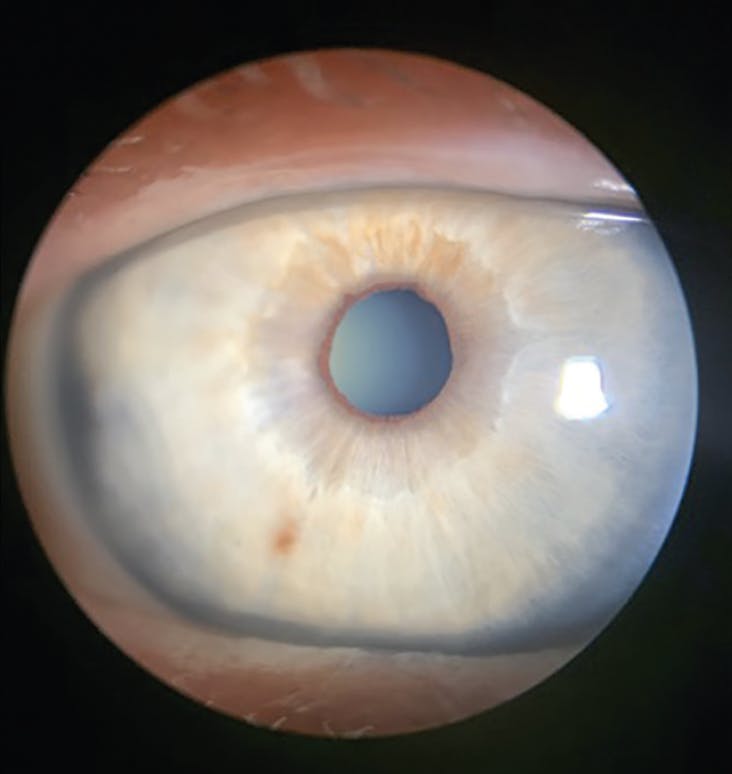
Another case involved a 61-year-old patient with intravascular lymphoma presenting with a primary vitreoretinal lymphomatous-like lesion. This patient experienced mild benefit from local intravitreal methotrexate, rituximab, cyclophosphamide, doxorubicin, vincristine, prednisone, and systemic high-dose methotrexate therapy, but, thereafter, responded more robustly to CAR-T cell therapy with resolution of the retinal lesion.18 A recent patient of ours with relapsing ALL (Figure 1) also responded to CD19-targeted CAR-T cell therapy with complete resolution (Figure 2).
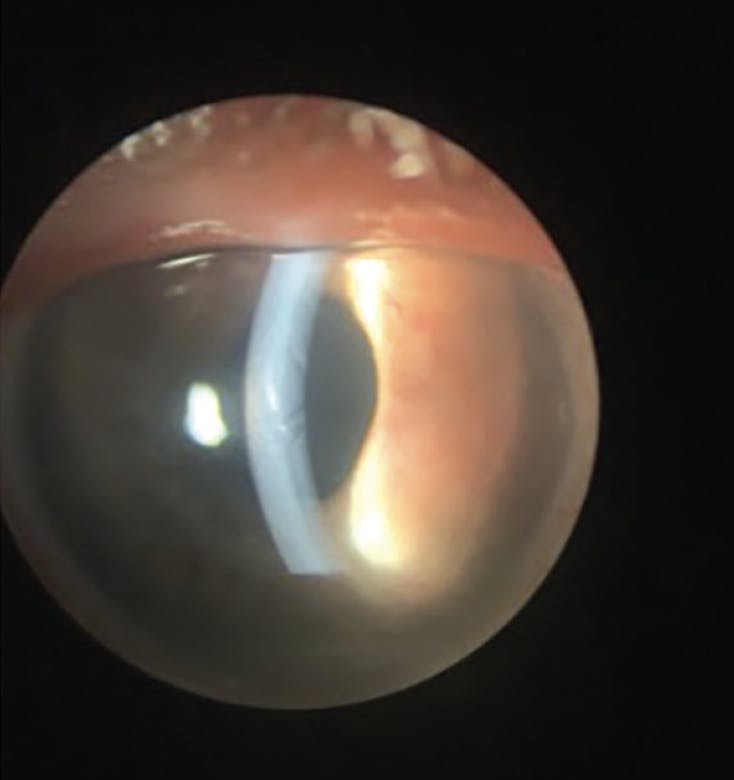
Figure 1. Ocular recurrence of acute lymphoblastic leukemia with pseudohypopyon, iris neovascularization, and nodularity. Uveal infiltration was confirmed via biopsy.
Conversely, there was a report of ocular recurrence of vitreoretinal lymphoma despite good systemic response to CAR-T cell therapy, as well as presumed recurrence or possible persistent malignancy in the eye despite systemic disease control in a pediatric patient treated with tisagenlecleucel.19,20 Bilateral orbital plasmacytoma causing ptosis and proptosis as the first sign of plasma cell leukemia recurrence after CAR-T cell therapy has also been reported.21
The ability of CAR-T cells to be introduced intravenously and treat diseases in the central nervous system, eyes, and testes begs the question: Which factors determine the success or failure of this treatment in the eyes, as well as other immune-privileged structures?22 CAR-T cell therapy is a welcome addition to the armamentarium for the treatment of ocular malignancy in the setting of multicentric or systemic disease, but further investigation is warranted.
ADVERSE EVENTS
Serious but medically treatable systemic adverse events associated with CAR-T cell therapy are relatively common, including myelosuppression, cytokine release syndrome (CRS), and immune effector cell-associated neurotoxicity syndrome. The lymphodepletive course required for most patients prior to CAR-T therapy can result in neutropenia, anemia, thrombocytopenia, B- and T-cell aplasia, and resultant opportunistic infections.11,12
CRS represents the most common adverse effect directly attributable to CAR-T cell therapy and has been documented in up to 90% of treatment cases.10 CRS is characterized by varying degrees of fever, hypotension, and hypoxia and can typically be treated with supportive care in a hospital setting but may progress to circulatory collapse and death. Therefore, in rare cases, it requires more aggressive treatment in the form of corticosteroids or intravenous tocilizumab (Actemra, Genentech/Roche).23 In our own experience with CRS after a single CAR-T cell infusion, subsequent infusion was deferred. However, the patient did well regarding local and systemic control of disease with the single CAR-T cell infusion, without relapse for 15 months.
Neurotoxicity is another common complication of CAR-T cell therapy, occurring in 60% of patients in the ZUMA-3 trial, with severity ranging from mild (depressed level of consciousness) to severe (comatose).10 Coagulopathy and encephalopathy syndromes have also been reported with use of CAR-T cell agents.24,25
Several ophthalmic adverse effects of CAR-T cell therapy have also been reported, including a variety of new visual, ophthalmic, or periorbital complaints, such as ocular graft-versus-host disease, herpes zoster ophthalmicus, and suspected acute retinal necrosis.26 Exudative retinal detachment (RD) has been reported secondary to systemic inflammatory syndrome associated with CAR-T cell therapy.27 Bilateral RD and leukemic infiltration into the retina and optic nerve have also been associated with CAR-T cell use.28 Cytomegalovirus retinitis confirmed by DNA analysis of a vitreous sample and resultant RD have been reported with CAR-T cell therapy targeted toward multiple myeloma.29,30 In addition, papilledema has been reported in a patient affected by CAR-T cell therapy-associated encephalopathy.31
Overall, ocular adverse events are rare compared with systemic side effects. Many occur secondary to systemic immunosuppression or cytokine release and inflammation secondary to the mechanism of action of CAR-T cell therapy.
FURTHER APPLICATIONS
CAR-T cell therapy has already demonstrated its promise as a treatment for refractory systemic hematologic malignancies, which has garnered interest in expanding its clinical uses. From an ophthalmic standpoint, there has been success with its use in vitro and in animal models for the treatment of retinoblastoma and uveal melanoma, and case reports have shown adequate short-term local control. Further studies of the treatment of primary ocular malignancies and secondary infiltration of ocular and periorbital structures by systemic malignancies with CAR-T cell therapy are warranted to further confirm their potential for ophthalmic care.
1. Neelapu SS, Locke FL, Bartlett NL, et al. Axicabtagene ciloleucel CAR T-cell therapy in refractory large B-cell lymphoma. N Engl J Med. 2017;377(26):2531-2544.
2. Hansen DK, Sidana S, Peres LC, et al. Idecabtagene vicleucel for relapsed/refractory multiple myeloma: real-world experience from the Myeloma CAR T Consortium. J Clin Oncol. 2023;41(11):2087-2097.
3. Abramson JS, Solomon SR, Arnason J, et al. Lisocabtagene maraleucel as second-line therapy for large B-cell lymphoma: primary analysis of the phase 3 TRANSFORM study. Blood. 2023;141(14):1675-1684.
4. Abebe EC, Shiferaw MY, Admasu FT, Dejenie TA. Ciltacabtagene autoleucel: the second anti-BCMA CAR T-cell therapeutic armamentarium of relapsed or refractory multiple myeloma. Front Immunol. 2022;13:991092.
5. Wang Y, Jain P, Locke FL, et al. Brexucabtagene autoleucel for relapsed or refractory mantle cell lymphoma in standard-of-care practice: results from the US Lymphoma CAR T Consortium. J Clin Oncol. 2023;41(14):2594-2606.
6. Talcott KE, Garg RJ, Garg SJ. Ophthalmic manifestations of leukemia. Curr Opin Ophthalmol. 2016;27(6):545-551.
7. Sharma T, Grewal J, Gupta S, Murray PI. Ophthalmic manifestations of acute leukaemias: the ophthalmologist’s role. Eye. 2004;18(7):663-672.
8. Vishnevskia-Dai V, Sella King S, Lekach R, Fabian ID, Zloto O. Ocular manifestations of leukemia and results of treatment with intravitreal methotrexate. Sci Rep. 2020;10(1):1994.
9. Maude SL, Laetsch TW, Buechner J, et al. Tisagenlecleucel in children and young adults with B-cell lymphoblastic leukemia. N Engl J Med. 2018;378(5):439-448.
10. Buie LW. Balancing the CAR T: perspectives on efficacy and safety of CAR T-cell therapy in hematologic malignancies. Am J Manag Care. 2021;27(13 Suppl):S243-S252.
11. Zhang X, Zhu L, Zhang H, Chen S, Xiao Y. CAR-T cell therapy in hematological malignancies: current opportunities and challenges. Front Immunol. 2022;13:927153.
12. Luo W, Li C, Zhang Y, et al. Adverse effects in hematologic malignancies treated with chimeric antigen receptor (CAR) T cell therapy: a systematic review and meta-analysis. BMC Cancer. 2022;22(1):98.
13. Amini L, Silbert SK, Maude SL, et al. Preparing for CAR T cell therapy: patient selection, bridging therapies and lymphodepletion. Nat Rev Clin Oncol. 2022;19(5):342-355.
14. Andersch L, Radke J, Klaus A, et al. CD171- and GD2-specific CAR-T cells potently target retinoblastoma cells in preclinical in vitro testing. BMC Cancer. 2019;19(1):895.
15. Forsberg EMV, Lindberg MF, Jespersen H, et al. HER2 CAR-T cells eradicate uveal melanoma and T-cell therapy-resistant human melanoma in IL2 transgenic NOD/SCID IL2 receptor knockout mice. Cancer Res. 2019;79(5):899-904.
16. Jacoby E, Zloto O, Dai VV. Anterior chamber infiltration of CAR T-cells. Am J Ophthalmol Case Rep. 2021;24:101223.
17. Gomel N, Levinger E, Ram R, Limon D, Habot-Wilner Z. Acute lymphoblastic leukemia relapse limited to the anterior chamber of the eye and treated with novel CAR T-cell therapy. Case Rep Ophthalmol. 2021;12(3):994-1001.
18. Asakage M, Umazume K, Takoi H, et al. A case of intravascular lymphoma diagnosed with a primary vitreoretinal lymphoma-like fundus lesion. J Ophthalmic Inflamm Infect. 2021;11(1):47.
19. Willier S, Raedler J, Blaeschke F, et al. Leukemia escape in immune desert: intraocular relapse of pediatric pro-B-ALL during systemic control by CD19-CAR T cells. J Immunother Cancer. 2020;8(2).
20. Taher A, Abadir E, McCluskey P, Hamad N, Lo T, Heydon P. Presumptive recurrence of intraocular lymphoma despite chimeric antigen receptor t-cell therapy. Retin Cases Brief Rep. 2023;17(5):562-566.
21. Nogués-Castell J, Feu-Basilio S, Felguera García Ó, et al. Bilateral orbital plasmacytomas as first sign of extramedullary progression post CAR-T therapy: case report and literature review. Front Oncol. 2023;13:1217714.
22. Chen X, Wang Y, Ruan M, et al. Treatment of testicular relapse of B-cell acute lymphoblastic leukemia with CD19-specific chimeric antigen receptor T cells. Clin Lymphoma Myeloma Leuk. 2020;20(6):366-370.
23. Obstfeld AE, Frey NV, Mansfield K, et al. Cytokine release syndrome associated with chimeric-antigen receptor T-cell therapy: clinicopathological insights. Blood. 2017;130(23):2569-2572.
24. Gust J, Taraseviciute A, Turtle CJ. Neurotoxicity associated with CD19-targeted CAR-T cell therapies. CNS Drugs. 2018;32(12):1091-1101.
25. Wang Y, Qi K, Cheng H, et al. Coagulation disorders after chimeric antigen receptor T cell therapy: analysis of 100 patients with relapsed and refractory hematologic malignancies. Biol Blood Marrow Transplant. 2020;26(5):865-875.
26. Mumtaz AA, Fischer A, Lutfi F, et al. Ocular adverse events associated with chimeric antigen receptor T-cell therapy: a case series and review. Br J Ophthalmol. 2023;107(7):901-905.
27. Khanna S, Mackin AG, Dao DT, et al. Exudative retinal detachment following chimeric antigen receptor T-cell therapy in relapsed B-cell acute lymphoblastic leukemia. Ophthalmic Surg Lasers Imaging Retina. 2022;53(2):113-115.
28. Denton CC, Gange WS, Abdel-Azim H, et al. Bilateral retinal detachment after chimeric antigen receptor T-cell therapy. Blood Adv. 2020;4(10):2158-2162.
29. Zu C, Xu Y, Wang Y, et al. Cytomegalovirus retinitis and retinal detachment following chimeric antigen receptor T cell therapy for relapsed/refractory multiple myeloma. Curr Oncol. 2022;29(2):490-496.
30. Bin Dokhi H, Alharbi AO, Ibnouf NH, Alahmari B, Refka MN. Post-CD19 chimeric antigen receptor T-cell therapy cytomegalovirus retinitis. Cureus. 2022;14(3):e23002.
31. Garcia-Robledo JE, Valencia-Sanchez C, Knox MG, et al. It is in the eye of the beholder: ocular ultrasound enhanced monitoring of neurotoxicity after CAR-T cell therapy. Hematol Rep. 2022;15(1):1-8.


