


The development of novel anticancer drugs has transformed the field of oncology.1-3 The latest cancer therapies work in a variety of ways, many of which involve functional modification of the immune system with immune checkpoint inhibitors (CPIs), cancer vaccines, and v-Raf murine sarcoma viral oncogene homolog B1/mitogen-activated protein kinase (BRAF/MEK) inhibitors. Whether through stimulation of the body’s native immune system to detect and clear cancer cells or manipulation of specific markers to decrease survival of cancer cells, such targeted therapies provide a revolutionary method of cancer clearance.
CPIs target certain proteins that act as checkpoints by allowing cancer cells to evade the immune response. The first CPI to receive FDA approval was ipilimumab (Yervoy, Bristol Meyers Squibb) in 2011 for metastatic melanoma.4 Since then, five other CPIs have been FDA-approved, including nivolumab (Opdivo, Bristol Meyers Squibb) and pembrolizumab (Keytruda, Merck) for non-small cell lung cancer.5 These advancements have broadened the number of potentially treatable cancers to include colon cancer, renal cell carcinoma, gastric cancer, head and neck squamous cell carcinoma, and Hodgkin lymphoma.6
Cancer vaccines are another type of immunotherapy designed to enhance the immune system’s ability to recognize and destroy cancer cells. These vaccines fall into three broad categories: cell-, peptide-, and nucleic acid-based. While cancer vaccines are not typically used as monotherapy, combination therapy with conventional chemotherapy and radiation has demonstrated increased efficacy.7
BRAF and MEK inhibitors form another promising class of chemotherapy.8 They interfere with the mitogen-activated protein kinase signaling pathway, thus limiting cell proliferation, differentiation, and survival. MEK inhibitors administered independently have been approved for use in various cancers.9 The combined use of BRAF and MEK inhibitors has been further shown to improve clinical efficacy and delay the development of drug resistance.10 For that reason, it has become the preferred treatment modality for melanoma containing the BRAFV600 mutation present in almost half of all melanomas.11,12
WATCH FOR SIDE EFFECTS
Despite the promising efficacy of these new cancer therapies, autoimmune side effects involving numerous organs, including the eyes, have been described.4,13,14 The extensive vascular and neural networking within the eye increases its susceptibility to these immune adverse events. Furthermore, the high metabolic activity of the retina makes it particularly vulnerable to toxicity from cancer immunotherapies.13
Immune CPIs
Immune-related ophthalmic adverse events have been shown to involve intraocular, extraocular, and periocular structures.15 Ocular adverse effects typically present within 6 months of initial exposure to immunotherapy, although in some cases, they may become apparent within weeks.15 Generally, inflammation is at the core of these events and can involve any structure of the eye and orbit, including the uvea, retina, optic nerve, and extraocular muscles. Documented immune-related adverse events of CPIs include anterior uveitis (52%), Vogt-Koyanagi Harada (VKH) syndrome/serous retinal detachment/panuveitis (23%), optic neuritis (13%), and corneal edema (3.2%).15
While the relationship between such events and CPIs is not completely understood, it is believed that CPIs disrupt immune regulation within the eye. There also appears to be a relationship between ocular side effects and specific CPIs, with ipilimumab and nivolumab being the most frequently cited suspects.4,15 Finally, combination therapy seems to lead to more severe immune-related adverse events.6
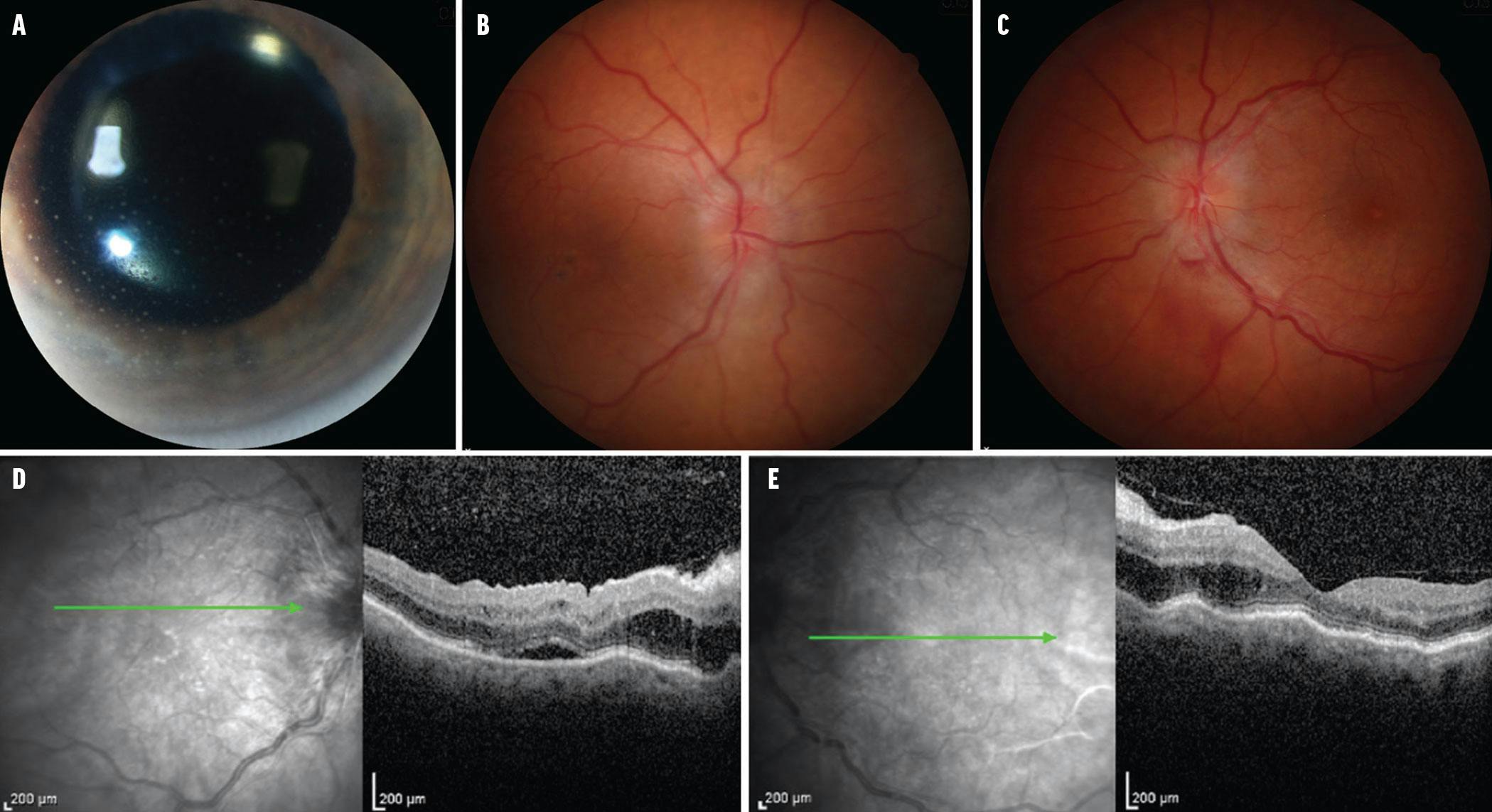
Figure 1. A 68-year-old White woman with metastatic renal cell carcinoma developed VKH-like panuveitis 6 weeks after starting nivolumab treatment (A). Keratic precipitates with panuveitis were noted on color fundus photography (B, C). Fundoscopy also demonstrated bilateral optic nerve edema, and OCT displayed VKH-like serous retinal detachments with shallow fluid accumulation and choroidal elevation and thickening in each eye (D, E).
BRAF/MEK Inhibitors and Cancer Vaccines
BRAF and MEK inhibitors can also induce prominent ocular side effects. BRAF inhibitors, such as dabrafenib (Tafinlar, Novartis) and vemurafenib (Zelboraf, Genentech/Roche), may lead to dry eye, conjunctivitis, uveitis, central serous-like chorioretinopathy, and syndromes mimicking VKH. MEK inhibitors, such as trametinib (Mekinist, Novartis), cobimetinib (Cotellic, Genentech/Roche), and binimetinib (Mektovi, Pfizer), are associated with similar adverse events as BRAF inhibitors and have also been linked to retinal vein occlusion, intraretinal fluid accumulation, retinal pigment epithelium toxicity, ischemic optic neuropathy, metamorphopsia, and altered color perception.13
There are several suggested mechanisms by which autoimmune ophthalmic side effects arise with use of these small-molecule inhibitors: 1) crossing the blood-retinal barrier and inciting an autoimmune response16; 2) apoptosis of cancer cells with subsequent stimulation of T lymphocytes, leading to dissemination of epitopes and induced autoimmunity16; and 3) increasing the risk of ocular toxicity with combined use of BRAF and MEK inhibitors.17
Cancer vaccines have not yet been linked to significant retinal side effects; however, given the experience of patients undergoing other immunotherapies, it is rational to consider the possibly of immune-related adverse ocular events.
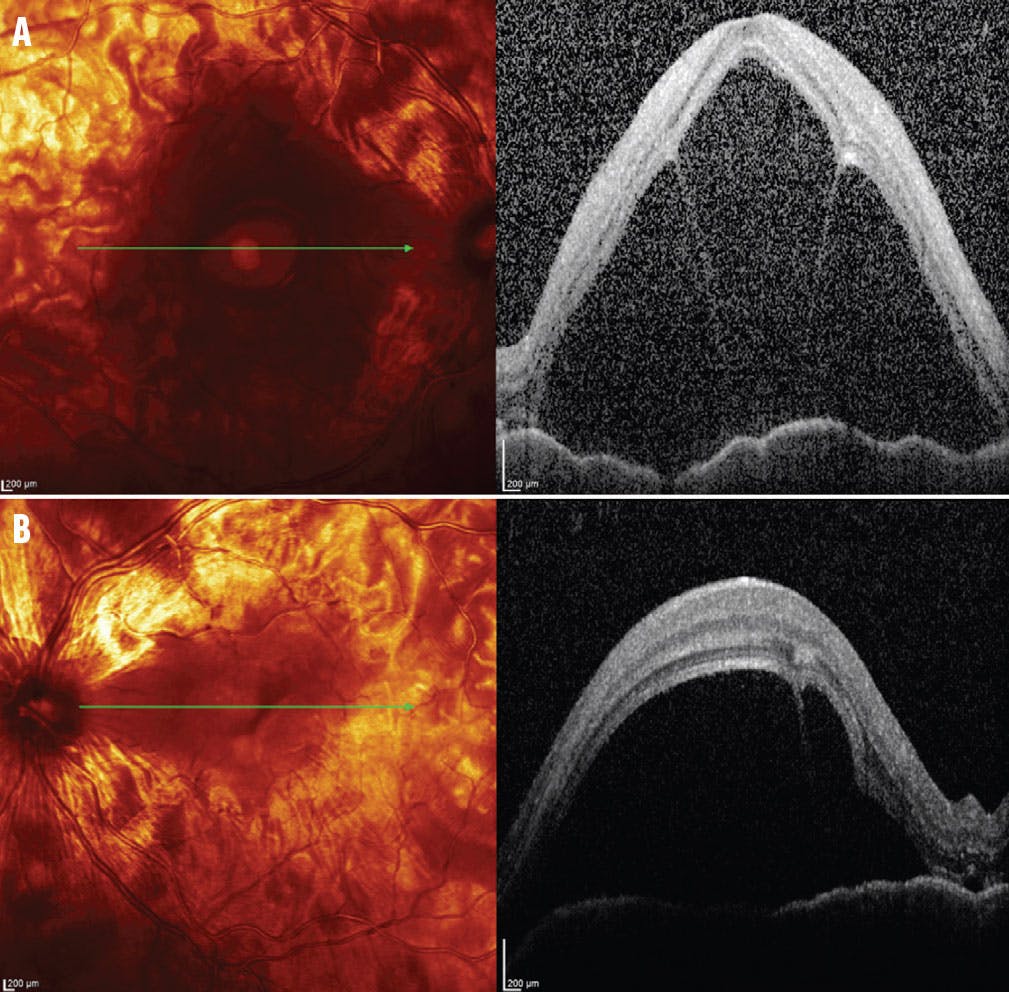
Figure 2. A 62-year-old White man with metastatic melanoma developed findings 2 weeks after starting nivolumab. Serous retinal detachment was noted in the right (A) and left (B) eye.
DIAGNOSIS AND TREATMENT OF TOXIC OCULAR MANIFESTATIONS
Diagnosis of immune-related ocular adverse events requires careful ophthalmic examination and review of multimodal imaging (Figures 1-3).4,14,18 In managing patients undergoing cancer treatment, clinicians must always consider each possible diagnosis, as these patients are at increased risk for infectious and metastatic disease. Slit-lamp examination can demonstrate inflammatory cells in the anterior or vitreous chamber. Fundus examination can reveal optic nerve involvement, retinal vascular disease, sensory detachments, or single or multiple yellowish areas of retinal elevation, all of which may be symmetrical. OCT is a necessary adjunct to confirm the presence and location of fluid and track disease progression over time and after treatment; choroidal thickening may also be visualized via OCT.
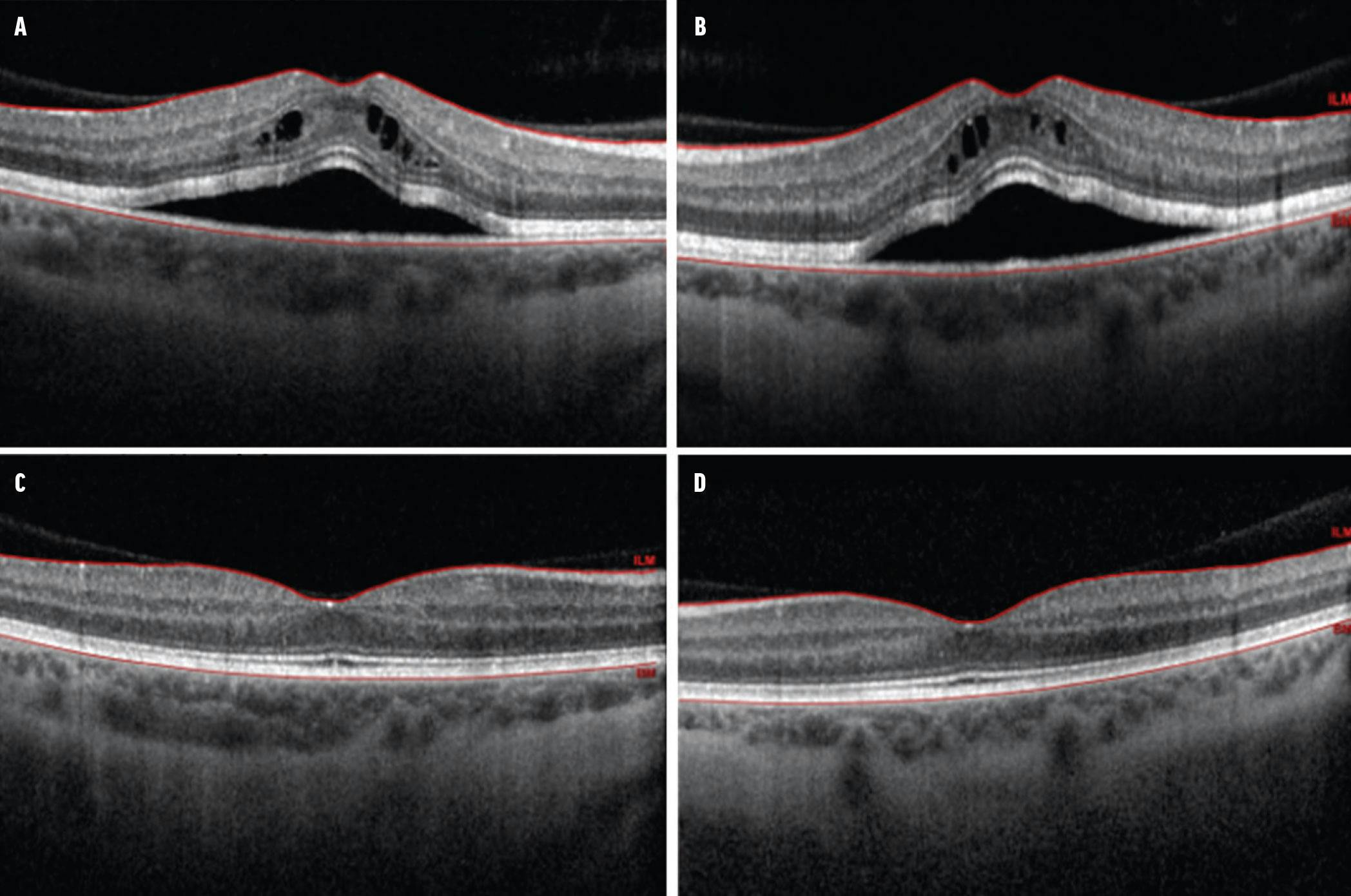
Figure 3. A 47-year-old White woman with a history of metastatic melanoma was on oral 960 mg vemurafenib twice per day and oral 60 mg cobimetinib daily for 2 days with onset of blurry vision and reports of seeing black circles. Her UCVA was 20/25 OD and 20/25 OS. OCT demonstrated subretinal fluid and intraretinal fluid in the macula in the right (A) and left (B) eye. Resolution of fluid in the right (C) and left (D) eye occurred 1 month after cessation of vemurafenib and cobimetinib treatment. Images courtesy of Diem Bui, MD.
Fluorescein angiography may fail to demonstrate a leak or reveal any vascular disturbance, as in the case of MEK-associated retinopathy. Alternatively, it may reveal multiple leaks, mimicking VKH in patients with CPI-associated retinopathy.
Patients starting anticancer treatments should be screened at baseline and then approximately 1 to 2 months after initiating therapy. If MEK inhibitor-associated retinopathy develops, it often resolves on its own without treatment. Steroid treatment (either topical, periocular, intravitreal, or oral) is the standard of care for patients experiencing significant adverse events and can often be administered concomitantly with cancer therapy.4
Discontinuation of the cancer agent may not be required if the ocular side effects are mild and easily treated. However, if ophthalmic side effects persist despite treatment and are vision-threatening, it is prudent to discuss with the patient’s oncologist the possibility of discontinuation of the cancer immunotherapy and consider the addition of other immunosuppressants, such as intravenous immunoglobulin.13
COORDINATED CARE
Although ocular immune-related adverse events are relatively rare side effects of newer cancer therapies, these patients should undergo baseline and regular ophthalmic examination. Close communication with oncology is recommended, with the overarching goal of extended disease-free survival with minimal ocular morbidity.
1. Li B, Chan HL, Chen P. Immune checkpoint inhibitors: basics and challenges. Curr Med Chem. 2019;26(17):3009-3025.
2. Marshall HT, Djamgoz MBA. Immuno-oncology: emerging targets and combination therapies. Front Oncol. 2018;8:315.
3. Rohaan MW, Wilgenhof S, Haanen JBAG. Adoptive cellular therapies: the current landscape. Virchows Arch. 2019;474(4):449-461.
4. Arora S, Surakiatchanukul T, Arora T, et al. Retinal toxicities of systemic anticancer drugs. Surv Ophthalmol. 2022;67(1):97-148.
5. Chen J, Wang J, Xu H. Comparison of atezolizumab, durvalumab, pembrolizumab, and nivolumab as first-line treatment in patients with extensive-stage small cell lung cancer: A systematic review and network meta-analysis. Medicine (Baltimore). 2021;100(15):e25180.
6. Davies M, Duffield EA. Safety of checkpoint inhibitors for cancer treatment: strategies for patient monitoring and management of immune-mediated adverse events. ImmunoTargets Ther. 2017;6:51-71.
7. Igarashi Y, Sasada T. Cancer vaccines: Toward the next breakthrough in cancer immunotherapy. J Immunol Res. 2020;2020:5825401.
8. Subbiah V, Baik C, Kirkwood JM. Clinical development of BRAF plus MEK inhibitor combinations. Trends Cancer. 2020;6(9):797-810.
9. Ascierto PA, Kirkwood JM, Grob JJ, et al. The role of BRAF V600 mutation in melanoma. J Transl Med. 2012;10(1):85.
10. Sullivan RJ, Flaherty KT. Resistance to BRAF-targeted therapy in melanoma. Eur J Cancer. 2013;49(6):1297-1304.
11. Robert C, Karaszewska B, Schachter J, et al. Improved overall survival in melanoma with combined dabrafenib and trametinib. N Engl J Med. 2015;372(1):30-39.
12. Davies H, Bignell GR, Cox C, et al. Mutations of the BRAF gene in human cancer. Nature. 2002;417(6892):949-954.
13. Bindiganavile SH, Bhat N, Lee AG, Gombos DS, Al-Zubidi N. Targeted cancer therapy and its ophthalmic side effects: a review. J Immunother Precis Oncol. 2021;4(1):6-15.
14. Fortes BH, Tailor PD, Dalvin LA. Ocular toxicity of targeted anticancer agents. Drugs. 2021;81(7):771-823.
15. Qian Y, Eppley S, Baer D, Melles RB. Characteristics of ocular inflammatory side effects associated with immune checkpoint inhibitors in a Northern California population. Ocul Immunol Inflamm. 2023:1-7.
16. Choe CH, McArthur GA, Caro I, Kempen JH, Amaravadi RK. Ocular toxicity in BRAF mutant cutaneous melanoma patients treated with vemurafenib. Am J Ophthalmol. 2014;158(4):831-837.e2.
17. Larkin J, Ascierto PA, Dréno B, et al. Combined vemurafenib and cobimetinib in BRAF-mutated melanoma. N Engl J Med. 2014;371(20):1867-1876.
18. Fortes BH, Tailor PD, Dalvin LA. More than meets the eye: the ocular toxicities accessory to anticancer therapies. Future Oncol. 2023;19(3):189-191.


