


A 49-year-old female patient presented with a long-standing history of decreased vision and night blindness since childhood. Past medical history was unremarkable, and the patient’s family history revealed consanguinity, with parents who were cousins. Two of the patient’s first cousins also experienced similar cases of visual impairment, as well as another distant relative.
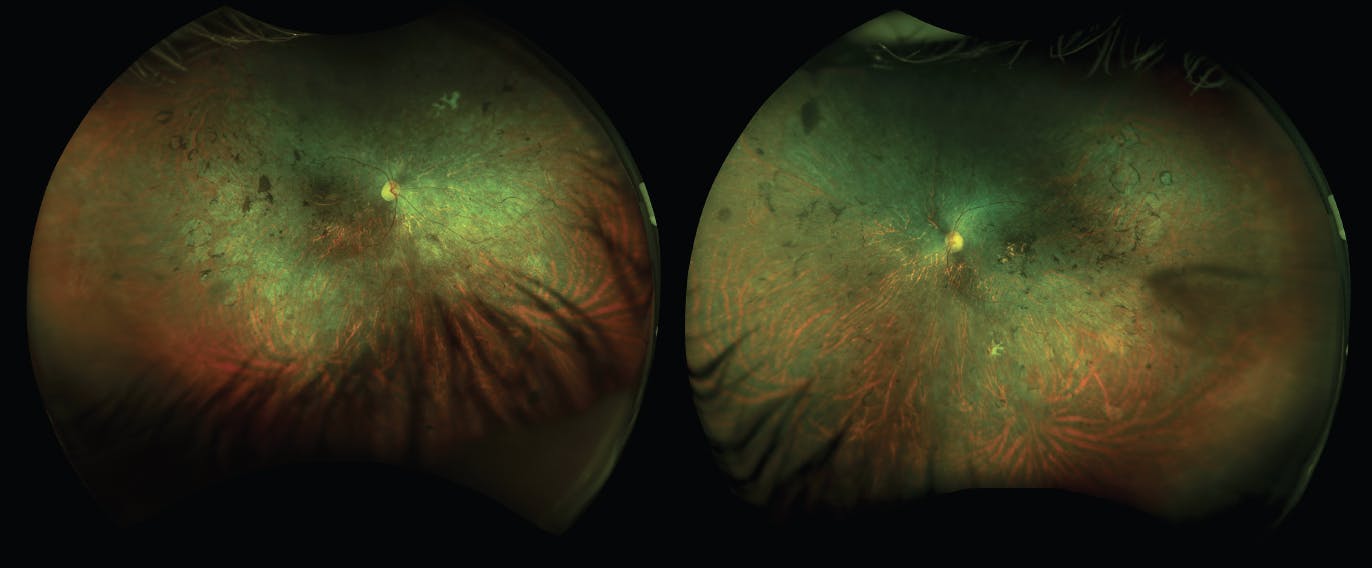
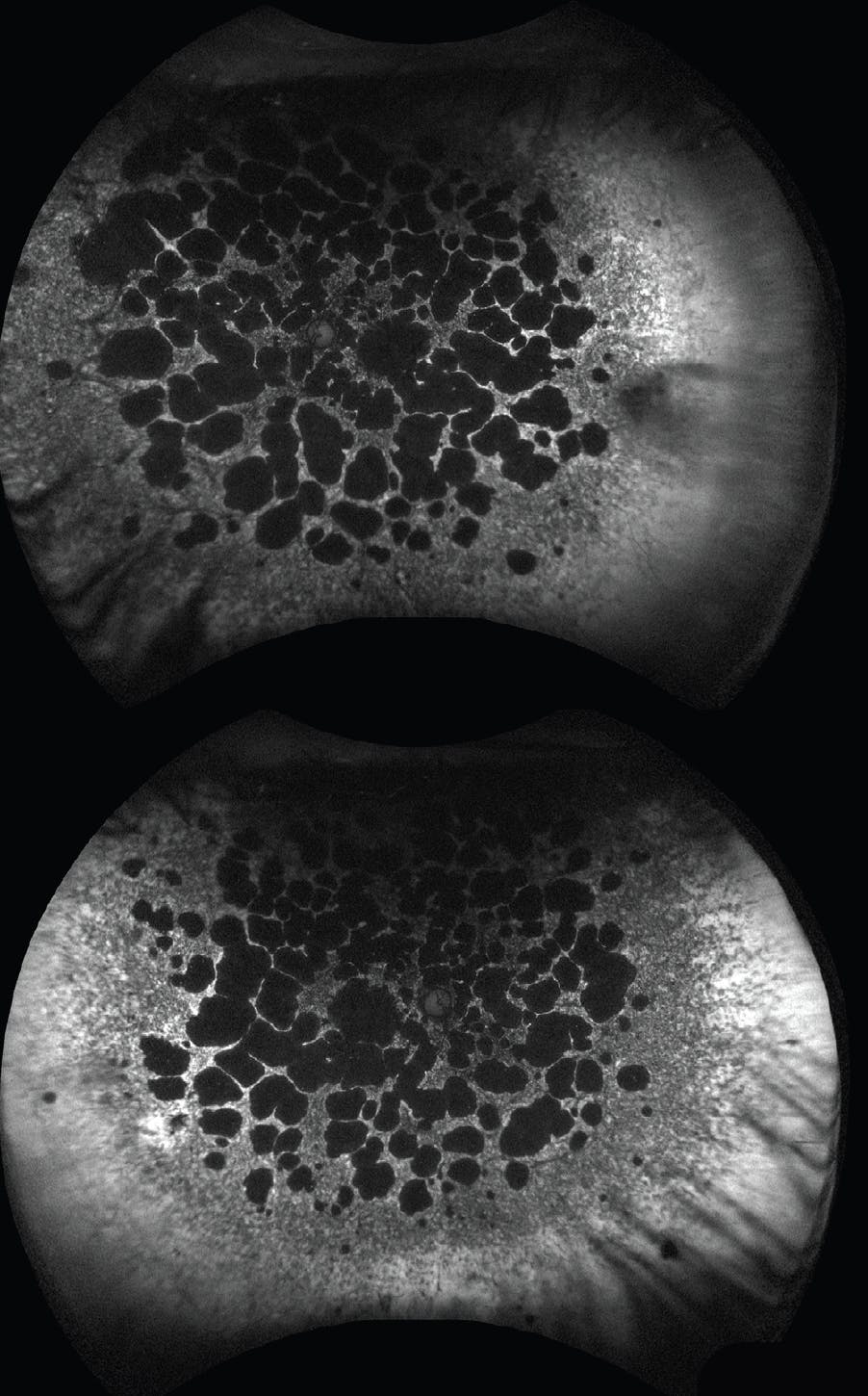
Her BCVA was counting fingers OU. Fundoscopy revealed a bilateral pale optic disc, diffuse retinal pigment epithelial degeneration, and pigment clumping in each eye (Figure 1). Fundus autofluorescence showed symmetric demarcated areas of atrophy, mostly nonconfluent, throughout the posterior pole without peripapillary sparing (Figure 2).
GENETIC TESTING
The patient had been diagnosed with Stargardt disease in her early life, before coming to our service. She was referred to our department’s ocular genetic specialist, who conducted a genetic workup for the first time. Testing using a next-generation sequencing 190 gene panel identified a specific pathogenic variant in the ABCA4 gene, likely in homozygosity. The variant has been associated with various retinal conditions, including Stargardt disease, cone-rod dystrophy, retinitis pigmentosa, and retinal dystrophy. The patient was advised to avoid vitamin A supplementation and to limit sun exposure by using sunglasses. She was also referred to a low vision consultation.
If you have images you would like to share, email Manish Nagpal, MS, FRCS, FASRS, at drmanishnagpal@yahoo.com.
Note: Photos should be 400 dpi or higher and at least 10 inches wide.


