



AT A GLANCE
- Photobiomodulation (PBM) is a promising new therapeutic approach for the treatment of dry AMD and other ocular diseases.
- PBM interacts with subcellular processes to boost the energy output through mitochondrial pathways,
- A randomized clinical trial evaluated multiwavelength PBM in patients with dry AMD and achieved statistically significant improvement in visual acuity gain through 24 months.
Photobiomodulation (PBM) is a photostimulation therapy delivered using light-emitting diodes at targeted wavelengths to enhance cellular function. In the setting of disease, normal metabolic processes may be interrupted or corrupted and may benefit from additional energetic support to encourage restoration of function. PBM is a minimally invasive method of stimulating mitochondrial energy production to help restore cellular processes and produce observable clinical benefits.
PBM therapy has been studied for decades in many models of biological stress and injury and has shown positive benefits for a variety of musculoskeletal, neurological, inflammatory, and painful indications and, more recently, in ophthalmic disease.1-3 Over the past decade, more than 30 published studies have explored the value of PBM for ocular conditions. Here, I share the mechanisms of action and recent clinical trial findings that demonstrated the positive effects of multiwavelength PBM in ophthalmology.
PBM MECHANISMS OF ACTION
The primary mechanism of action for PBM appears to affect bioenergetic output, although other functions may also be affected. Mitochondria are the organelles in the cell that are critical for energy production, maintaining cellular function, and controlling cell survival. The retina is one of the most energy-demanding organs in the body, with energy requirements that exceed those of the brain. Retinal cells—including the retinal pigment epithelium (RPE), retinal ganglion cells, and photoreceptors—have high concentrations of mitochondria, and considering their intense energy demand, mitochondrial dysfunction can have immediate and devastating effects on retinal health.4
As we age, retinal cells show a functional decline in mitochondrial energy output, which contributes to cellular waste buildup, hampering function.4 PBM is absorbed by mitochondrial cytochrome c oxidase in the electron transport chain, thus stimulating energy production in the cell. Increased energy availability promotes intrinsic cell functions that aid in cellular repair processes and reduce potential further cell dysfunction and damage.5-7
Mechanistically, the ability of PBM to directly influence energy generation and subsequent bioenergetic output of the cell is hypothesized to underlie improved clinical and anatomical outcomes in degenerative disease states, such as AMD (Figure 1). The unique and direct activity of PBM at the mitochondrial level provides an appealing interventional strategy to potentially improve mitochondrial dysfunction at early signs of disease.
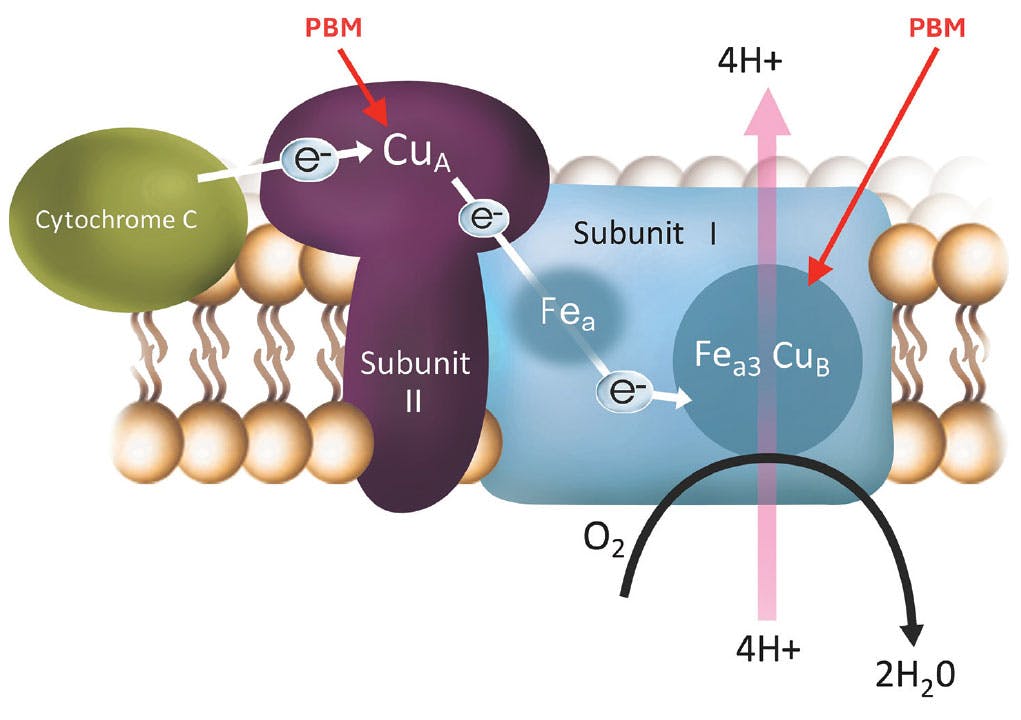
Figure 1. Photobiomodulation therapy targets photo-acceptors in the mitochondria to improve bioenergetic output. Image courtesy of LumiThera.
While some ocular PBM studies have targeted ocular conditions using single wavelength approaches, others, such as those investigating the Valeda Light Delivery System (LumiThera), employ yellow (590 nm), red (660 nm), and near-infrared (850 nm) wavelengths. This multiwavelength approach targets several enzyme sites to stimulate mitochondrial output and modify degenerative processes. This combination offers multiple opportunities for engagement in the cellular system, improving the odds of enhancing cellular outcomes and subsequent clinical benefits.8,9
THE CLINICAL TRIAL
The LIGHTSITE III clinical trial evaluated the long-term safety and efficacy of multiwavelength PBM treatments in patients with early and intermediate dry AMD (Figure 2). In this 24-month, double-masked, prospective study, participants were randomly assigned to PBM or sham treatment groups (2:1) and received one series of treatment (nine sessions delivered three times a week over 3 to 5 weeks) every 4 months.
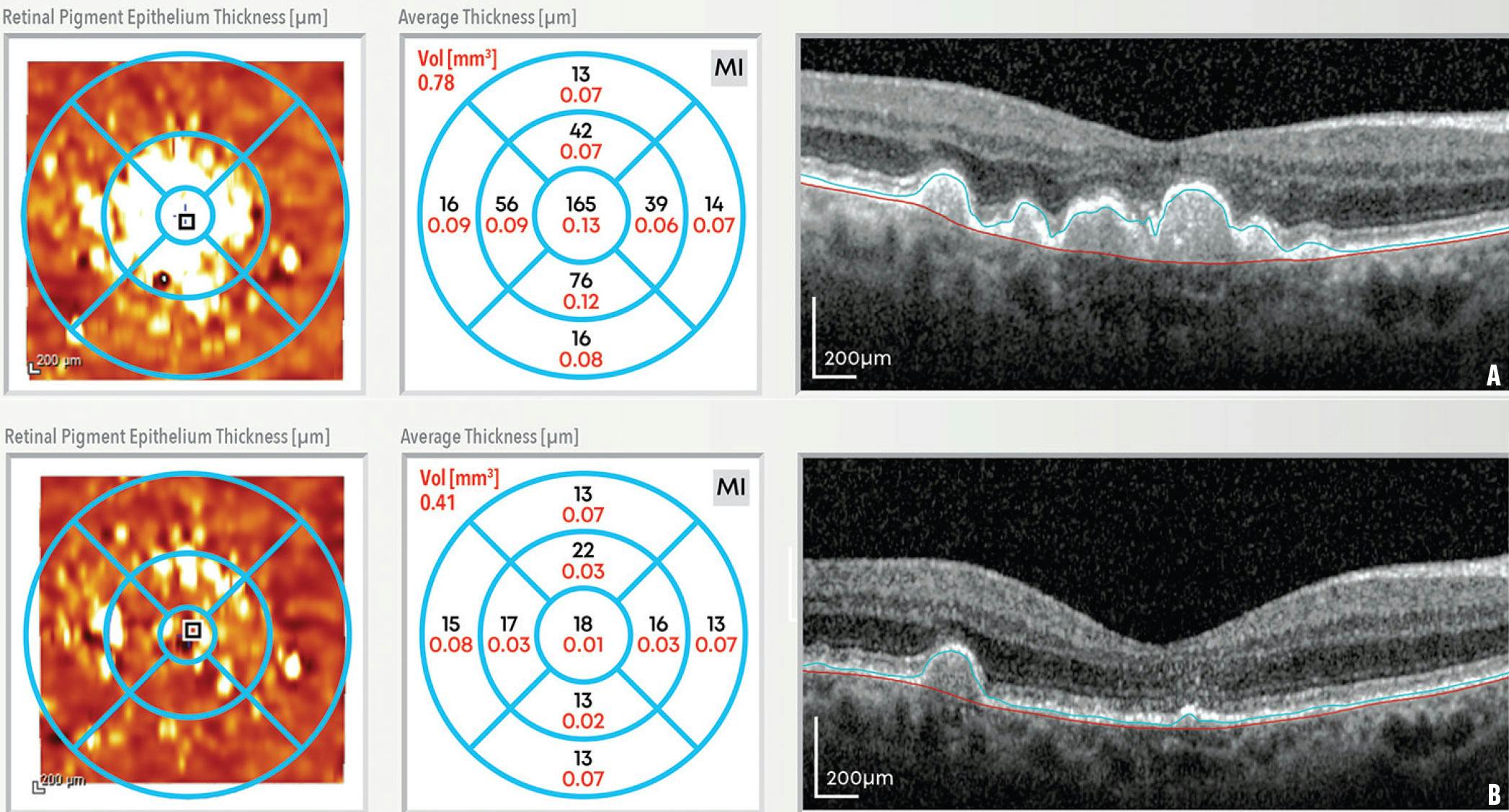
Figure 2. This patient, who participated in the LIGHTSIGHT study, experienced a reduction in drusen from baseline (A) over 12 months following PBM treatment (B). Image courtesy of LumiThera.
The study met the primary visual acuity efficacy endpoint at month 13 (after four series of PBM treatment) with a statistically significant difference between the PBM and sham treatment groups (P = .02) and a gain of 5.4 letters in the PBM group, which was further increased to 5.9 letters at month 24 (P < .0001). Participants showed improvements in quality of life and anatomical outcomes following PBM treatment.
A reduction in the progression of AMD to later stages of the disease was observed, as well as a favorable safety profile with no signs of phototoxicity.10,11
POTENTIAL CLINICAL IMPLICATIONS
PBM is not a cure for AMD, and retreatment is necessary to maintain the benefits and potentially further enhance the effects over time. While most patients saw beneficial effects after one series of treatment, clinical benefits in visual acuity were more pronounced at 24 months after six series of treatments. The extension study currently underway will add additional long-term data on the effect of PBM over time.
The positive findings from the LIGHTSITE III trial in AMD align with published reports showing the benefit of PBM in other ocular indications, such as diabetic macular edema, retinitis pigmentosa, Stargardt disease, myopia, and retinopathy of prematurity.12-20 With the growing evidence supporting PBM therapy in ophthalmology, further research is underway to develop diagnostics that can rapidly detect response and help clinicians tailor treatment regimens for individual patients.
1. Stevens AR, Hadis M, Milward M, et al. Photobiomodulation in acute traumatic brain injury: a systematic review and meta-analysis. J Neurotrauma. 2023;40(3-4):210-227.
2. Zhang C-X, Lou Y, Chi J, Bao X-L, Fan B, Li G-Y. Considerations for the use of photobiomodulation in the treatment of retinal diseases. Biomolecules. 2022;12(12):1811.
3. Ron C, Brunner A, Barbero M, Clarys P, Taeymans J. Effects of low-level laser therapy on pain in patients with musculoskeletal disorders: a systematic review and meta-analysis. Euro J Phys Rehab Med. 2017;53(4):603-610.
4. Eells JT. Mitochondrial dysfunction in the aging retina. Biology (Basel). 2019;8(2):31.
5. de Freitas LF, Hamblin MR. Proposed mechanisms of photobiomodulation or low-level light therapy. IEEE J Sel Top Quantum Electron. 2016;22(3):7000417.
6. Karu T. Mitochondrial mechanisms of photobiomodulation in context of new data about multiple roles of ATP. Photomed Laser Surg. 2010;28(2):159-160.
7. Karu T. Primary and secondary mechanisms of action of visible to near-IR radiation on cells. J Photochem Photobiol B. 1999;49(1):1-17.
8. Ball KA, Castello PR, Poyton RO. Low intensity light stimulates nitrite-dependent nitric oxide synthesis but not oxygen consumption by cytochrome c oxidase: Implications for phototherapy. J Photochem Photobiol B. 2011;102(3):182-191.
9. Wong-Riley MT, Liang HL, Eells JT, et al. Photobiomodulation directly benefits primary neurons functionally inactivated by toxins: role of cytochrome c oxidase. J Biol Chem. 2005;280(6):4761-471.
10. Munk MR, Gonzalez V, Boyer DS, et al. LIGHTSITE III 24-month analysis: evaluation of multiwavelength photobiomodulation in dry age-related macular degeneration using the LumiThera Valeda Light Delivery System. Invest Ophthalmol Vis Sci. 2023;64:5059.
11. Boyer D, Hu A, Warrow D, et al. LIGHTSITE III: 13-month efficacy and safety evaluation of multiwavelength photobiomodulation in nonexudative (dry) age-related macular degeneration using the LumiThera Valeda Light Delivery System. Retina. 2024;44(3):487-497.
12. Kent AL, Abdel-Latif ME, Cochrane T, et al. A pilot randomised clinical trial of 670 nm red light for reducing retinopathy of prematurity. Pediatr Res. 2020;87(1):131-136.
13. Scalinci SZ, Valsecchi N, Pacella E, Trovato Battagliola E. Effects of photo-biomodulation in Stargardt disease. Clin Ophthalmol. 2022;16:85-91.
14. Casson RJ, Wood JPM, Ao J, et al. Cone photoreceptor preservation with laser photobiomodulation in murine and human retinal dystrophy. Clin Transl Med. 2022;12(2):e673.
15. Ivandic BT, Ivandic T. Low-level laser therapy improves vision in a patient with retinitis pigmentosa. Photomed Laser Surg. 2014;32(3):181-184.
16. Shen W, Teo KYC, Wood JPM, et al. Preclinical and clinical studies of photobiomodulation therapy for macular oedema. Diabetologia. 2020;63(9):1900-1915.
17. Eells JT, Gopalakrishnan S, Connor TB, et al. 670 nm photobiomodulation as a therapy for diabetic macular edema: a pilot study. Invest Ophthalmol Vis Sci. 2017;58:932.
18. Tang J, Herda AA, Kern TS. Photobiomodulation in the treatment of patients with non-center-involving diabetic macular oedema. Br J Ophthalmol. 2014;98(8):1013-1015.
19. Ahadi M, Ebrahimi A, Ramin S. Long-term outcome of photobiomodulation for diabetic macular edema: a case report. Photobiomodul Photomed Laser Surg. 2022;40(11):742-746.
20. Kaymak H, Munk MR, Tedford SE, et al. Non-invasive treatment of early diabetic macular edema by multiwavelength photobiomodulation with the Valeda Light Delivery System. Clin Ophthalmol. 2023;17:3549-3559.


_1773249222.png?auto=compress,format&w=75)


