


Social Media and Retina
Henry C. Skrehot, BA; Amer Alsoudi, MD; and Ehsan Rahimy, MD
Want to learn more about navigating social media as a retina practice owner or manager? See the companion article, Social Media and Retina.
To gather insights on how to effectively use social media to engage with patients, colleagues, and the general public, Retina Today reached out to Edmund Tsui, MD, MS, coauthor of a paper published in Clinical & Experimental Ophthalmology1 that explored the effect of social media on ophthalmic practice and education.
RETINA TODAY (RT): ARE CERTAIN PLATFORMS OR TYPES OF CONTENT MORE EFFECTIVE FOR PATIENT OUTREACH?
Dr. Tsui: Based on our research and our own anecdotal experience, the most popular platforms tend to be the more visual platforms. Given that ophthalmology is a very visual medical specialty, platforms that place an emphasis on short-form videos and images such as Instagram, TikTok, and even long-form videos, like YouTube, have a large user base. X/Twitter only allows shorter post lengths, so sometimes it’s not as easy to convey complex information to the public. The platforms that are better suited for video content tend to be most popular with patients.
I use X/Twitter more to engage with other ophthalmologists and medical specialties, as well as to follow links to research articles to keep up to date with happenings in our field (Figure 1).

Figure 1. This X/Twitter post by Retina Today is an example of how social media can be used to engage with eye care professionals about clinical issues, research and industry updates, and more.
RT: WHAT ARE THE BENEFITS AND CHALLENGES OF USING SOCIAL MEDIA PROFESSIONALLY?
Dr. Tsui: I use X/Twitter and Instagram professionally. I think sometimes it’s hard to start out using many different social media platforms. I would say pick a platform or two that you’re comfortable with. Although you don’t have to use all the platforms at once, you do want to be consistent with your branding and image, including your username or handle—these should be consistent between platforms so it’s easier to find your profile. Your profile should also be consistent and reflect your professional title(s), and your profile picture should generally be the same across the platforms, again, so that patients can recognize you easily. I think that’s the simplest and most important piece of advice to keep in mind when getting started on social media, which can be a very intimidating task.
RT: WHAT ARE SOME CONSIDERATIONS FOR MINDFULLY ENGAGING WITH THE PUBLIC?
Dr. Tsui: Of course, the most important thing is making sure you’re protecting your patients’ privacy and remaining compliant with HIPAA regulations whenever you post content online, such as retinal images from an interesting case.
Beyond confidentially considerations, it’s important to consider that, once you post something on the internet, even if you only intended it for your colleagues, everyone can see that content—your patients, your boss, your organization, and your university’s leadership. Many of these individuals won’t be fellow ophthalmologists and may have very different interpretations of the content you post. In other words, be wary of the perspective that you have online because your content can be interpreted differently by different parties.
A related aspect to keep in mind is talking to others about new research findings (Figure 2). Many physicians and researchers post about their late-breaking studies, and anyone can comment, which is nice because it creates interaction online. It doesn’t necessarily have to be in real-time, but certainly you’re able to post and interact with others on new research and share your thoughts, which is a benefit of social media. But again, all those posts and comments that you share are also visible to the public, so if you’re criticizing a study or providing your own opinion, understand that it may not be completely filtered or interpreted by others in the way you meant it.
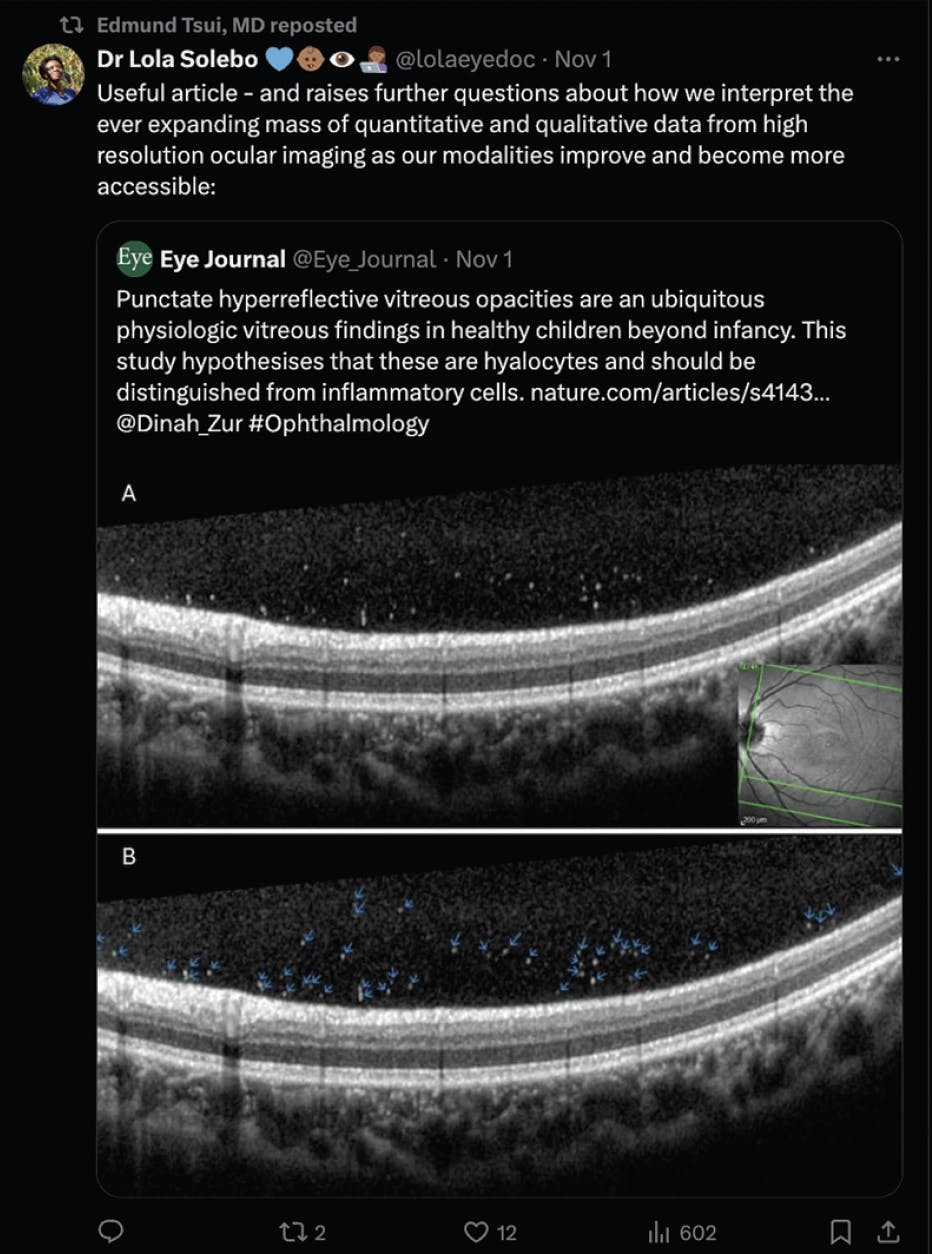
Figure 2. This X/Twitter post, retweeted by Dr. Tsui, is a good example of how to mindfully engage with content about new research findings.
RT: DO YOU THINK AI WILL AFFECT HOW EYE CARE PROVIDERS USE SOCIAL MEDIA?
Dr. Tsui: That’s an interesting question. There are many AI tools that help users create content, so there’s certainly the possibility for it to streamline your posts or help you generate ideas. Ultimately, the best content is still going to be that which is user-generated. I think the ones that are AI-generated end up coming across very generic, as they’re not able to replicate the unique voice and branding that each user brings to their or their practice’s social media platform.
Another aspect is that with AI, there’s a lot of misinformation out there, so using that to help generate content about complex topics is probably not the best idea. AI often comes up with facts and ideas and references from unreliable sources, especially if you’re using ChatGPT and other publicly accessible platforms. It may give you content that can sound quite true to the layperson but on expert review may be completely false or only partially accurate. So, you really have to pay close attention to what is being generated by AI.
RT: DO YOU HAVE ANY TIPS TO MAKE USING SOCIAL MEDIA MORE EFFICIENT?
Dr. Tsui: It’s one of those things where you do have to devote some time to it, if you’re truly interested in creating a strong social media presence. On the flip side, you can also create an account, put together a quick profile and image, and then just consume social media. You don’t necessarily have to post content, especially not right away. There are a lot of users on TikTok, X/Twitter, and Instagram who don’t necessarily post their own content but are still reading and engaging with different posts to keep up with conversations about eye care. I think that’s still extremely beneficial.
1. Nguyen AAK, Tsui E, Smith JR. Social media and ophthalmology: a review. Clin Exp Ophthalmol. 2022;50(4):449-458.


