



Social media is a significant source of information exchange for people of all ages and backgrounds. Social media influencers are individuals who cultivate large followings and can sway the opinions and/or actions of their audience based on the content of their posts. In recent years, physicians are increasingly using social media to communicate with patients on a broader scale, interact with colleagues, and disseminate research advances.1
Ophthalmology, a field with extensive potential for content creation driven by multimodal diagnostic imaging and intraoperative surgical videos, has started to expand its reach in social media. The AAO Instagram page, for example, has increased in popularity to include more than 55,000 followers and shares content directed toward physicians and patients (Figure 1).2 This suggests social media is a powerful communication tool that all ophthalmologists, including retina specialists, can potentially harness to improve their professional outreach (see Advice for Getting Started to learn more about using social media for patient outreach).
In this article, we share findings regarding how certain types of content perform on various social media platforms.
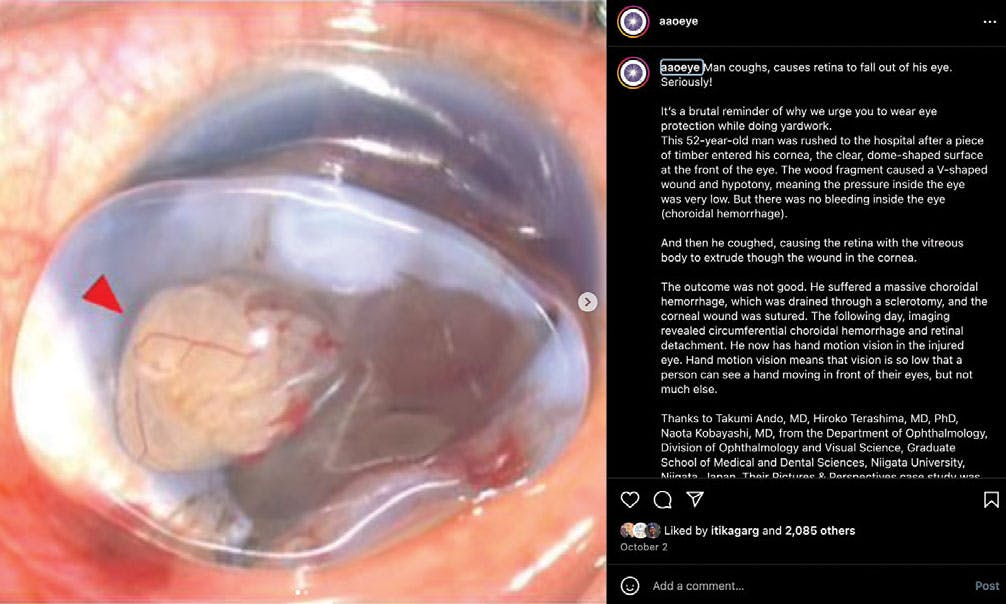
Figure 1. In this Instagram post about a case of ocular trauma, which received > 2,000 likes, the AAO cautions its audience about the importance of using appropriate eye safety gear.
TRENDING TOPICS
We investigated the relationship between vitreoretinal surgery (ie, retinal detachment repair) and social media (ie, Instagram).3 Of the nearly 1,800 posts analyzed, we found that approximately 40% were made by patients. The most common topic was resuming activities of daily living and postoperative rehabilitation. Interesting trends in how patients perceived their pre- and postoperative experiences emerged: Most posts made in the postoperative period had a positive tone (P < .001), while negative posts were more likely to be made in the preoperative period (P < .001). This may imply that, while the perceived experience of retinal detachment repair can be anxiety-provoking, the subsequent management and treatment of retinal detachment is usually an overall positive experience for patients. It is important for eye care providers to recognize that patients are having these conversations on social media and that such interactions may play a significant role in influencing patients’ perspectives on decisions about their care.
Optometry Versus Ophthalmology
While our research found that most posts came from patients, the next largest contributions came from ophthalmologists (approximately 30%), followed by optometrists (approximately 10%). We also found that ophthalmologists and optometrists differed in their target audience; ophthalmologists were more likely to post for colleague education purposes (P < .001; Figure 2), while optometrists were more likely to post for patient education purposes (P < .001). The importance of promoting collegiality and medical education online among our peers cannot be overstated, but there is a clear missed opportunity to engage with a broader audience of patients on the part of each specialty, but especially retina. Patients sharing their stories of recovery after retinal detachment repair often receive substantial numbers of likes and comments per post, suggesting there is a strong social engagement and interest in these topics in online communities. We would be remiss not to seize this opportunity to engage more with our patients and ensure that the information they are sharing is from reliable sources.
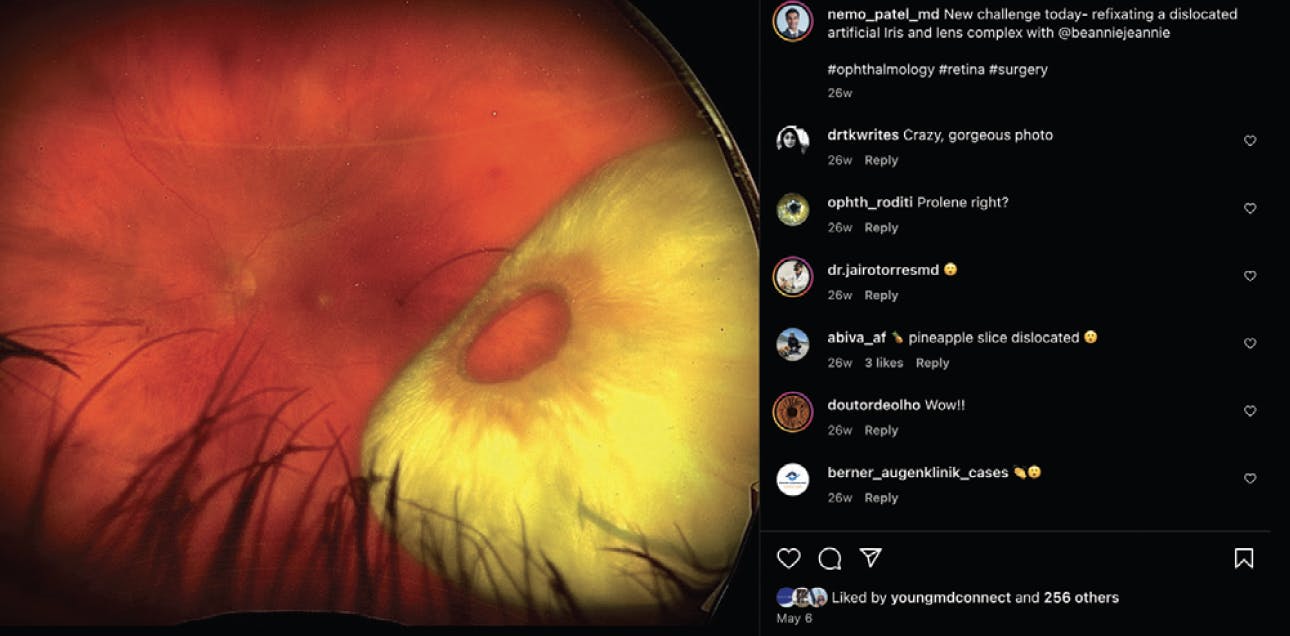
Figure 2. This retina specialist shared a challenging case of a dislocated IOL, garnering comments and engagement from fellow physicians.
Getting Personal
To this point, several studies have reported that social media improves patient satisfaction by fostering support and allowing rapid dissemination of information.4 Our study highlighted that posts made by physicians had the highest engagement (ie, likes and comments) compared with posts made by optometrists and patients. This suggests that physicians have a larger, more engaged audience, providing an ideal opportunity for retina specialists to contribute their voices to the topics that patients care about the most. Especially with increasing concerns of misinformation online, the strong engagement physicians have on social media should be used to promote the sharing of reliable health-related content.5
FIND YOUR VOICE ONLINE
Retina specialists have an opportunity to better support their patients and practices by using social media as a form of outreach to understand needs and set expectations before, during, and after surgery.
1. Ventola CL. Social media and health care professionals: benefits, risks, and best practices. P T Peer-Rev J Formul Manag. 2014;39(7):491-520.
2. Tsui E, Rao RC. Navigating social media in #ophthalmology. Ophthalmology. 2019;126(6):779-782.
3. Alsoudi AF, Rayess N, Khan S, Koo E, Rahimy E. Social media and retinal detachment: perspectives of providers and patients on Instagram. Ophthalmic Surg Lasers Imaging Retina. 2021;52(7):391-395.
4. Merolli M, Gray K, Martin-Sanchez F. Health outcomes and related effects of using social media in chronic disease management: a literature review and analysis of affordances. J Biomed Inform. 2013;46(6):957-969.
5. Wang Y, McKee M, Torbica A, Stuckler D. Systematic literature review on the spread of health-related misinformation on social media. Soc Sci Med 1982. 2019;240:112552.


