





The 17th Asia-Pacific Vitreo-Retina Society (APVRS) Congress, held November 22-24, 2024, in Singapore, was a successful scientific gathering dedicated to the theme of Transforming Retinal Disease Management With Technology. The congress attracted more than 2,000 delegates from more than 40 countries and featured an array of insightful lectures. Here, we summarize some of the hot topics discussed.
LATE-BREAKING REPORTS
Advances in the latest clinical trials were reported in the late-breaking session, with several innovative treatment strategies taking center stage. Nadia K. Waheed, MD, MPH, and Gemmy Cheung, MBBS, FRCOphth, FAMS, MCI, presented positive results from two trials evaluating tyrosine kinase inhibitors (TKIs), small molecules that block all VEGF signaling and are delivered with sustained release platforms. Wet AMD patients treated with OTX-TKI (Axpaxli, Ocular Therapeutix) demonstrated > 80% reduction in treatment burden compared with bimonthly 2 mg aflibercept (Eylea, Regeneron), while patients with severe nonproliferative diabetic retinaopthy (DR) showed a 23.1% improvement in DR severity score at 48 weeks in the OTX-TKI treated group compared with sham. In the DAVIO 2 trial for patients with wet AMD, EYP-1901 (Duravyu, EyePoint Pharmaceuticals) demonstrated maintenance of vision with an 85% reduction in treatment burden compared with bimonthly aflibercept.
Gavin S. Tan, MBBS, MMED, FRCSEd(Ophth), PhD, and Xiaoling Liang, MD, PhD, shared positive results from gene therapy for various indications. The phase 2 LUNA study reported 79% of patients with wet AMD receiving Ixo-vec (ixoberogene soroparvovec, Adverum Biotechnologies) required no additional injections while maintaining visual stability. Results from the clinical trial investigating a gene therapy delivering LX101 (vortigene neparvovec, Innostellar Biotherapeutics) for biallelic RPE65 mutation-associated retinal dystrophy showed that more than 50% of treated patients experienced a clinically significant improvement in visual acuity after 1 year.
In addition, Marion Munk, MD, discussed ISTH0036 (Isarna Therapeutics), a TGF-β2 blocking antisense designed to address fibrosis in retinal diseases, and Michael Singer, MD, shared information on suprachoroidal drug delivery with Xiphere (Bausch + Lomb). Lastly, Se Joon Woo, MD, PhD, explored novel surgical strategies with HyperVit (Alcon) and Advanced UltraVit (Alcon) vitrectomy probes.
These advances signal a paradigm shift toward patient-centered approaches to alleviate the logistical burdens of current treatment regimens.
NEW DATA ON POLYPOIDAL CHOROIDAL VASCULOPATHY AND GEOGRAPHIC ATROPHY
At this year’s congress, two new approaches related to the management of polypoidal choroidal vasculopathy (PCV) were discussed.
The multicenter phase 3b/4 SALWEEN study, presented by Dr. Cheung, is evaluating the efficacy, safety, and durability of faricimab (Vabysmo, Genentech/Roche) in patients with PCV across Asian countries. At 16 weeks, interim results from 135 macular PCV patients showed BCVA improvement of 7.8 letters, central subfield thickness reduction of 144.6 µm, and subretinal fluid resolution in 80.3% of cases. In addition, 51% of baseline polypoidal lesions achieved complete regression. Faricimab demonstrated a favorable safety profile, with no confirmed cases of retinal vasculitis.
Additionally, Kelvin Teo Yi Chong, MBBS, PhD, provided data on aflibercept monotherapy versus aflibercept combined with reduced-fluence photodynamic therapy for treating PCV. He noted that, while both arms achieved mean visual gains of more than 2 lines, the combination approach demonstrated enhanced anatomic outcomes in polyp closure at week 52, suggesting a synergistic effect between the two treatments. This dual therapy strategy offers a potential alternative for cases for which monotherapy may not achieve optimal lesion control.
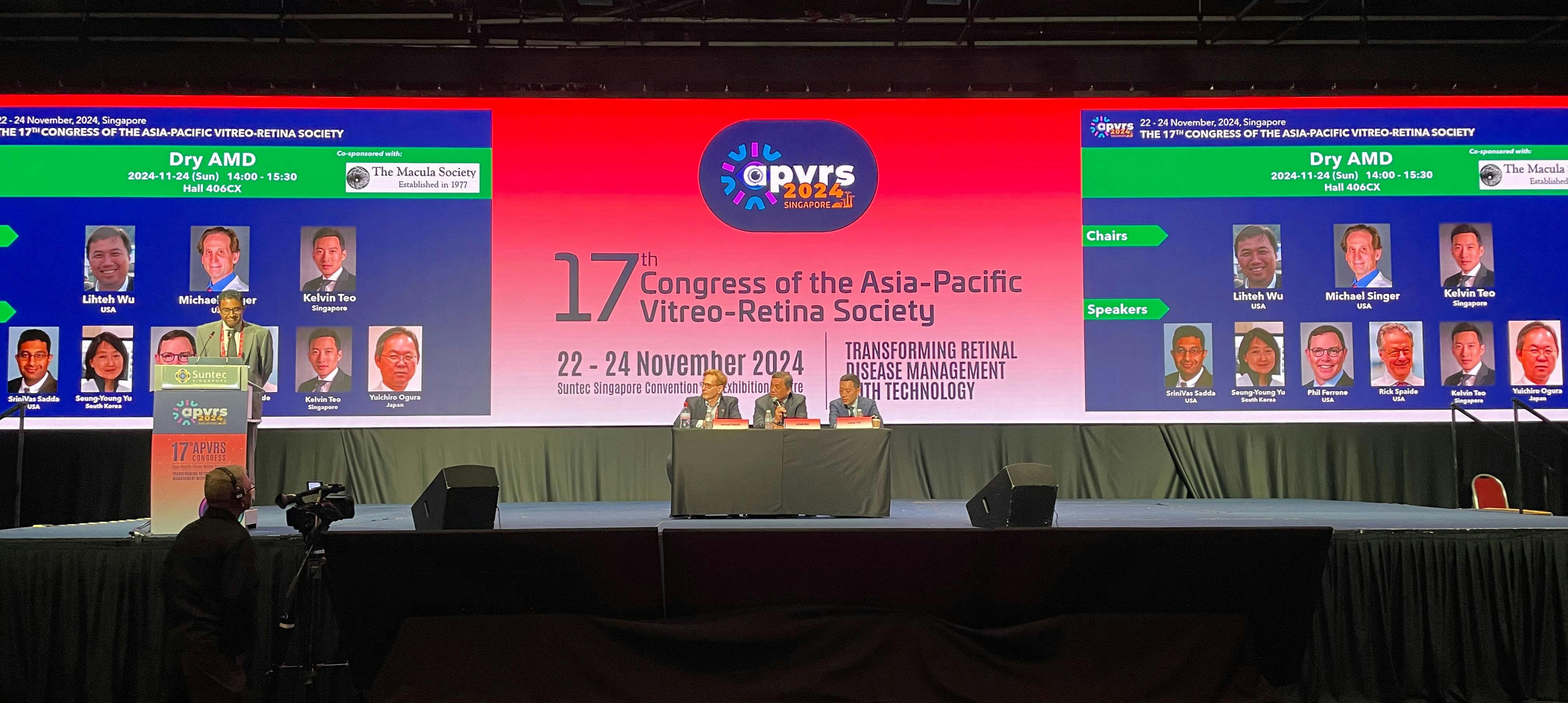
Figure 1. Dr. Sadda (left) spoke during the Dry AMD session, which was co-hosted by the Macula Society and chaired by Dr. Singer; Lihteh Wu, MD; and Dr. Teo.
Therapy for geographic atrophy (GA) was another hot topic. During the Dry AMD session, which was co-hosted by the Macula Society, experts discussed the best imaging methods to diagnose and monitor GA progression (Figure 1). SriniVas R. Sadda, MD, gave a comprehensive overview of the advantages and disadvantages of common imaging modalities and how they complement each other. The efficacy and safety of C3 and C5 inhibitors was debated between Philip J. Ferrone, MD, and Richard F. Spaide, MD, highlighting the importance of patient selection and counselling. Finally, variability of GA phenotypes and progression patterns in Asian populations was highlighted by Dr. Teo and Seung-Yoon Yu, MD. Interestingly, the role of the choroid and potential differences in choroidal morphology in the development of GA were discussed by both speakers.
NEW DEVELOPMENTS IN IRD MANAGEMENT
The clinical evaluation of and therapeutic advances for inherited retinal diseases (IRDs) were explored in several sessions. Experts shared promising clinical trial data and insights into side effect profiles from trials.
The latest advances in gene therapy for IRDs showcase innovative approaches that hold transformative potential for treating these challenging conditions. In addition, advances in retinal gene therapy delivery techniques were explored, underscoring both progress and complexities. For example, Su Xinyi, PhD, MMed, MBChir, addressed cell-based therapies that have seen significant developments, as well as ongoing efforts to refine their efficacy and address associated challenges. Michiko Mandi, MD, PhD, discussed cutting-edge research into allogeneic iPSC-derived retinal organoid sheet transplantation, which offers a promising avenue for treating conditions, such as retinitis pigmentosa.
Together, these advancements highlight a rapidly evolving landscape in IRD therapy, driven by innovative clinical and translational research.
MANAGEMENT OF PATHOLOGIC MYOPIA
Several presentations centered on the latest in imaging and diagnostics for pathologic myopia. Insights into the role of the choroid, sclera, and vitreous were shared, with a deeper dive into innovations such as polarization-sensitive OCT by Leila Eppenberger, MD, and scleral imaging by Kyoko Ohno-Matsui, MD, PhD. In addition, Quan V. Hoang, MD, PhD, shared how biomechanical modeling can offer predictive insights into eye shape progression, while Toshihide Kurihara, MD, PhD, discussed sclera-targeting strategies that aim to slow disease progression.
For recurrent macular hole retinal detachment, experts presented on macular buckling, amniotic membrane grafts with heavy silicone oil, and refined preretinal membrane management. Surgical challenges such as RD and giant retinal tears in high myopia were addressed by Manish Nagpal, MD, with a look at tailored techniques such as perfluorocarbon liquid injection and careful handling to prevent complications, including bleeding and slippage. Bingqian Liu, MD, shared the T-shaped titanium macular buckle as a solution for myopic traction maculopathy. Makoto Inoue, MD, presented on digital-assisted vitrectomy and the technological precision it provides when treating these complications.
WOMEN IN OPHTHALMOLOGY
This symposium, chaired by Judy E. Kim, MD; Shu Yen Lee, MD; and Annabelle Okada, MD, DMSc, provided an inspiring discussion on the evolving role of women in ophthalmology, with a particular focus on the field of retina. Leaders shared their journeys and offered valuable advice on key topics such as gaining recognition in research, navigating the leadership pathway, and establishing a successful surgical practice. While many of the lessons shared were gender-neutral, the overarching themes emphasized the importance of mentorship, support, and collaboration.
Speakers highlighted the need to foster an inclusive environment where women can thrive, while also celebrating collective achievements and creating opportunities for future generations. The discussion touched on gender-based work styles and career satisfaction, as well as the path from clinical practice to innovation, underscoring the importance of encouraging and empowering women in ophthalmology.
The session reinforced the value of supporting each other in the pursuit of a more inclusive and equitable professional landscape.
FELLOWS ADVANCED VITREOUS SURGERY COURSE
The fellows Advanced Vitreous Surgery (fAVS) course, jointly organized by the Singapore National Eye Centre (SNEC) and Duke Eye Center, is a landmark event in surgical vitreoretinal education in Singapore. Led by SNEC course directors Andrew Tsai, MD, and Farah Ibrahim, MD, this program brought together local and international experts to enhance the skills and knowledge of retina fellows across the region. Esteemed faculty from the Duke Eye Center, including Lejla Vajzovic, MD; Glenn J. Jaffe, MD; Majda Hadziahmetovic, MD; and Dilraj S. Grewal, MD, contributed their extensive expertise in running similar courses in the United States.
The course received an overwhelming response with more than 60 participants from 15 countries. It offered a holistic learning experience through a combination of didactic lectures, small group discussions, and wet lab sessions (Figure 2). Topics ranged from foundational scleral buckling and vitrectomy techniques for RD repair to advanced strategies for challenging surgeries in high myopes and complex diabetic vitrectomy. Updates in medical retina explored cutting-edge imaging, AMD and diabetic retinopathy treatment, pachychoroid disease, and IRDs, providing participants with a blend of established practices and emerging advances. Interactive panel discussions provided a platform for participants to engage with faculty on academics, scientific writing, publishing, and career development.
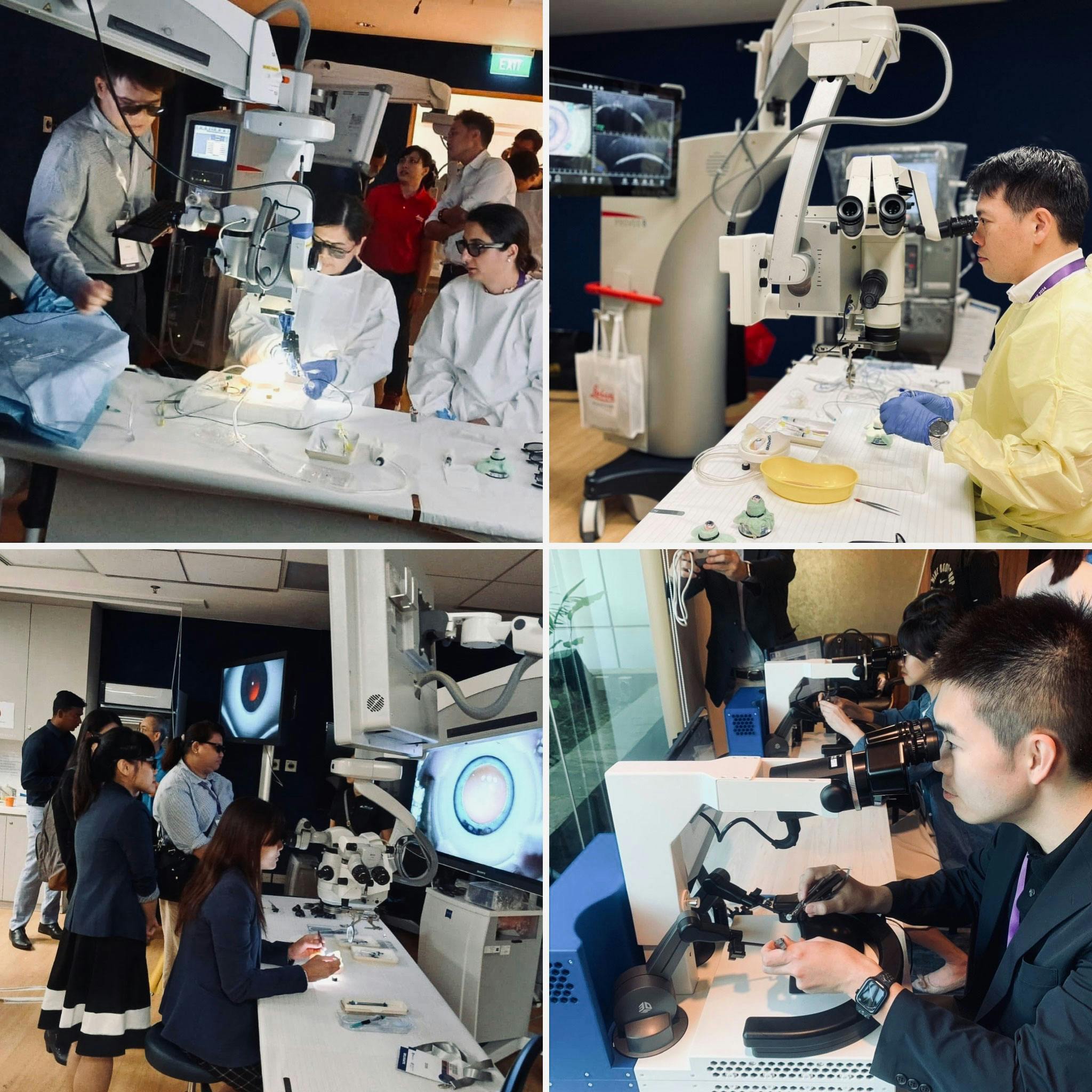
Figure 2. Participants of the fAVS experienced a hands-on wet lab experience led by SNEC and Duke faculty.
The wet lab sessions were the highlight of the course, offering hands-on training in vitrectomy using pig eyes, epiretinal membrane peeling using a Bioniko eye model, scleral-fixed IOL implantation with SimulEYE, and virtual reality simulations for the port delivery system (Susvimo, Genentech/Roche) and subretinal gene therapy. The use of 3D visualization systems, such as Alcon’s Ngenuity 3D Visualization System and the Carl Zeiss Meditec Artevo, further enhanced the experience.
This exceptional collaboration between SNEC and Duke Eye Center underscores a shared commitment to advancing vitreoretinal education, leaving participants with improved surgical skills, expanded knowledge, and stronger ties to the global retina community.


