AT A GLANCE
- Leber congenital amaurosis (LCA) has a prevalence of one in 50,000 to 100,000 people.
- LCA typically appears in early childhood, requiring the patient and family to consult a low vision specialist for evaluation and to learn about tools and adaptive technologies.
- In 2017, the FDA approved voretigene neparvovec-ryzl (Luxturna, Spark Therapeutics) to treat LCA caused by mutations in RPE65.
Leber congenital amaurosis (LCA) comprises a heterogenous group of inherited retinal diseases (IRDs) characterized by severely reduced vison in the first few months of life. LCA has a prevalence of one in 50,000 to 100,000 people and is currently known to be caused by 29 different genes.1,2 The diagnosis and treatment of LCA have come to prominence since the 2017 FDA approval of voretigene neparvovec-ryzl (Luxturna, Spark Therapeutics) to treat LCA caused by mutations in the RPE65 gene (Figure 1).3
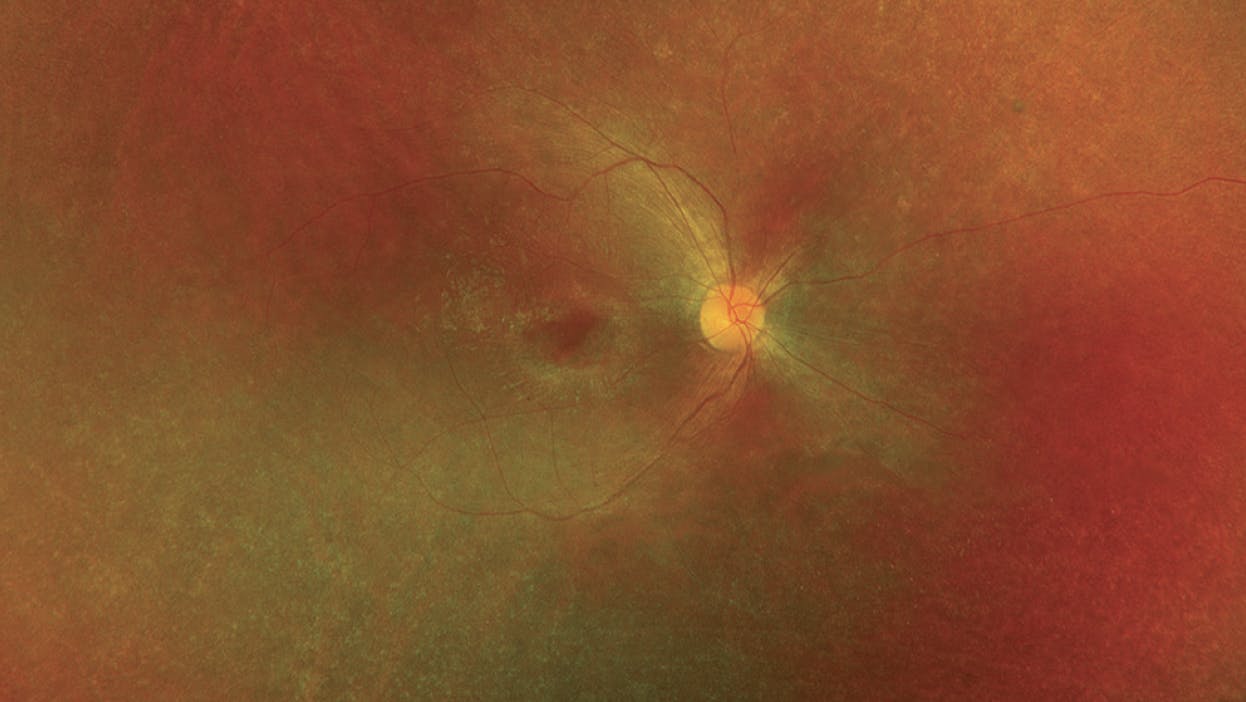
Figure 1. RPE65-associated LCA in the right eye of a 15-year-old girl presents with diffuse mild pigment mottling and multiple small white dots.
CLINICAL FEATURES
LCA classically manifests before 6 months of age, and patients develop congenital nystagmus, poor pupillary light response, severely reduced vision, high hyperopia, and oculo-digital reflex. Electroretinography is typically extinguished. However, there is significant functional variability; some patients have a visual acuity at light perception only, while others have more preserved vision, termed severe early childhood-onset retinal dystrophy. Some cases resemble retinitis pigmentosa with more preserved central vision.
Fundus examination is also variable and can be normal in early disease but commonly progresses with varying macular and peripheral atrophy and pigmentation. CRB1-related LCA can show extensive retinal dystrophy but with periarteriolar preservation of the retinal pigment epithelium, observed on both fundus imaging and autofluorescence (Figure 2). Other genes, including RDH12, can be associated with extensive retinal dystrophy and pigment clumping (Figure 3). OCT can be normal in early disease and demonstrate varying degrees of outer retinal degeneration.
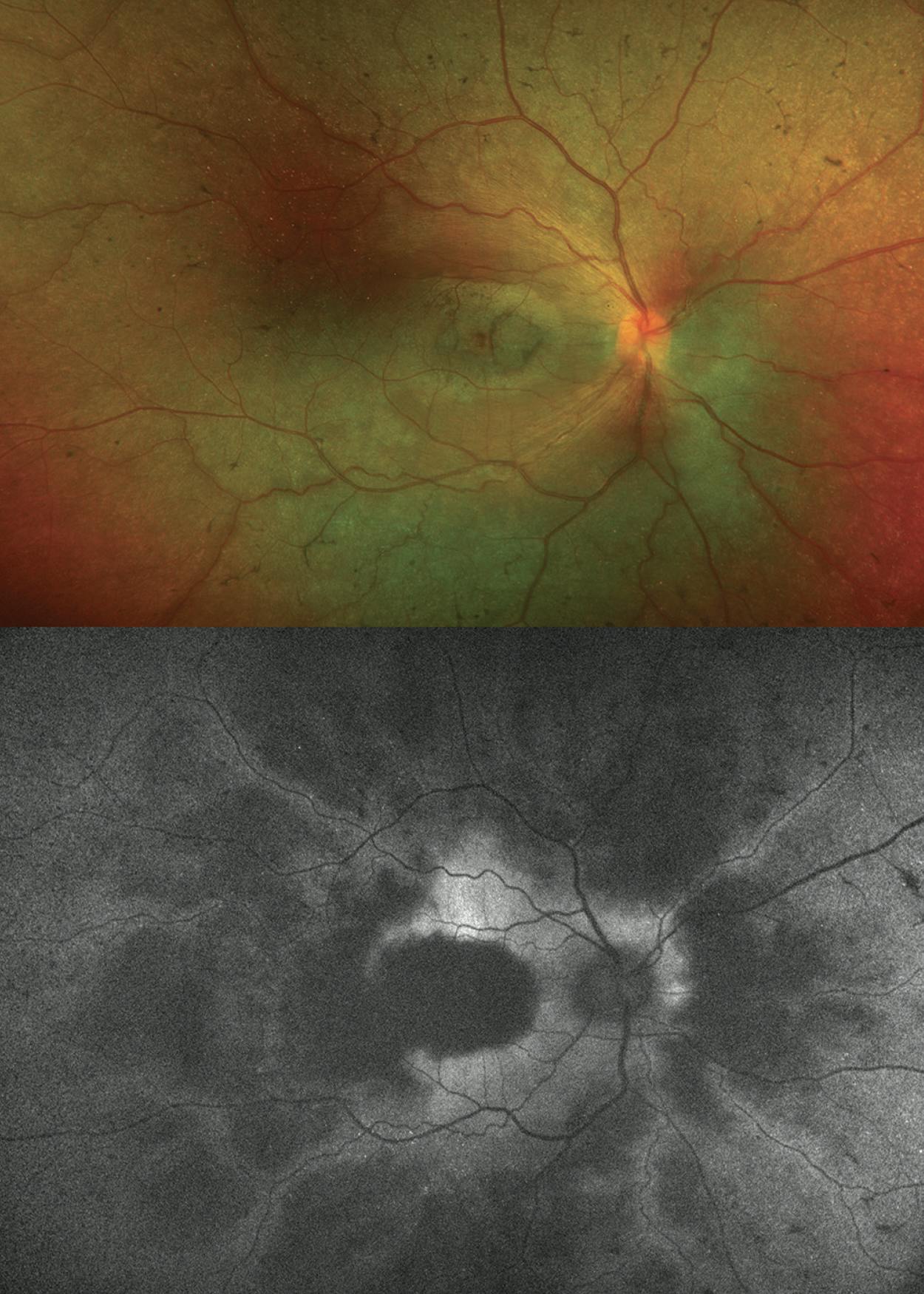
Figure 2. The fundus photograph (top) of the eye of a 10-year-old girl with CRB1-associated LCA presents with periarteriolar preservation of the retinal pigment epithelium. The fundus autofluorescence (bottom) shows loss of central macular autofluorescence.
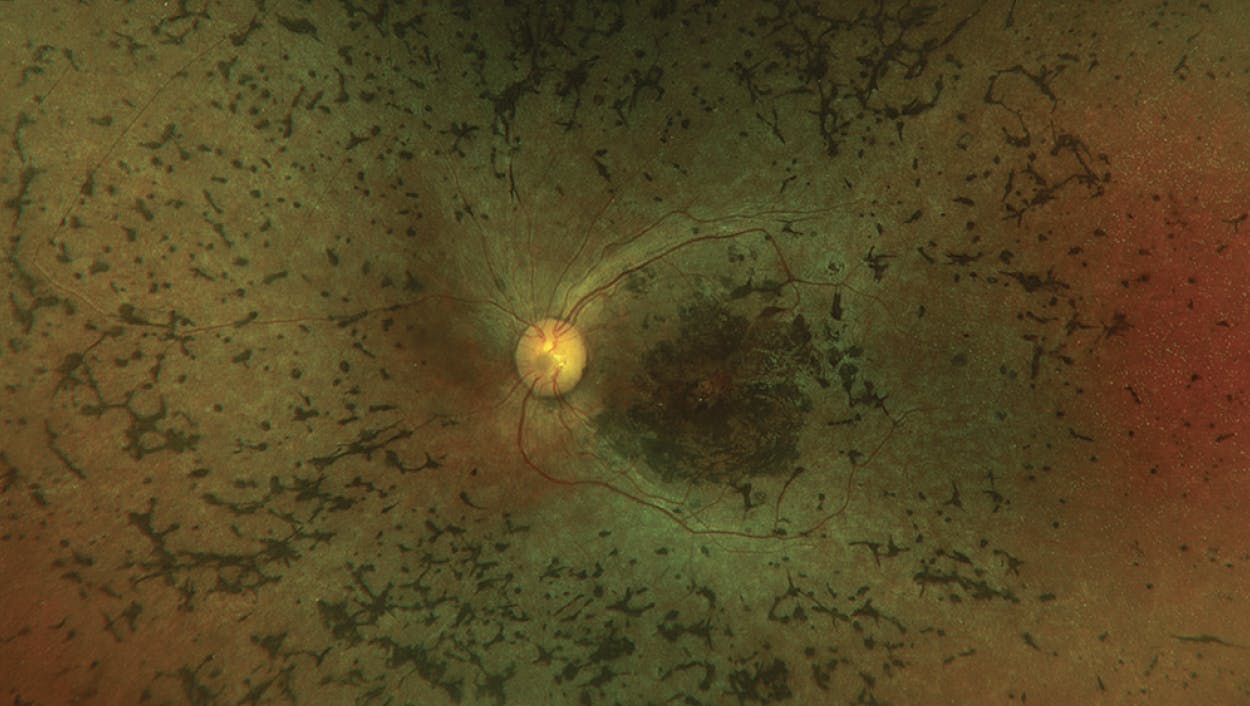
Figure 3. The fundus photograph of the left eye of a 29-year-old woman with RDH12-associated LCA demonstrates extensive pigment clumping throughout the fundus.
LCA can be associated with renal disease, developmental delay, and Joubert syndrome, with underdevelopment of the cerebellar vermis identified by a “molar tooth” sign on brain MRI.4
Supportive Care
LCA typically appears in early childhood, requiring the patient and family to consult a low vision specialist for evaluation and to learn about tools and adaptive technologies. For children, assistance from local education or other programs for sight impairment are suggested to provide early mobility and Braille training. Children with developmental delay may also require further generalized supportive care.
GENETICS
Genetic testing provides the definitive molecular diagnosis of LCA. Most cases are autosomal recessive, where individuals carry two abnormal copies of an LCA gene. The proteins expressed by these genes have varied functions, including visual cycle (RPE65, RDH12, LRAT), phototransduction (AIPL1, GUCY2D, RD3), signal transduction (CABP4, KCNJ13), protein folding (CCT2), ciliary transport (CEP290, IQCB1, LCA5, RPGRIP1, SPATA7, TULP1, IFT140, CLUAP1), photoreceptor morphogenesis (CRB1, GDF6, PRPH2), regulation of retinal differentiation (CRX, OTX2), NAD biosynthesis (NMNAT1), and nucleotide synthesis (IMPDH1).5
There are currently 25 genes associated with autosomal recessive LCA: AIPL1, CABP4, CCT2, CEP290, CLUAP1, CRB1, CRX, DTHD1, GDF6, GUCY2D, IDH3A, IFT140, IQCB1, KCNJ13, LCA5, LRAT, NMNAT1, PRPH2, RD3, RDH12, RPE65, RPGRIP1, SPATA7, TULP1, and USP45. Four genes (CRX, IMPDH1, OTX2, and TUBB4B) are associated with autosomal dominant transmission, where one abnormal copy of the gene is sufficient to cause disease.5
The rationale for gene therapy is that replacing the abnormal gene with a functional copy will restore visual function in areas of preserved retinal structure. An ongoing trial of QR-110 (Sepofarsen, Splice Bio) uses antisense oligonucleotides targeting an intronic splice site in messenger RNA aiming to restore normal splicing. These approaches have been attempted for autosomal recessive LCA associated with better preserved retinal anatomy, including LCA associated with RPE65, CEP290, GUCY2D, LCA5, and AIPL1.
APPROVED THERAPY
Voretigene neparvovec-rzyl, the first gene therapy for a human IRD for RPE65-associated retinal dystrophy,3 is a subretinal AAV2 vector expressing the RPE65 gene in the retinal pigment epithelium to restore RPE65 enzyme levels and help generate 11-cis-retinol protein from all-trans retinyl esters. The primary outcome of the phase 3 study was change in performance using a multiluminance mobility test (MLMT) that showed significantly improved scores at 1 year.3 There was also significant improvement on full-field stimulus threshold (FST) testing and improvement in kinetic visual field testing. Four-year follow-up data confirmed the sustained benefit of the MLMT improvement. There were no reports of severe immune response.6 However, development of chorioretinal atrophy in a subset of the treated patients has been reported after treatment.7
SELECT ONGOING AND EMERGING LCA TRIALS
EDIT-101 (Editas) is an AAV5-CRISPR-Cas9 construct that removes a splice site created in intron 26 of the CEP290 gene. In the phase 1/2 study (NCT03872479), there was clinically meaningful improvement in visual acuity, FST testing, or mobility testing for nine (64%) of the treated participants.8
QR-110 is an RNA antisense oligonucleotide targeting the IVS26 mutation in the CEP290 gene. Significant improvement in visual acuity and retinal sensitivity has been reported.9 Although the phase 2/3 study did not meet the primary endpoint of improved visual acuity,10 the company is pursuing a phase 3 trial (NCT06891443).
A phase 1/2 study of rAAV8.hRKp.AIPL1 (MeiraGTx) was conducted in the United Kingdom using an AAV8-AIPL1 construct delivered to the subretinal space in children with AIPL1-associated retinal dystrophy. Subjects had improvement in visual acuity and visual evoked potentials in the treated eye, with reduced function in the untreated eye.11
A phase 1/2 study (NCT03920007) is evaluating AAV5-GUCY2D (Atsena Therapeutics), which targets guanylate cyclase mutations to restore phototransduction. The 12-month data showed that some patients had improvement on the MLMT, and there was significant improvement on FST testing.12
A phase 1/2 dose-escalation study (NCT05616793) of AAV8-hLCA5 (OPGx-001, Opus Genetics) is investigating subretinal delivery in LCA5-associated retinal dystrophy. The LCA5 protein, lebercilin, is involved in the formation and function of the connecting cilia in photoreceptors, which is essential for protein transportation within the cell.13
Opus Genetics is also planning a phase 1/2 retinal gene therapy for RDH12-associated retinal dystrophy in 2025.14
MORE RESOURCES

Foundation Fighting Blindness provides important educational resources for you and your patients, including disease state education, genetic testing, and clinical trial updates.
TEST THE GENES
Although there are limited treatment options for LCA, we are approaching a paradigm shift where the causative gene can be identified in more than 75% of cases.15 Additionally, there is an approved treatment for one form of LCA and ongoing clinical trials for other types of LCA. As a result, it is important for patients with suspected LCA to have genetic testing. This is ideally performed by IRD specialists who can manage patients and guide them to relevant clinical trials or treatments and low vision specialists at an early age.
1. Allikmets R. Leber congenital amaurosis: a genetic paradigm. Ophthalmic Genet. 2004;25(2):67-79.
2. Sather R 3rd, Ihinger J, Simmons M, Lobo GP, Montezuma SR. The clinical findings, pathogenic variants, and gene therapy qualifications found in a Leber congenital amaurosis phenotypic spectrum patient cohort. Int J Mol Sci. 2024;25(2):1253.
3. Russell S, Bennett J, Wellman JA, et al. Efficacy and safety of voretigene neparvovec (AAV2-hRPE65v2) in patients with RPE65-mediated inherited retinal dystrophy: a randomised, controlled, open-label, phase 3 trial. Lancet. 2017;390(10097):849-860. Erratum in: Lancet. 2017;390(10097):848.
4. Traboulsi EI. The Marshall M. Parks memorial lecture: making sense of early-onset childhood retinal dystrophies. The clinical phenotype of Leber congenital amaurosis. Br J Ophthalmol. 2010;94:1281e1287.
5. Lori S. Sullivan LS, Daiger SP. Summaries of genes and loci causing retinal diseases. ReTNet.org. 2024. Accessed May 21, 2025. retnet.org/summaries
6. Maguire AM, Russell S, Chung DC, et al. Durability of voretigene neparvovec for biallelic RPE65-mediated inherited retinal disease: phase 3 results at 3 and 4 years. Ophthalmology. 2021;128(10):1460-1468.
7. Gange WS, Sisk RA, Besirli CG, et al. Perifoveal chorioretinal atrophy after subretinal voretigene neparvovec-rzyl for RPE65-mediated Leber congenital amaurosis. Ophthalmol Retina. 2022;6(1):58-64.
8. Pierce EA, Aleman TS, Jayasundera KT, et al. Gene editing for CEP290-associated retinal degeneration. N Engl J Med. 2024;390(21):1972-1984.
9. Russell SR, Drack AV, Cideciyan AV, et al. Intravitreal antisense oligonucleotide sepofarsen in Leber congenital amaurosis type 10: a phase 1b/2 trial. Nat Med. 2022;28(5):1014-1021.
10. ProQR announces top-line results from phase 2/3 illuminate trial of sepofarsen in CEP290-mediated LCA10 [press release] ProQR. February 11, 2022. Accessed may 27, 2025. bit.ly/44dJ5Al
11. Michaelides M, Laich Y, Wong SC, et al. Gene therapy in children with AIPL1-associated severe retinal dystrophy: an open-label, first-in-human interventional study. Lancet. 2025;405(10479):648-657.
12. Yang P, Pardon LP, Ho AC, et al. Safety and efficacy of ATSN-101 in patients with Leber congenital amaurosis caused by biallelic mutations in GUCY2D: a phase 1/2, multicentre, open-label, unilateral dose escalation study. Lancet. 2024;404(10456):962-970.
13. Boldt K, Mans DA, Won J, et al. Disruption of intraflagellar protein transport in photoreceptor cilia causes Leber congenital amaurosis in humans and mice. J Clin Invest. 2011;121(6):2169-2180.
14. IRD programs. Opus Genetics. Accessed May 27, 2025. opusgtx.com/pipeline-programs/ird-programs
15. Stone EM, Andorf JL, Whitmore SS, et al. Clinically focused molecular investigation of 1000 consecutive families with inherited retinal disease. Ophthalmology. 2017;124(9):1314-1331.