


Eye injuries are a significant cause of visual impairment and blindness in individuals of all ages.1 These injuries, which may occur in isolation or as part of polytrauma, account for approximately 10% of all trauma cases.1,2 The majority of eye injuries occur in men (92% to 100%), especially those from 29 to 38 years of age (66%).2 Penetrating eye injuries with intraocular foreign bodies (IOFBs) represent 18% to 41% of all open-globe injuries and are commonly due to workplace accidents (54% to 72%), home incidents (30%), and activities such as hammering (60% to 80%), using power tools (18% to 25%), or handling weapons (19%).1-6
Accurate diagnosis and rapid treatment are critical, as the prognosis for visual recovery depends on the severity of the injury and the timeliness of medical intervention.1 This review focuses on the surgical management of IOFBs, one of the most severe types of ocular trauma.
INITIAL EXAMINATION AND DIAGNOSIS
When evaluating a patient with a suspected penetrating eye injury involving an IOFB, obtaining a detailed history is essential. Clinicians should ask about the injury mechanism, time of occurrence, use of any protective equipment, and time elapsed until initial medical attention.3,7 A thorough clinical examination must follow, but it’s important to note that certain procedures, including applanation tonometry, gonioscopy, and scleral indentation, are contraindicated before primary treatment of any open-globe injuries.3
The entry wound’s location is crucial for diagnosis, most commonly in the cornea (65%), sclera (25%), or limbus (10%).3 IOFBs that enter through the sclera tend to cause more damage due to greater kinetic energy compared with corneal entry.3,8 Scleral-entry IOFBs may also result in perforating injuries, potentially creating an exit wound toward the orbit. The shape of the entry wound can provide clues about the nature of the foreign object; sharp objects typically cause linear lacerations, while blunt objects create irregular wounds.1,3,9
Be aware that, in rare cases, small IOFBs can cause self-sealing scleral entry wounds with a normal eye pressure and no conjunctival chemosis. It is not advisable to express your opinion concerning the final clinical outcome after eye trauma with IOFBs; even severely damaged eyes may eventually regain some functional vision, but this will likely only be known several months after the initial event.10
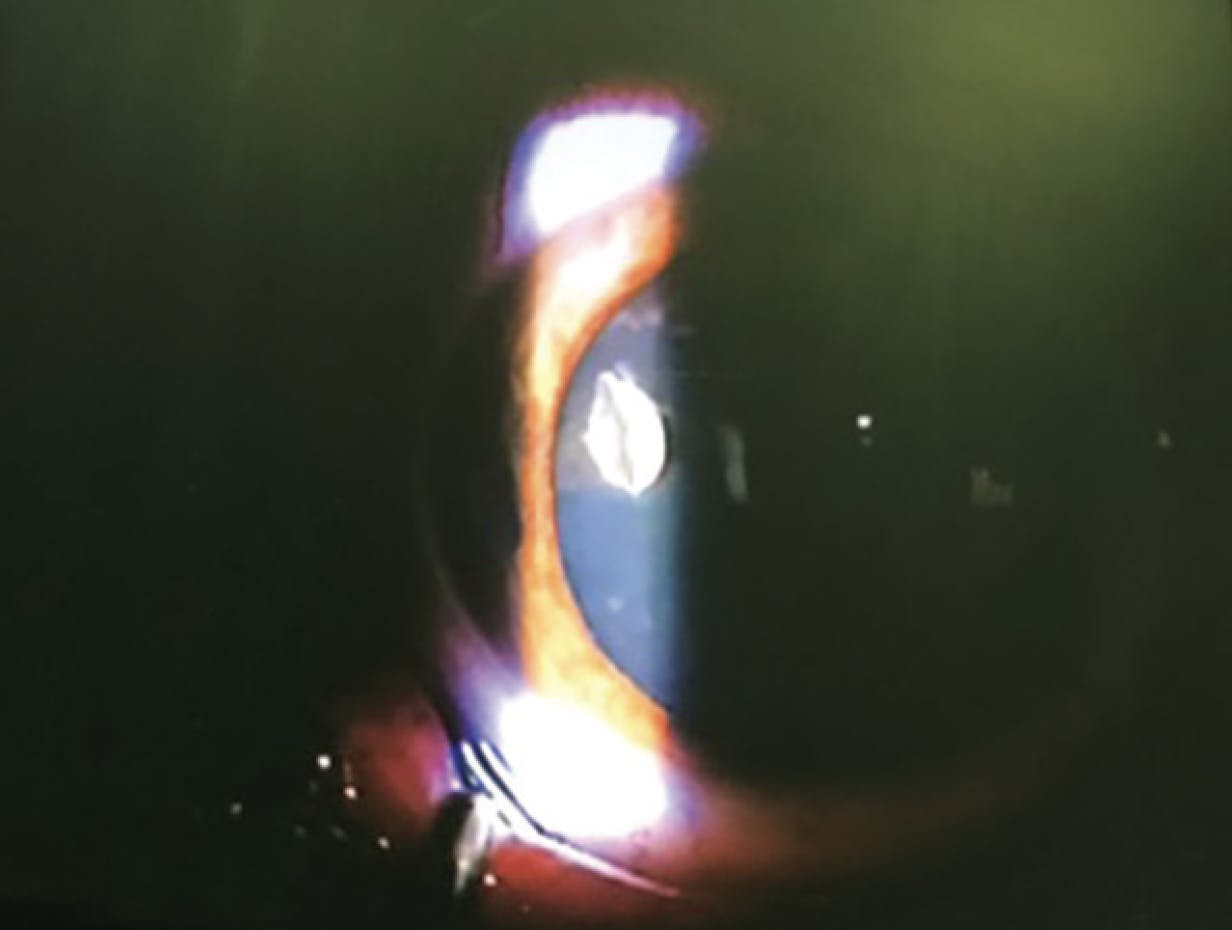
If an IOFB is suspected, a detailed examination of the anterior and posterior segments under mydriasis is required (Figure 1). If visualization is obstructed by opaque media, or an IOFB is suspected in the area of the ciliary body and iris root, further diagnostics (such as B-scan ultrasonography or CT scan) are necessary to locate and evaluate the IOFB.11,12
TREATMENT AND SURGICAL MANAGEMENT
The primary goal in managing IOFB-related injuries is to preserve the structural integrity of the eye and prevent complications such as endophthalmitis, retinal detachment, and metallosis.1 Surgical intervention should be carefully planned following diagnosis along with preoperative measures, including anti-tetanus prophylaxis and broad-spectrum systemic antibiotics to cover Gram-positive and Gram-negative bacteria.13,14
Surgical Timing
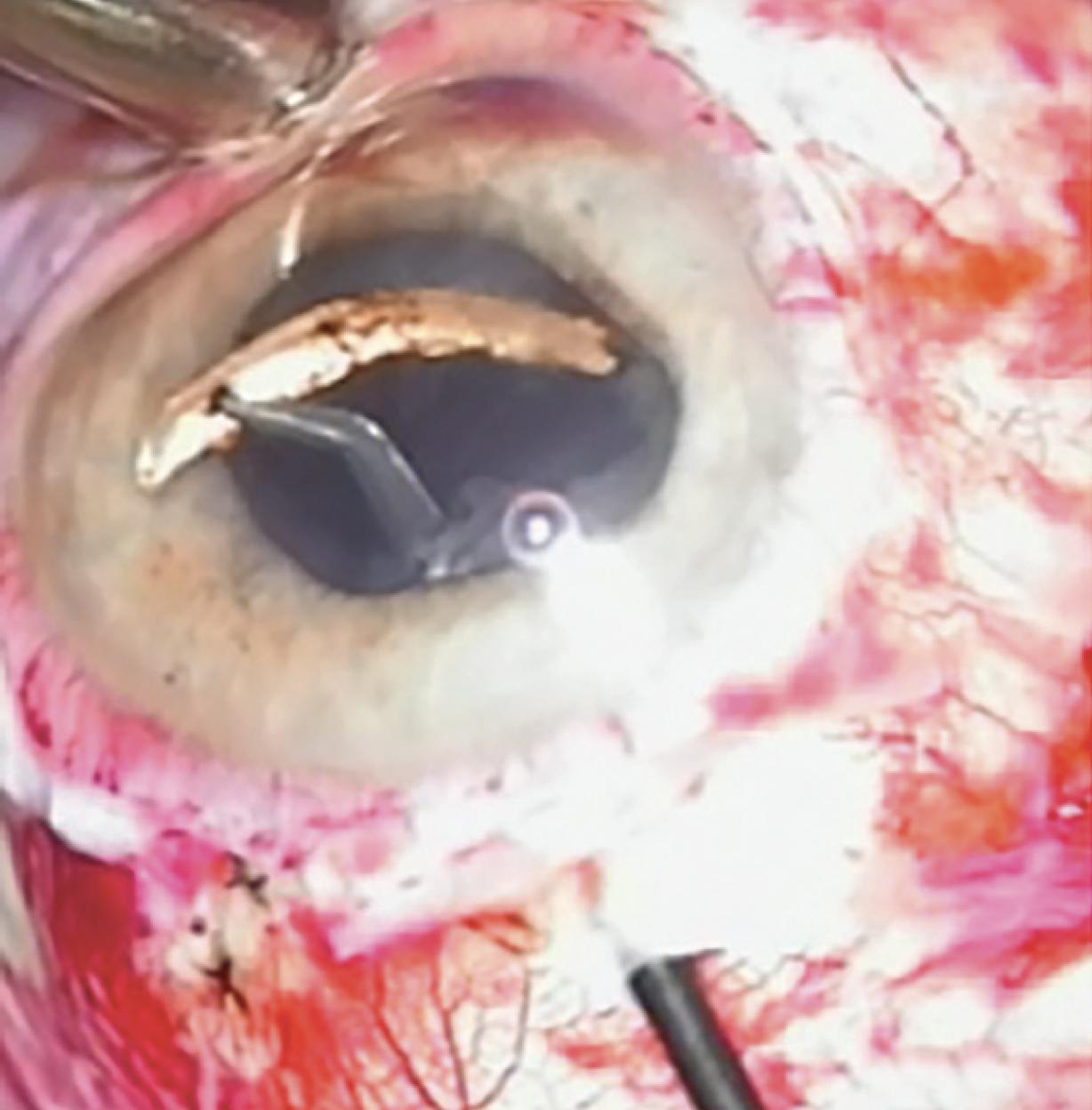
The ideal timing of IOFB extraction is debated. Many studies recommend simultaneous primary injury treatment and IOFB removal within 24 hours, particularly in cases with signs of early endophthalmitis or in the presence of organic IOFBs.1-3,12,15,16 Others have suggested delaying the extraction of metallic IOFBs, arguing that the high-speed entry sterilizes the object, thereby greatly reducing the risk of intraocular infection (Figure 2). Observing the patient clinically for up to 2 weeks will make it more likely that a complete intraoperative posterior vitreous detachment can be induced in young patients with an adherent posterior hyaloid, which will lower the risk of proliferative vitreoretinopathy (PVR).1
In rare cases, trying to extract the IOFB may be contraindicated. These are cases in which the IOFB is so deeply embedded within the sclera that the extraction may cause more damage to the scleral wall than is advisable.17 In these cases, it has been shown that the fibrotic scar of the deeply embedded IOFB may preclude the development of siderosis.17
Vitrectomy Pearls
For posterior segment IOFBs, pars plana vitrectomy (PPV) is the preferred surgical technique.16-19 Begin by repairing the entry wound, removing any damaged or opaque lens, and establishing an infusion line in the pars plana. In cases of complete intravitreal hemorrhage, perform the initial stage of the vitrectomy using an anterior chamber maintainer until the position of the pars plana infusion can be verified. The initial step is a core vitrectomy to isolate the IOFB from the surrounding vitreous (Figure 3A). If endophthalmitis is suspected at this stage, perform a vitreous biopsy to guide antimicrobial therapy.1,12,20

Figure 3. Core PPV was performed with identification of the IOFB and removal of the surrounding vitreous (A). The IOFB was extracted using an intraocular magnet, revealing a retinal tear with localized detachment at the IOFB site (B). The IOFB was removed through an enlarged sclerotomy following lens removal (C). Heavy fluids were injected to flatten the retina, facilitating precise endolaser photocoagulation (D). This was followed by removal of heavy liquids and instillation of silicone oil as a tamponade (E).
Next, grasp the IOFB using forceps or, if it is metallic and retains magnetic properties, an intraocular magnet, and remove it through an enlarged sclerotomy (Figure 3B and C). Throughout the procedure, use of heavy liquids such as perfluorocarbon should be considered to protect the retina, particularly the macula and optic nerve (Figure 3D). After IOFB removal, suture the sclerotomy, and perform a complete vitrectomy with removal of the posterior hyaloid to reduce the risk of retinal detachment and PVR. Apply endolaser photocoagulation to any retinal tears or around the IOFB impact site if the local situation warrants it. In cases of severe retinal injury or retinal detachment, intraocular gas or silicone oil should be used according to the extent of the pathology (Figure 3E).1,12,20
POSTOPERATIVE CARE AND COMPLICATIONS
Postoperative care includes both oral and topical antibiotic and antiinflammatory treatment, as well as close monitoring for complications such as endophthalmitis, secondary glaucoma, retinal detachment, PVR, and sympathetic ophthalmia.20-23 In pediatric patients, more frequent follow-up is required to prevent complications such as amblyopia and tissue reactions to sutures.24-27
ACT QUICKLY TO SPARE VISION
Timely IOFB extraction, ideally within 24 hours for nonmetallic IOFBs, is crucial to improve functional outcomes. Even with severe injuries, restoring partial visual function may be possible and can enhance a patient’s quality of life.
Acknowledgments: The author would like to thank Thomas J. Wolfensberger, MD; Goran Damjanovic, MD; Igor Kovacevic, MD; and Theodor Stappler, MD, for providing the images for this article.
1. Kuhn F, Pieramici DJ. Ocular trauma: principles and practice. Thieme. 2011.
2. Jonas JB, Knorr HL, Budde WM. Prognostic factors in ocular injuries caused by intraocular or retrobulbar foreign bodies. Ophthalmology. 2000;107(5):823-828.
3. Loporchio D, Mukkamala L, Gorukanti K, Zarbin M, Langer P, Bhagat N. Intraocular foreign bodies: a review. Surv Ophthalmol. 2016;61(5):582-596.
4. Patel SN, Langer PD, Zarbin MA, Bhagat N. Diagnostic value of clinical examination and radiographic imaging in identification of intraocular foreign bodies in open globe injury. Eur J Ophthalmol. 2012;22(2):259-268.
5. Kuhn F, Morris R, Witherspoon CD, Mann L. Epidemiology of blinding trauma in the United States eye injury registry. Ophthalmic Epidemiol. 2006;13(3):209-216.
6. Greven CM, Engelbrecht NE, Slusher MM, Nagy SS. Intraocular foreign bodies: management, prognostic factors, and visual outcomes. Ophthalmology. 2000;107(3):608-612.
7. Yeh S, Colyer MH, Weichel ED. Current trends in the management of intraocular foreign bodies. Curr Opin Ophthalmol. 2008;19(3):225-233.
8. Brown IA. Intraocular foreign bodies: nature of injury. Int Ophthalmol Clin. 1968;8(1):147-152.
9. Potts AM, Distler JA. Shape factor in the penetration of intraocular foreign bodies. Am J Ophthalmol. 1985;100(1):183-187.
10. Coelho J, Ferreira A, Kuhn F, Meireles A. Globe ruptures: outcomes and prognostic analysis of severe ocular trauma. Ophthalmologica. 2022;245(4):376-384.
11. Kaushik S, Ichhpujani P, Ramasubramanian A, Pandav SS. Occult intraocular foreign body: ultrasound biomicroscopy holds the key. Int Ophthalmol. 2008;28(1):71-73.
12. Kovačević I, Stefanović I, Jovanović M, Potić J, Damjanović G. Pars plana vitrectomy with extraction of intraocular foreign body in patients with siderosis of the eye: Report of two cases. [Article in Serbian]. Srpski arhiv za celokupno lekarstvo. 2013;141(5-6):371-374.
13. Bhagat N, Nagori S, Zarbin M. Post-traumatic infectious endophthalmitis. Surv Ophthalmol. 2011;56(3):214-251.
14. Cornut PL, Boisset S, Romanet JP, et al. Principles and applications of molecular biology techniques for the microbiological diagnosis of acute post-operative endophthalmitis. Surv Ophthalmology. 2014;59(3):286-303.
15. Chaudhry IA, Shamsi FA, Al-Harthi E, Al-Theeb A, Elzaridi E, Riley FC. Incidence and visual outcome of endophthalmitis associated with intraocular foreign bodies. Graefes Arch Clin Exp Ophthalmol. 2008;246(2):181-186.
16. Demircan N, Soylu M, Yagmur M, Akkaya H, Ozcan AA, Varinli I. Pars plana vitrectomy in ocular injury with intraocular foreign body. J Trauma. 2005;59(5):1216-1218.
17. Wygnanski-Jaffe T, Desatnik H, Arazi T, Treister G, Moisseiev J. Metallic intraocular foreign body impacted in the retina: 12-year follow-up. Retina. 2000;20(2):222.
18. Weichel L, Yeh S. Techniques of intraocular foreign body removal. Techniques in Ophthalmology. 2008;6(3):88-97.
19. Mester V, Kuhn F. Ferrous intraocular foreign bodies retained in the posterior segment: management options and results. Int Ophthalmol. 1998;22(6):355-62.
20. Williamson TH. Vitreoretinal Surgery. Springer Science & Business Media. 2013.
21. Andreoli CM, Andreoli MT, Kloek CE, Ahuero AE, Vavvas D, Durand ML. Low rate of endophthalmitis in a large series of open globe injuries. Am J Ophthalmol. 2009;147(4):601-608.e2.
22. Soheilian M, Rafati N, Mohebbi MR, et al. Prophylaxis of acute posttraumatic bacterial endophthalmitis: a multicenter, randomized clinical trial of intraocular antibiotic injection, report 2. Arch Ophthalmol. 2007;125(4):460-465.
23. Ozbek Z, Arikan G, Yaman A, Oner H, Bajin MS, Saatci AO. Sympathetic ophthalmia following vitreoretinal surgery. Int Ophthalmol. 2010;30(2):221-227.
24. Gupta A, Rahman I, Leatherbarrow B. Open globe injuries in children: factors predictive of a poor final visual acuity. Eye. 2009;23(3):621-625.
25. Li X, Zarbin MA, Bhagat N. Pediatric open globe injury: a review of the literature. J Emerg Trauma Shock. 2015;8(4):216-223.
26. Liu X, Liu Z, Liu Y, et al. Determination of visual prognosis in children with open globe injuries. Eye. 2014;28(7):852-856.
27. Yang Y, Yang C, Zhao R, et al. Intraocular foreign body injury in children: clinical characteristics and factors associated with endophthalmitis. Br J Ophthalmol. 2020;104(6):780-784.


