




AT A GLANCE
- Chronic inflammation is a critical driver of AMD pathogenesis. Thus, AVD-104 (Aviceda Therapeutics) and tonabersat (Xiflam, InflammX Therapeutics) aim to improve inflammatory modulation in the retina.
- Elamipretide (SS-31, Stealth Biotherapeutics) and photobiomodulation with the Valeda Light Delivery System (LumiThera) both focus on improving mitochondrial health and function.
- ONL1204 (ONL Therapeutics) and CT1812 (Zervimesine, Cognition Therapeutics) are neuroprotective therapies being explored for the treatment of dry AMD.
A better understanding of complement dysregulation in AMD has led to the first approved therapies targeting the complement system to slow the progression of geographic atrophy (GA).1 However, beyond complement inhibition, several novel therapeutic strategies are emerging that target the diverse pathogenic mechanisms of dry AMD (Figure 1).2 These include therapies that suppress chronic inflammation, enhance mitochondrial health and function, and protect against cellular apoptosis to slow retinal degeneration.
TARGETING INFLAMMATION
Chronic, low-grade inflammation is a critical driver of AMD pathogenesis. Increased chemokine, cytokine, and complement cascade signaling results in pathologic accumulation of activated macrophages, microglia, and complement factors in the subretinal space. This dysregulated immune response promotes progressive retinal tissue injury and photoreceptor degeneration as AMD progresses (Figure 2).3-6
Mature cells of the innate immune system express a family of receptors called sialic acid-binding immunoglobulin-type lectins (siglecs), which modulate immune activity in response to specific sialic acid patterns on the cell membranes. Because certain siglecs function as immune checkpoints to recognize “self” sialic acid patterns and dampen local inflammatory activity against host tissues, they represent promising targets to reduce inflammatory damage to retinal tissue in the development of AMD.6,7
AVD-104 (Aviceda Therapeutics) is a glycomimetic siglec-agonist nanoparticle designed to reduce retinal inflammation in GA by binding select siglec subtypes on activated macrophages and microglia in the subretinal space, repolarizing them to a neuroprotective state and reducing the production of proinflammatory cytokines to curtail local retinal injury.8 AVD-104 also directly disrupts the complement cascade by binding and activating complement factor H to suppress C3 activity.9 Preliminary data from the phase 2/3 SIGLEC trial (NCT05839041) suggest that AVD-104 therapy in patients with GA may be well tolerated with significant reduction in GA growth rate at 3 months.10
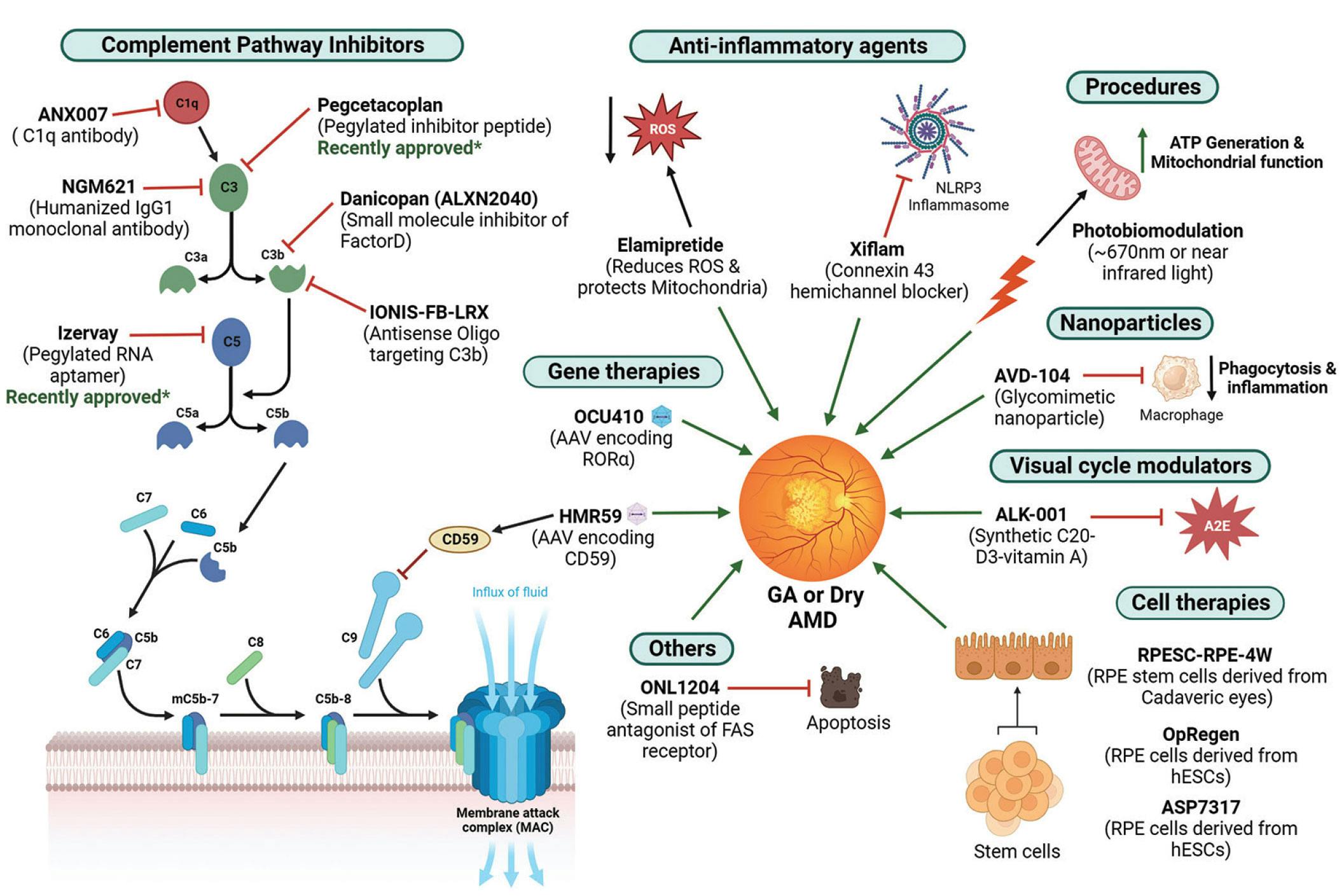
Figure 1. In addition to complement pathway inhibitors, several emerging therapies target other mechanisms of dry AMD pathogenesis. Image courtesy of Rajanala et al.2 Licensed for reuse under Creative Commons Attribution License CC BY 4.0.
Tonabersat (Xiflam, InflammX Therapeutics) is an oral inhibitor of the connexin43 hemichannel, which plays a critical role in ocular inflammation through the assembly and activation of the NLRP3 inflammasome pathway within immune cells.11,12 Connexin43-mediated activation of the NLRP3 inflammasome triggers cytokine release, while connexin43-driven ATP secretion perpetuates the NLRP3 pathway.12 A phase 2 trial (NCT05727891) is assessing tonabersat in diabetic macular edema, and the company is planning a phase 2 trial for patients with intermediate AMD.13
ENHANCING MITOCHONDRIAL HEALTH AND FUNCTION
Chronic inflammation in AMD is thought to be driven primarily by an imbalance between the generation and elimination of reactive oxygen species (ROS) in retinal tissue, subjecting retinal pigment epithelium (RPE) and photoreceptor cells to chronic oxidative stress and accumulation of toxic metabolic byproducts.14 This metabolic stress causes progressive mitochondrial damage, energy depletion, and, ultimately, apoptotic cell death. Therapies aimed at correcting such metabolic imbalances in AMD seek to slow retinal degeneration by enhancing mitochondrial function and reducing oxidative damage.
Photobiomodulation (PBM) employs low-intensity light, typically 590 nm to 850 nm, to reduce oxidative stress associated with chronic retinal diseases.15 Exposure to these wavelengths is thought to activate mitochondrial cytochrome c oxidase in retinal cells to enhance cellular respiration, increasing ATP production and limiting toxic ROS.16 Together, these effects may protect retinal cells against oxidative injury and progressive degeneration.15-17
The Valeda Light Delivery System (LumiThera), which received FDA De Novo authorization for treating dry AMD, delivers simultaneous 590 nm, 660 nm, and 850 nm wavelengths of light in brief sessions multiple times per week over the course of several months. The LIGHTSITE III trial (NCT03878420) showed significant and clinically meaningful improvements in visual acuity, with gains of ≥ 5 letters in more than 55%, ≥ 10 letters in 26.4%, and ≥ 15 letters in 5.5% of PBM-treated eyes.18,19 An open-label extension study, LIGHTSITE IIIB (NCT06229665), is assessing the efficacy of PBM in this cohort over an additional 13 months.
Elamipretide (SS-31, Stealth Biotherapeutics) is a subcutaneous tetrapeptide designed to mitigate oxidative damage by promoting efficient cellular respiration.20 Elamipretide selectively binds cardiolipin (a lipid found on the inner mitochondrial membrane) to stabilize the electron transport chain, thus increasing ATP production and reducing ROS generation during cellular respiration.20,21 By improving mitochondrial function in RPE cells under oxidative stress, elamipretide may slow or even reverse retinal degeneration in AMD.22-24 Although a phase 1 trial (NCT02848313) showed that daily elamipretide may improve visual function over 24 weeks, the phase 2 trial (NCT03891875) did not meet primary endpoints of change in low-luminance visual acuity or GA area after 48 weeks.24-26 A phase 3 trial (NCT06373731) is recruiting.27
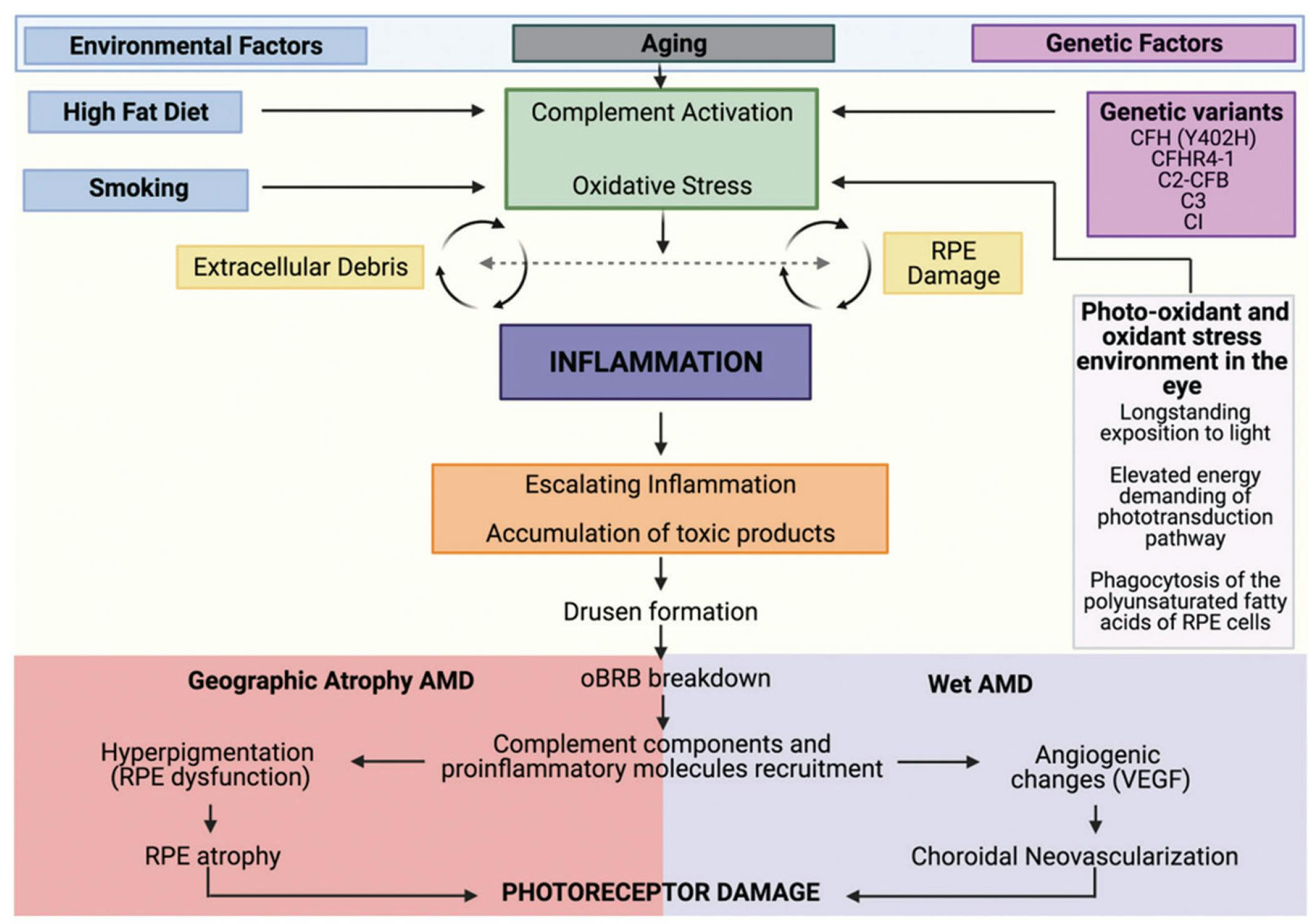
Figure 2. AMD pathogenesis and progression is thought to be largely driven by chronic, low-grade inflammation in the aging retina. Environmental, genetic, and age-related factors trigger complement activation, oxidative stress, and escalating inflammation, ultimately driving RPE dysfunction, drusen formation, and photoreceptor degeneration. Image courtesy of Romero-Vazquezm et al.34 Licensed for reuse under Creative Commons Attribution License CC BY 4.0.
THE ROLE OF NEUROPROTECTION
Chronic inflammatory and oxidative injury in AMD cause progressive RPE dysfunction and photoreceptor degeneration as the disease progresses.28 Neuroprotective strategies to promote RPE and photoreceptor survival may therefore mitigate progressive retinal degeneration in AMD.
The Fas receptor (CD95), a transmembrane protein of the tumor necrosis factor receptor family, serves as a key trigger of cellular apoptosis in response to environmental stressors. When bound by its ligand, Fas activates the extrinsic apoptosis pathway via caspase-8, culminating in cell death.29 Fas activation additionally results in the production of chemokines and cytokines that recruit immune cells and enhance local inflammation. Preclinical studies in mice have found that overactivation in the RPE results in increased susceptibility to inflammatory stimuli and oxidative stress, promoting progressive photoreceptor degeneration.30 The Fas receptor has therefore emerged as a potential target for neuroprotective prevention of photoreceptor degeneration in AMD.29
ONL1204 (ONL Therapeutics) is an intravitreal small-molecule Fas inhibitor that protects against RPE and photoreceptor apoptosis.31 Preliminary data from a phase 1 study in patients with GA (NCT04744662) suggest that ONL1204 is well tolerated and may result in a dose-dependent reduction in GA growth rate at 6 months.32 A multicenter phase 2 trial (NCT06659445) is further assessing the safety and efficacy of ONL1204 in GA with various dosing regimens.
CT1812 (Zervimesine, Cognition Therapeutics) is an oral drug that displaces toxic protein oligomers from the sigma-2 receptor complex on the endoplasmic reticulum, which plays a role in cellular protein/lipid trafficking and homeostasis. In preclinical AMD models, CT1812 showed an ability to reverse the pathologic effects of oxidative stress on RPE cells, restoring RPE homeostasis and normalizing RPE-mediated phagocytosis and trafficking of photoreceptor outer segments.33 A phase 2 trial (NCT05893537) is ongoing to assess daily oral CT1812 therapy in patients with GA.
GENE THERAPY APPROACH
Two gene therapies are under investigation for the treatment of GA: OCU410 (AAV5-hRORA, Ocugen) and JNJ-1887 (JNJ-81201887/AAVCAGsCD59, Janssen). To learn more about these therapies, check out Gene Therapy for AMD: What You Need to Know.
FUTURE DIRECTIONS AND CLINICAL OUTLOOK
Many emerging therapeutic strategies for dry AMD are rapidly expanding our approach beyond complement inhibition. With novel drugs in development that aim to reduce chronic inflammation, enhance mitochondrial health, and promote retinal cell survival, clinicians may one day have the ability to proactively intervene on multiple mechanisms of AMD pathogenesis to prevent disease progression. Sustained innovation in this field is likely to continue shifting our approach to AMD from supportive care toward multimodal, patient-tailored therapy aimed at preventing vision loss and enhancing quality of life in our aging population.
1. Shughoury A, Sevgi DD, Ciulla TA. The complement system: a novel therapeutic target for age-related macular degeneration. Expert Opin Pharmacother. 2023;24(17):1887-1899.
2. Rajanala K, Dotiwala F, Upadhyay A. Geographic atrophy: pathophysiology and current therapeutic strategies. Front Ophthalmol. 2023;3.
3. Hageman GS, Luthert PJ, Victor Chong NH, Johnson LV, Anderson DH, Mullins RF. An integrated hypothesis that considers drusen as biomarkers of immune-mediated processes at the RPE-Bruch’s membrane interface in aging and age-related macular degeneration. Prog Retin Eye Res. 2001;20(6):705-732.
4. Hollyfield JG, Bonilha VL, Rayborn ME, et al. Oxidative damage-induced inflammation initiates age-related macular degeneration. Nature Medicine. 2008;14(2):194-198.
5. Datta S, Cano M, Ebrahimi K, Wang L, Handa JT. The impact of oxidative stress and inflammation on RPE degeneration in non-neovascular AMD. Prog Retin Eye Res. 2017;60:201-218.
6. Krishnan A, Sendra VG, Patel D, et al. PolySialic acid-nanoparticles inhibit macrophage mediated inflammation through Siglec agonism: a potential treatment for age related macular degeneration. Front Immunol. 2023;14.
7. Tolentino MJ, Tolentino AJ, Tolentino EM, Krishnan A, Genead MA. Sialic acid mimetic microglial sialic acid-binding immunoglobulin-like lectin agonism: potential to restore retinal homeostasis and regain visual function in age-related macular degeneration. Pharmaceuticals (Basel). 2023;16(12):1735.
8. Krishnan A, Patel D, Sendra VG, et al. Modulation of retinal inflammatory macrophages by sialic-acid coated nanoparticles as novel mechanism for nonexudative AMD treatment. Invest Ophthalmol Vis Sci. 2023;64(8):2730.
9. Peterson SL, Krishnan A, Patel D, et al. Polysialic acid nanoparticles actuate complement-factor-h-mediated inhibition of the alternative complement pathway: a safer potential therapy for age-related macular degeneration. Pharmaceuticals. 2024;17(4):517.
10. Aviceda Therapeutics announces topline data from part 1 of the phase 2/3 SIGLEC clinical trial for AVD-104, demonstrating positive safety and early clinical efficacy in patients with geographic atrophy [press release]. Biospace. January 16, 2024. Accessed May 2, 2025. bit.ly/44mnTcX
11. Mat Nor MN, Rupenthal ID, Green CR, Acosta ML. Connexin hemichannel block using orally delivered tonabersat improves outcomes in animal models of retinal disease. Neurotherapeutics. 2020;17(1):371-387.
12. Mugisho OO, Rupenthal ID, Paquet-Durand F, Acosta ML, Green CR. Targeting connexin hemichannels to control the inflammasome: the correlation between connexin43 and NLRP3 expression in chronic eye disease. Expert Opin Ther Targets. 2019;23(10):855-863.
13. InflammX Therapeutics announces option agreement with Bausch + Lomb [press release]. BioSpace. January 10, 2025. Accessed March 9, 2025. bit.ly/4l72jyZ
14. Feher J, Kovacs I, Artico M, Cavallotti C, Papale A, Balacco Gabrieli C. Mitochondrial alterations of retinal pigment epithelium in age-related macular degeneration. Neurobiol Aging. 2006;27(7):983-993.
15. Geneva II. Photobiomodulation for the treatment of retinal diseases: a review. Int J Ophthalmol. 2016;9(1):145-152.
16. Eells JT, DeSmet KD, Kirk DK, et al. Photobiomodulation for the treatment of retinal injury and retinal degenerative diseases. In: Proceedings of Light-Activated Tissue Regeneration and Therapy Conference. Springer, Boston;2008:39-51.
17. Hamblin MR. Mechanisms and mitochondrial redox signaling in photobiomodulation. Photochem Photobiol. 2018;94(2):199-212.
18. Boyer D, Hu A, Warrow D, et al. LIGHTSITE III: 13-month efficacy and safety evaluation of multiwavelength photobiomodulation in nonexudative (dry) age-related macular degeneration using the Lumithera Valeda light delivery system. Retina. 2024;44(3):487.
19. Munk MR, Gonzalez V, Boyer DS, et al. LIGHTSITE III 24-month analysis: evaluation of multiwavelength photobiomodulation in dry age-related macular degeneration using the LumiThera Valeda light delivery system. Invest Ophthalmol Vis Sci. 2023;64(8):5059.
20. Tung C, Varzideh F, Farroni E, et al. Elamipretide: a review of its structure, mechanism of action, and therapeutic potential. Internat J Mol Sci. 2025;26(3):944.
21. Szeto HH. First-in-class cardiolipin-protective compound as a therapeutic agent to restore mitochondrial bioenergetics. British J Pharmacol. 2014;171(8):2029-2050.
22. Kapphahn R, Terluk M, Ebeling M, et al. Elamipretide protects RPE and improves mitochondrial function in models of AMD. Invest Ophthalmol Vis Sci. 2017;58(8):1954.
23. Alam NM, Douglas RM, Prusky GT. Treatment of age-related visual impairment with a peptide acting on mitochondria. Dis Model Mech. 2022;15(3):dmm048256.
24. Allingham MJ, Mettu PS, Cousins SW. Phase 1 clinical trial of elamipretide in intermediate age-related macular degeneration and high-risk drusen: ReCLAIM high-risk drusen study. Ophthalmol Sci. 2022;2(1):100095.
25. Mettu PS, Allingham MJ, Cousins SW. Phase 1 clinical trial of elamipretide in dry age-related macular degeneration and noncentral geographic atrophy. Ophthalmol Sci. 2021;2(1):100086.
26. Ehlers JP, Hu A, Boyer D, et al. ReCLAIM-2: A randomized phase II clinical trial evaluating elamipretide in age-related macular degeneration, geographic atrophy growth, visual function, and ellipsoid zone preservation. Ophthalmol Sci. 2024;5(1):100628.
27. Stealth Biotherapeutics announces achievement of 50% enrollment target in phase 3 ReNEW study of elamipretide in patients with dry age-related macular degeneration. Stealth BioTherapeutics. March 13, 2025. Accessed April 1, 2025. bit.ly/4jdoIZB
28. Lenin RR, Koh YH, Zhang Z, et al. Dysfunctional autophagy, proteostasis, and mitochondria as a prelude to age-related macular degeneration. Int J Mol Sci. 2023;24(10):8763.
29. Zacks DN, Kocab AJ, Choi JJ, Gregory-Ksander MS, Cano M, Handa JT. Cell death in AMD: the rationale for targeting Fas. J Clin Med. 2022;11(3):592.
30. Wang Y, Shen D, Wang VM, et al. Enhanced apoptosis in retinal pigment epithelium under inflammatory stimuli and oxidative stress. Apoptosis. 2012;17(11):1144-1155.
31. Yang M, Yao J, Jia L, Kocab AJ, Zacks DN. Preservation of retinal structure and function in two mouse models of inherited retinal degeneration by ONL1204, an inhibitor of the Fas receptor. Cell Death Dis. 2024;15(8):1-9.
32. ASRS 2024: Fas inhibition with ONL1204 for the treatment of geographic atrophy. Ophthalmology Times. July 18, 2024. Accessed March 3, 2025. bit.ly/3XFR8TW
33. Lizama BN, Keeling E, Cho E, et al. Sigma-2 receptor modulator CT1812 alters key pathways and rescues retinal pigment epithelium (RPE) functional deficits associated with dry age-related macular degeneration (AMD). Sci Rep. 2025;15:4256.
34. Romero-vazquez S, Llorens V, Soler-boronat A, Figueras-roca M, Adan A, Molins B. Interlink between inflammation and oxidative stress in age-related macular degeneration: role of complement factor H. Biomedicines. 2021;9(7):763.

-1_1748961738.jpg?auto=compress,format&w=70)


