



Fellowship training in vitreoretinal surgery is like being thrown into the deep end of a pool—you either learn to swim quickly or you struggle to stay afloat. As a surgical retina fellow at Singapore National Eye Center, I’ve experienced firsthand the steep learning curve, the long hours, and, yes, those moments of self-doubt. But I’ve also discovered that these fellowship challenges are universal, shared by fellows across different programs and countries.
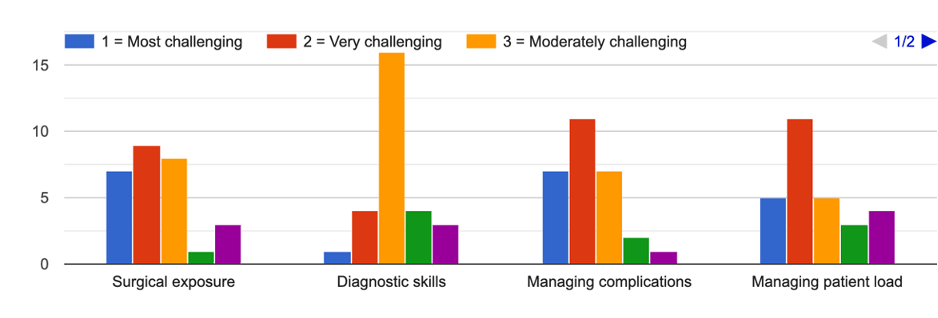
Figure 1. When asked to rank the clinical challenges they faced during fellowship, most fellows felt that surgical exposure and complications were the toughest to handle.
SURVEY INSIGHTS: WE’RE ALL IN THIS TOGETHER
To better understand these shared experiences, I (VLC) conducted a Google survey of 28 current and former retina fellows. The results were both validating and enlightening—I wasn’t alone in my struggles.
Among the clinical challenges, 60% of fellows found surgical exposure to be very or most challenging (Figure 1). I remember my first vitrectomies, awkwardly maneuvering instruments while trying to maintain a mental map of what was happening inside the eye. Even more fellows (64%) rated managing complications as highly challenging. There’s nothing quite like that moment of panic when something isn’t going according to plan, and your attending is watching your every move. Patient load was another significant hurdle, with 57% rating it as very challenging. Between clinic responsibilities, surgery, and the pressure to conduct research, most fellows reported working 60 to 70 hours per week. No wonder 53% found work-life balance to be a major challenge, and 75% experienced moderate to severe burnout (Figure 2).
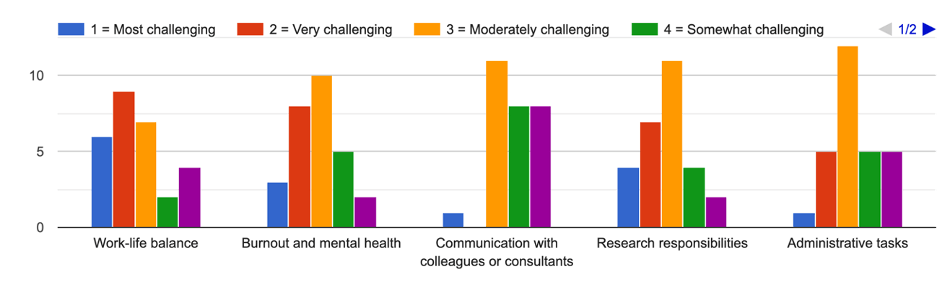
Figure 2. When asked about the biggest non-surgical challenges during fellowship, work-life balance topped the list for survey respondents.
MENTORSHIP: DON’T BE AFRAID TO ASK
While 60% to 77% of fellows reported satisfaction with their supervision, a significant minority felt inadequately supported (Figure 3). The best advice I’ve received is simple: Don’t be afraid to ask questions. A great mentor won’t just teach you; they’ll challenge you to grow.
Building personal relationships with your attendings makes a tremendous difference. I’ve found that seeking regular feedback—even when it’s uncomfortable—accelerates improvement. Remember that every attending started exactly where you are now, fumbling through their first surgeries and making mistakes.
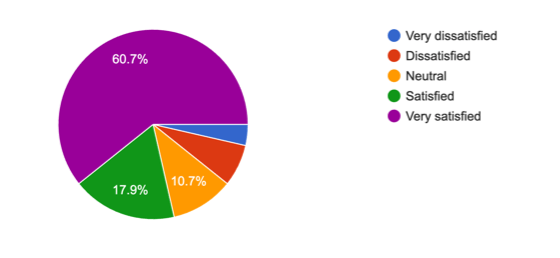
Figure 3. Fellows were asked to rank, on a scale from 1 to 5, how satisfied they were with their mentorship or supervision during their fellowship. Most of the survey respondents (nearly 61%) felt supported by their mentors.
RESEARCH: START SMALL, BE REALISTIC
Research requirements often add another layer of stress to fellowship. Among survey respondents, 78% found research moderately to extremely challenging, with 53% feeling neutral about their research preparation (Figure 4).
My approach to research during fellowship has been to start small and be realistic. Focus on one or two meaningful projects that you can complete, such as case reports or small retrospective studies. Don’t feel pressured to publish groundbreaking research during fellowship—there’s plenty of time to build your academic portfolio throughout your career.
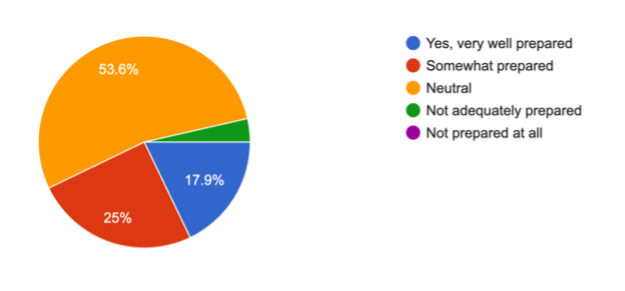
Figure 4. When asked if they felt fellowship adequately prepared them for research opportunities, approximately half of the fellows were ambivalent.
WORK-LIFE BALANCE: A NECESSARY STRUGGLE
With 60- to 70-hour workweeks, maintaining any semblance of work-life balance feels like an impossible task. Yet, it is crucial for preventing burnout and preserving your passion for the field. I’ve learned to protect small pockets of time for activities that recharge me. Whether it’s a quick video call with family back home in the Philippines, a short workout, or even a proper meal that doesn’t come from the hospital cafeteria, these moments make a difference.
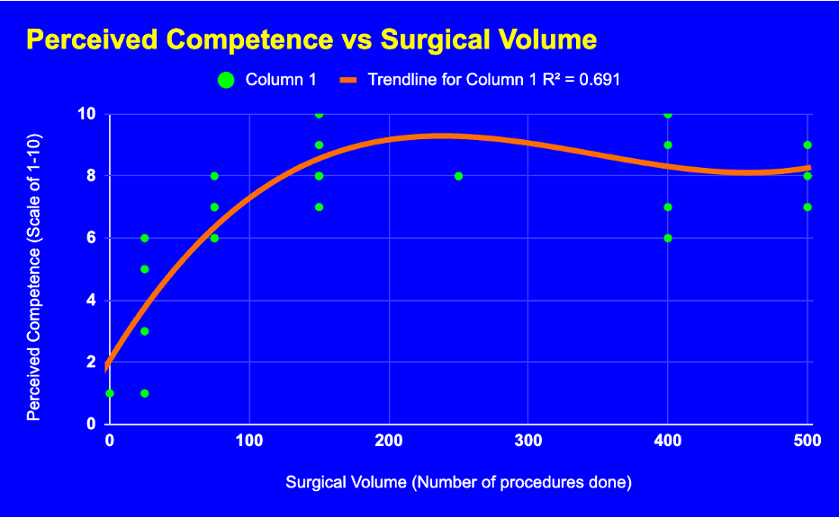
Figure 5. This graph depicts the relationship between perceived surgical competence and surgical volume. The learning curve shows that competence intially increases rapidly and plateaues after approximately 200 cases. In regression analyses, an R² value of 0.69 indicates that 69% of the variation in the dependent variable (perceived surgical competence) can be explained by the independent variable (surgical volume).
THE LEARNING CURVE: IT GETS BETTER (EVENTUALLY)
If I graphed my fellowship learning experience, it would look like a rollercoaster with an upward trajectory. The initial phase is slow while learning new techniques, adapting to unfamiliar equipment, and constantly asking, “Where’s the break?!” in retinal detachment cases. Then comes the variable yet rapid learning phase, where some skills improve quickly while others lag behind. This is followed by a peak learning period when everything starts to click. Many vitreoretinal fellows experience a plateau or even a decline as fatigue sets in, before finally reaching a level of mastery (Figure 5).
The Association of University Professors of Ophthalmology recommends minimum surgical requirements of 100 vitrectomies and 20 scleral buckles over a 2-year fellowship.1 But numbers don’t tell the whole story—it’s the quality of the experience that matters most.
FINAL THOUGHTS: IT’S WORTH IT
As my fellowship supervisor said, “Fellowship is tough, but it’s worth it.” I couldn’t agree more. You’re not just learning to be a surgeon—you’re learning to be resilient, adaptable, and competent in the face of challenges.
When frustration hits (and it will), find ways to stay motivated. Every mistake, complication, or difficult situation is a learning experience that shapes your development as a surgeon. Perhaps the most comforting realization from my survey was that fellowship is only 1 to 2 years of your career. As you continue to practice for 5, 10, or 15+ years, this intense training period becomes just one chapter of your story. It will not define you as an eye surgeon. For me, success is the sum of small efforts repeated daily. So, keep showing up, keep learning, and remember that marginal gains are still gains. The curve will go up—I promise.
1. Bassilious K, Moussa G, Kalogeropoulos D, Ch’ng SW, Andreatta W. Experience gained during vitreoretinal fellowships in the United Kingdom. Eye (Lond). 2023;37(7):1479-1483.

-1_1748961738.jpg?auto=compress,format&w=70)


