The 26th annual Advanced Vitreoretinal Techniques & Technology (AVTT) Symposium and Fellows’ Course, held August 22 – 24, 2025, in Chicago, convened leading vitreoretinal specialists and trainees for 3 days of interactive lectures, debates, surgical case discussions, and hands-on training. The program emphasized practical strategies for both trainees and seasoned retina specialists, advances in imaging and surgery, the evolving therapeutic landscape, and broader professional issues such as advocacy, leadership, and practice management.
BEST PRACTICES AND PROFESSIONAL DEVELOPMENT
The first day, designed for trainees, emphasized career transitions and engagement in the field. To start, course organizer William F. Mieler, MD, analyzed demographic trends in ophthalmology, noting high satisfaction rates but persistent challenges such as reimbursement pressure, regulatory hurdles, and obstacles to launching new practices. He stressed matching training with workforce demands.
Next, R. V. Paul Chan, MD, MSc, MBA, showcased the AAO’s Leadership Development Program, which prepares physicians for roles beyond clinical care. With alumni including four AAO presidents, the program has been the catalyst for many international leadership efforts.
Justine Cheng, MD, then emphasized the importance of mastering workflow efficiencies, surgical preparation, and striking a balance between confidence and humility during the early years of practice.
Maria H. Berrocal, MD, urged physicians to avoid the urgency trap, embrace networking, and not fear impermanence in career decisions. She stressed compartmentalizing life’s stages and prioritizing relationships and family.
Jennifer I. Lim, MD, outlined the logistical and financial realities of running clinical trials, while Jay Duker, MD, stressed that industry interactions must be grounded in authenticity and aligned with one’s values.
Mark Johnson, MD, discussed what he called compassionomics and reviewed evidence that physician compassion improves patient outcomes, adherence, and even practice revenue, while also protecting against burnout.
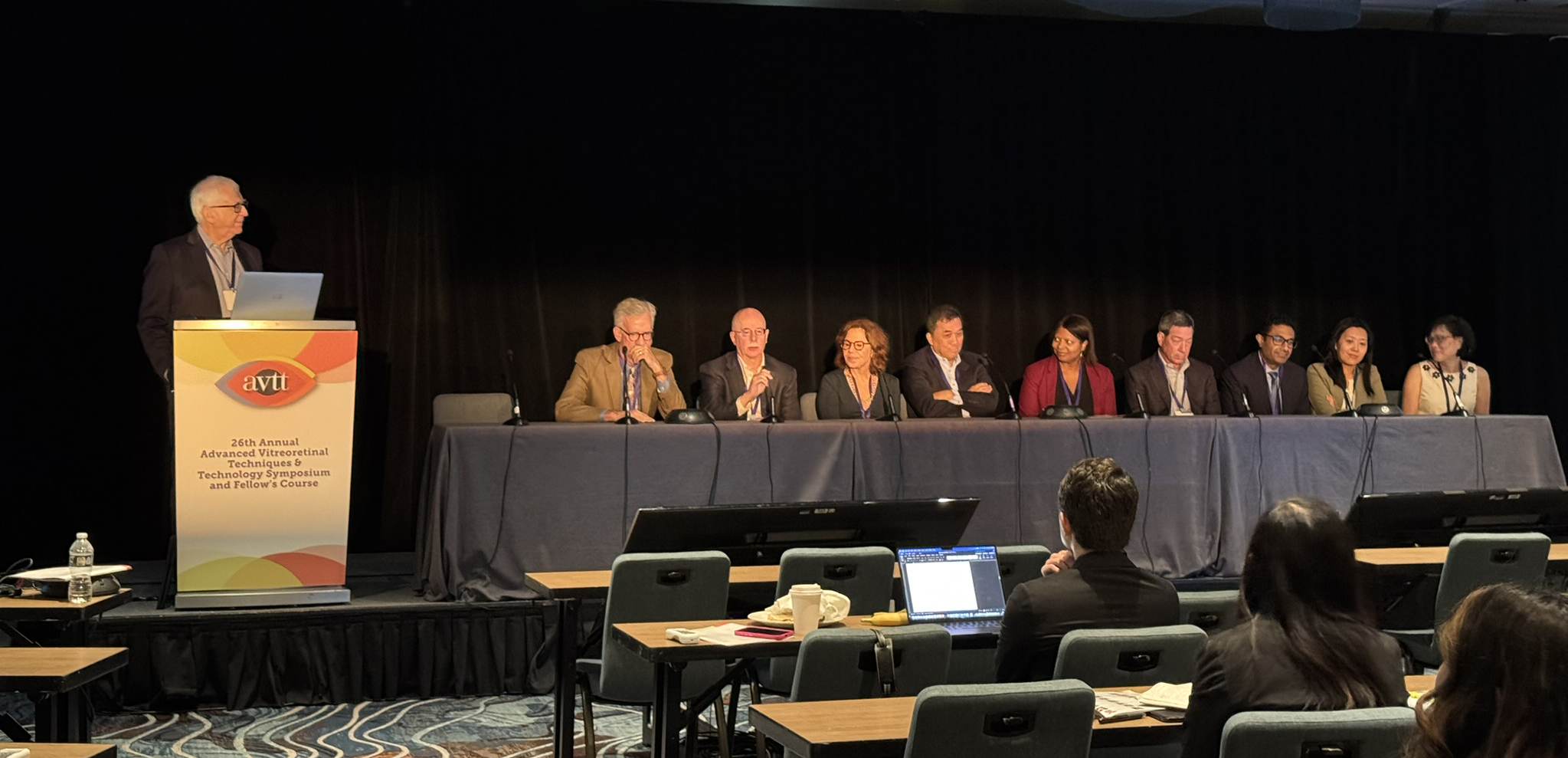
As part of an ethics roundtable, panelists debated real-world dilemmas, including transparency in the delegation of surgical steps, choices in therapy influenced by cost, and handling misinformation on social media (Figure).
Another discussion compared various practice models. The faculty emphasized that professional fulfillment hinges less on setting than on culture, mentorship, and personal alignment. Key considerations in job selection included location, family, partner compatibility, and practice culture.
George A. Williams, MD, tackled physician payments and advocacy; he warned of the growing threats to surgical innovation if payment shifts toward time-based valuation. Dr. Lim urged active engagement in advocacy to safeguard patient care and professional scope.
As part of a discussion on health care disparities, Adrienne Scott, MD, stressed that patient recruitment and diversity of study teams can mitigate disparities in access to clinical trials.
Finally, Dr. Mieler closed out the morning session with his patented photo essay highlighting the importance of mentorship and community to prevent burnout.
The afternoon sessions combined wet lab instruction with medical retina cases. The wet lab offered trainees direct exposure to advanced equipment and therapeutics in collaboration with the meeting’s industry sponsors. The day concluded with dinner and a boat cruise.
IMAGING, SURGICAL INNOVATION, AND MORE
Day 2 began with a focus on advanced imaging and its role in diagnosis and management. Practical pearls for OCT angiography and widefield imaging were emphasized by Amani Fawzi, MD, and SriniVas R. Sadda, MD, including artifact recognition, careful segmentation, and the value of ultra-widefield angiography in diseases such as diabetic retinopathy (DR), retinal vein occlusion, and pachychoroid syndromes. Dr. Cheng highlighted the role of imaging in distinguishing AMD mimickers, and Dr. Johnson described unique OCT features of a potential new class of macular disorders he coined Müller gliopathies. Two early debates engaged the audience. Home OCT monitoring shows promise for earlier treatment initiation, according to Dr. Berrocal; however, Dr. Scott argued that it has yet to translate into better visual outcomes at scale. The use of photobiomodulation for dry AMD was debated with humor among close colleagues; while Dr. Sadda cited FDA-approved data showing benefit, Dr. Fawzi cautioned against premature enthusiasm, using Dr. Sadda’s own words against him.
Felix Y. Chau, MD, reviewed the classification and treatment options for retinopathy of prematurity, while Robert A. Hyde, MD, PhD, highlighted genetic advances in pediatric retinal degenerations and the role of electrophysiology.
Next, Jennifer J. Kang-Mieler, PhD, reviewed biomarkers and blood flow dynamics in diabetic macular edema. Dr. Sadda noted that leakage, rather than nonperfusion, may better predict DR progression. Dr. Berrocal detailed evolving surgical techniques for diabetic tractional detachments, emphasizing meticulous hyaloid removal.
EMERGING THERAPIES FOR AMD
Sunday’s program focused on macular degeneration and inflammation. Dr. Williams explained that the IRIS Registry contains data from nearly one billion encounters, offering opportunities to identify disparities, inform payer negotiations, and personalize care. Next, Dr. Kang-Mieler revealed new drug delivery platforms, including hydrogels and microparticles, that may be able to extend biologic therapy duration, although durability and safety remain under investigation. Dr. Lim summarized novel agents, antifibrotics, tyrosine kinase inhibitors, and gene therapies that could transform wet AMD care, reducing treatment burden.
In addition, Dr. Sadda highlighted OCT features in wet AMD, such as lesion type, pigment epithelial detachments, and fluid fluctuations, that help predict clinical outcomes.
Following Dr. Sadda, Lawrence J. Ulanski, MD, noted that while C3 and C5 inhibitors modestly slow geographic atrophy progression, safety concerns and limited visual benefits are important considerations when deciding if and when to treat a patient. As for wet AMD, Dr. Sadda posited that baseline disease factors drive atrophy more than treatment intensity, challenging the rigid treat-to-dry approach.
The afternoon included three lively debates related to AMD: the utility of biosimilars, complement inhibition for geographic atrophy, and use of OCT angiography when managing choroidal neovascularization.
UVEITIS AND MORE
The closing session addressed challenging inflammatory conditions. Pooja V. Bhat, MD, emphasized systematic evaluation, exclusion of infections, and stepwise use of steroids and immunomodulatory therapy for noninfectious uveitis. Dr. Cheng reviewed the data for cornerstone immunomodulatory treatments, including methotrexate, mycophenolate, and adalimumab (Humira, Abbvie). She also reminded us that, because lymphomas and other neoplastic conditions can mimic uveitis, biopsy and imaging are essential. Dr. Johnson discussed several considerations for uveitis: While surgical intervention can improve vision and reduce traction, postoperative inflammation must be controlled. Dr. Mieler highlighted that prevention of endophthalmitis remains key, and early recognition ensures better outcomes.
LEARN, GROW, AND SHARE
AVTT 2025 underscored the dynamic nature of modern vitreoretinal practice. Across sessions, recurring themes emerged: the need for adaptability in career development, the power of research and collaboration, the integration of compassion into care, and the balance between innovation and evidence. The meeting reaffirmed AVTT’s unique role in blending rigorous clinical science with mentorship, practical career guidance, and open debate, ensuring that both trainees and experienced surgeons are equipped for the challenges and opportunities ahead.
SAVE THE DATE: August 28 – 29, 2026
27th Annual AVTT Symposium & Fellows’ Course
Chicago, Illinois
For more information, visit medconfs.com.