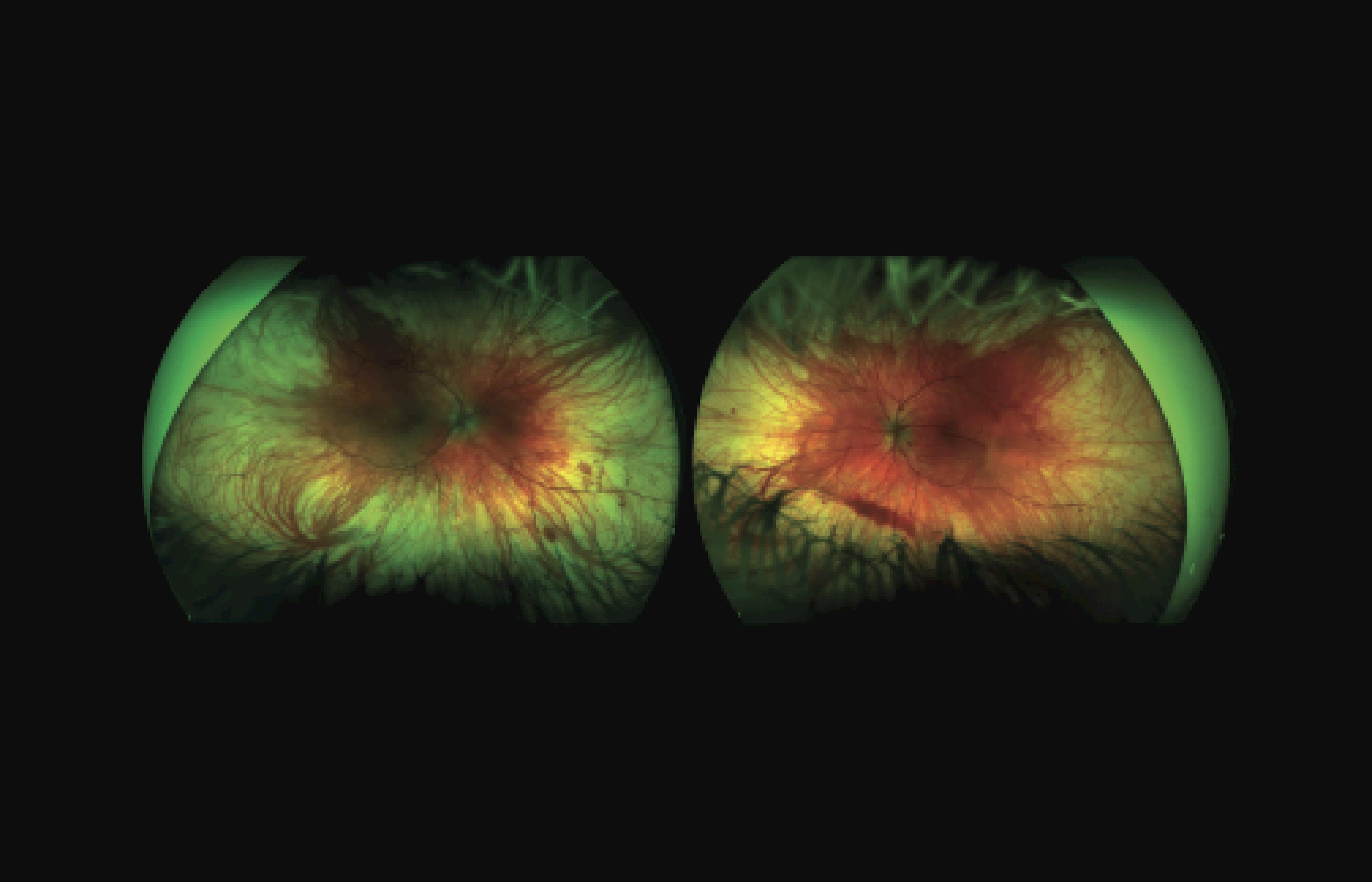
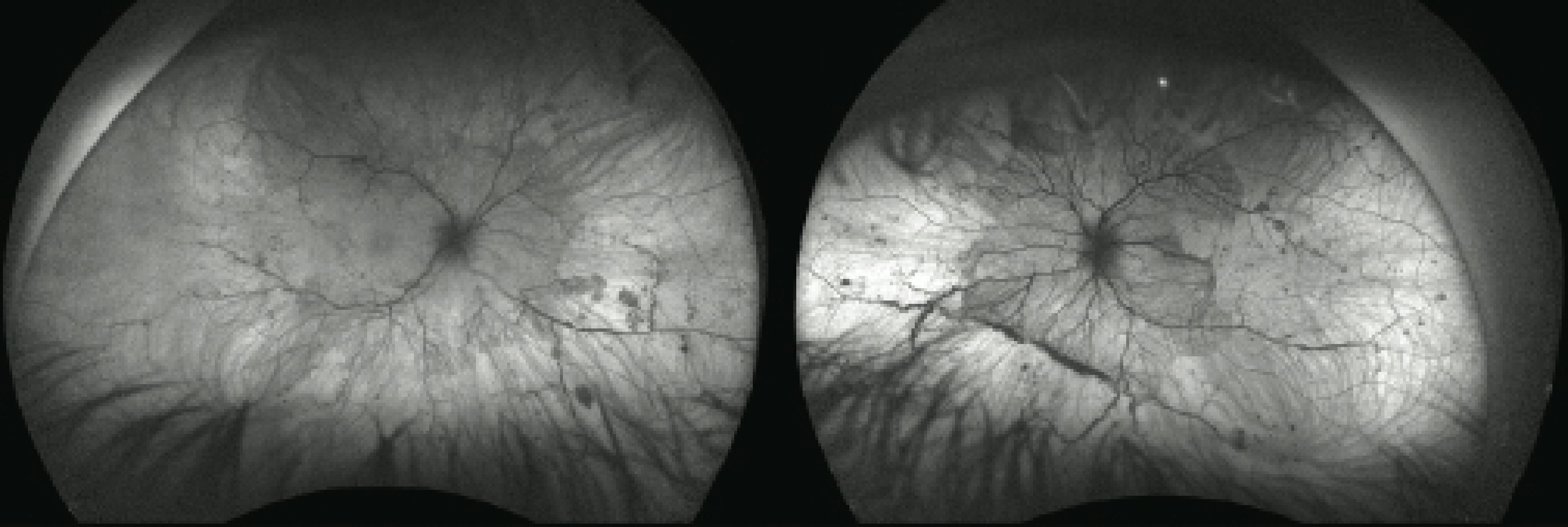
A 17-year-old girl with a history of type 1 diabetes and oculocutaneous albinism presented with blurred vision in her left eye, noted after a recent episode of diabetic ketoacidosis requiring hospitalization. Her BCVA was 20/25 OD and counting fingers at 3 ft OS. Widefield pseudocolor fundus images demonstrated bilateral proliferative diabetic retinopathy with extensive neovascularization of the discs and elsewhere, severe dot-blot hemorrhages and microaneurysms, and marked venous beading. Mild optic disc edema was noted in her right eye, and a large preretinal hemorrhage was found in the inferior periphery of her left eye. Bilateral fundus hypopigmentation was also present, consistent with her history of albinism (Figure 1). Fundus autofluorescence further characterized the impressive extent of the bilateral neovascular proliferative disease (Figure 2).
TREATMENT APPROACH
The patient was unable to tolerate laser procedures in the clinic. Over the subsequent 9 months, she went to the OR three times for panretinal photocoagulation (PRP) in each eye under general anesthesia. Adequate laser uptake was obtained, despite retinal pigment epithelial hypopigmentation related to her history of albinism. The vitreous hemorrhage in her left eye improved, and the neovascularization regressed in each eye, solely from PRP without the need for supplemental intravitreal anti-VEGF injection.
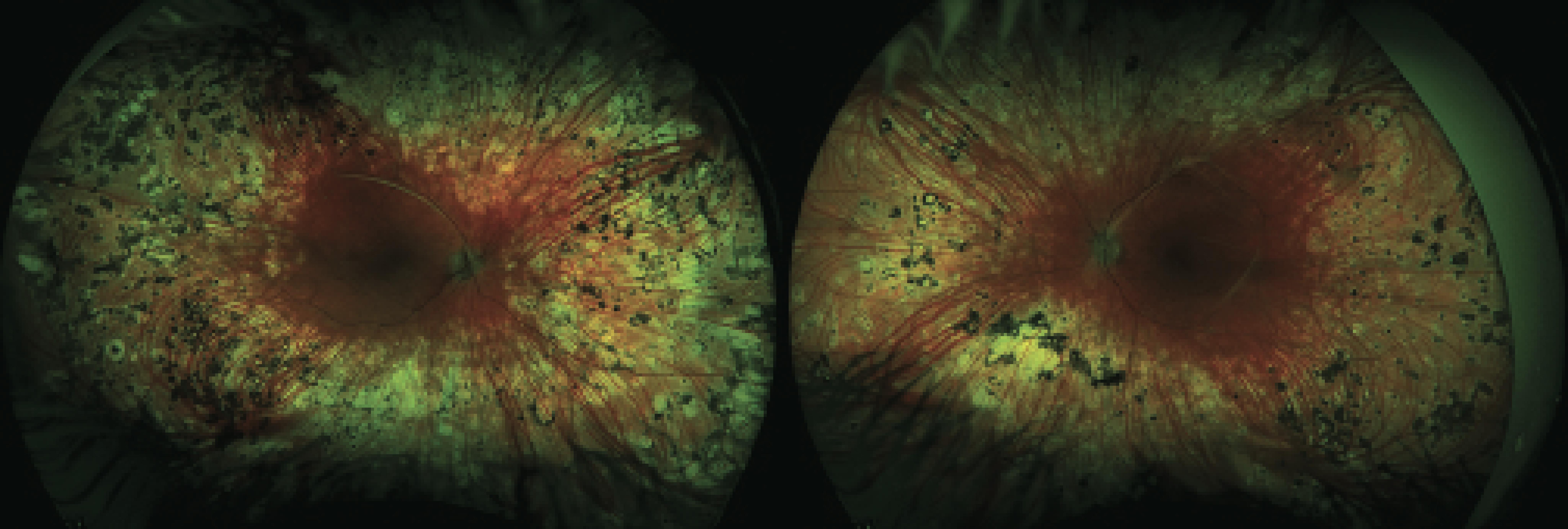
At the final follow-up 3 years later, her VA had improved to 20/25 OD and 20/50 OS. Fundus photography demonstrated bilateral peripheral laser scarring 360° with complete regression of the neovascularization (Figure 3).