



Emory Eye Center’s Retina Department hosted the 37th annual Southeastern Vitreoretinal (SEVR) conference on May 30 – 31, 2025, in Atlanta. This meeting brings together Emory alumni, retina specialists from across the southeastern United States, and expert guests to engage in lively discussions on timely topics. This year’s meeting—chaired by Nieraj Jain, MD, and co-directed by G. Baker Hubbard III, MD, and Sruthi Arepalli, MD—featured a program rich in SEVR traditions alongside new segments such as fellow cases and a young physician lunch focused on early career development and networking. Here, we share some of the highlights and a glimpse into the celebrations for Dr. Hubbard and returning faculty Daniel F. Martin, MD.
PNEUMATIC RETINOPEXY AND RRD REPAIR
Rajeev H. Muni, MD, gave the Paul Sternberg Jr. Lecture and presented his research and insights on pneumatic retinopexy (Figure 1). He emphasized that conventional metrics of success (ie, central visual acuity and anatomic reattachment) may overlook nuances in visual recovery and patient quality of life. Dr. Muni highlighted the importance of photoreceptor alignment and preservation of the retinal architecture, urging the audience to adopt a more patient-centered and functionally driven approach when evaluating outcomes in rhegmatogenous retinal detachment (RRD) repair.
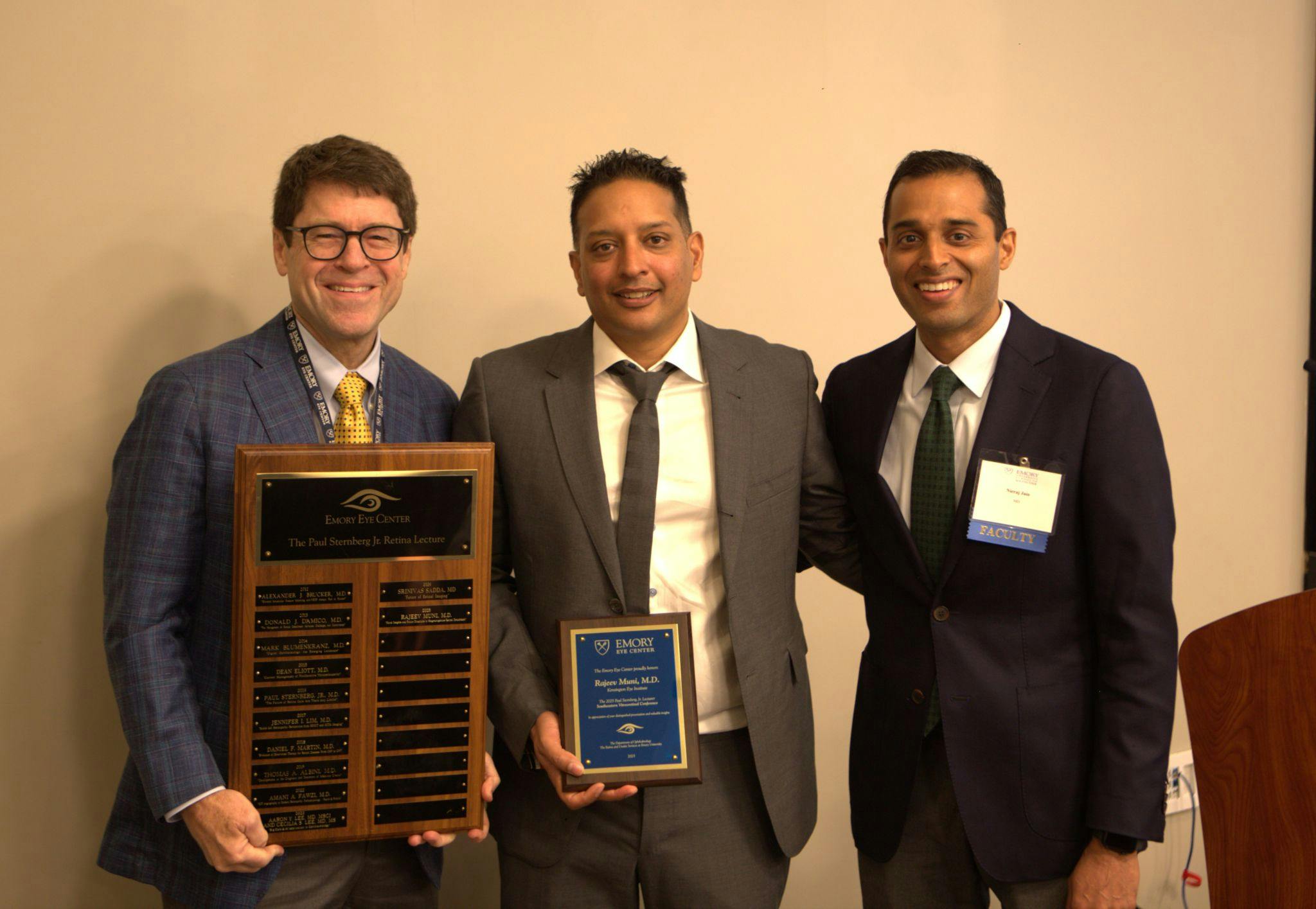
Figure 1. Dr. Muni (center) receives the Paul Sternberg Jr. Lecture plaque from Dr. Hubbard (left) and Dr. Jain (right). Image courtesy of Christina Spencer, Event Coordinator, Emory University School of Medicine.
Dr. Muni reviewed key tenets and pearls for successful pneumatic retinopexy, such as how to prevent subretinal gas, ways to avoid “fish eggs,” the best timing of laser or cryotherapy, and proper patient positioning. To illustrate pneumatic retinopexy’s versatility, he presented a series of complex cases—such as those involving proliferative vitreoretinopathy, posterior retinal breaks, retinal dialysis, and a pediatric patient with Stickler syndrome—in which the technique achieved favorable outcomes. Dr. Muni concluded by dispelling several persistent myths surrounding pneumatic retinopexy, advocating for its broader consideration based on emerging evidence and refined surgical strategies.
VISITING LECTURERS
The program also featured distinguished visiting lecturers: Sonia Mehta, MD; Jesse Smith, MD; and Justin Townsend, MD. Dr. Townsend discussed his work on the association between self-reported marijuana use and failure of RRD repair. Many patient-related factors influence surgical success, and Dr. Townsend found higher rates of RRD repair failure among patients with self-reported marijuana use. The reason for this association is unclear, but with increasing rates of marijuana use in the United States, this is an important piece of history surgeons should obtain from patients, and Dr. Townsend suggested surgeons consider including it in pre- and post-surgery counseling.
Dr. Mehta then shared her expertise on scleral-fixated and sutured IOLs. She reviewed a range of available techniques and lens options for secondary implantation, offering practical pearls for optimizing surgical outcomes. Through a series of surgical videos, she demonstrated key steps and strategies for successful implantation, highlighting tips for minimizing complications and ensuring stable fixation. She offered practical guidance for achieving better refractive outcomes in scleral-fixated IOL surgery, reinforcing the value of meticulous planning and intraoperative precision.
Dr. Smith discussed the unique challenges of vitreoretinal surgery in high-altitude areas such as Colorado, where patients face significant elevation changes. He emphasized that the rate of elevation change affects the eye’s ability to regulate IOP through mechanisms like gas dissolution and scleral compliance. Surgeons should understand local geography, counsel patients using elevation maps, pretreat at-risk patients, and advise immediate descent if pain or vision loss occurs. Dr. Smith highlighted research in the Colorado Elevation Study to improve care guidelines for these patients.
EMORY FACULTY TALKS
Jiong Yan, MD, updated attendees on revakinagene taroretcel-lwey (Encelto, Neurotech Pharmaceuticals) for the treatment of macular telangiectasia type 2 (MacTel). After phase 3 clinical trials demonstrated slowing of photoreceptor loss in treated patients, the implant became the first FDA-approved treatment for MacTel. A phase 4 trial will further evaluate its safety and efficacy in patients who previously underwent the sham procedure in the phase 3 trial.
Dr. Arepalli discussed inflammatory events reported with new intravitreal therapies. As more physicians use recently approved new treatments for various retinal conditions, rare and potentially devastating complications have been identified that were not captured in clinical trials. As other novel therapies and biosimilars hit the market, physicians will have to be on the lookout for unknown complications.
Kevin Ferenchak, MD, reviewed the history and potential future of gene therapy treatments for wet AMD. He highlighted the eye as a prime target for gene therapy given the excellent imaging modalities available and noted that the fellow eye can be used as a control in clinical studies.
Dr. Martin provided a thoughtful review of emerging therapies for AMD, including FDA-approved complement inhibitors for geographic atrophy and photobiomodulation. He offered a critical appraisal of their applicability, efficacy, and safety, highlighting the potential benefits and current limitations.
Anant Madabhushi, PhD, who serves as the executive director for the Emory Empathetic AI for Health Institute, also joined the event. Dr. Madabhushi has done extensive work using AI to answer clinical questions in ophthalmology, cardiovascular disease, and cancer. In his talk, he discussed both the power and shortfalls of AI use in medicine. He encouraged attendees to rethink how to leverage AI to phenotype imaging and produce results that are reproducible and explainable rather than using a “blackbox” approach.
CELEBRATING AN EMORY LEGACY
The highlight was the reception at the Michael C. Carlos Museum, where Dr. Hubbard was honored for 25 years of hosting SEVR and his service to Emory Eye Center (Figure 2). Dr. Hubbard, the chief of the Vitreoretinal Surgery and Disease section, is an expert in pediatric and adult retinal disease. In addition to his clinical, surgical, and research accomplishments, Dr. Hubbard is a skilled communicator, selfless leader, and expert teacher. The collaborative atmosphere at SEVR is a direct reflection of the culture he has carried forward through the Emory Retina Department.
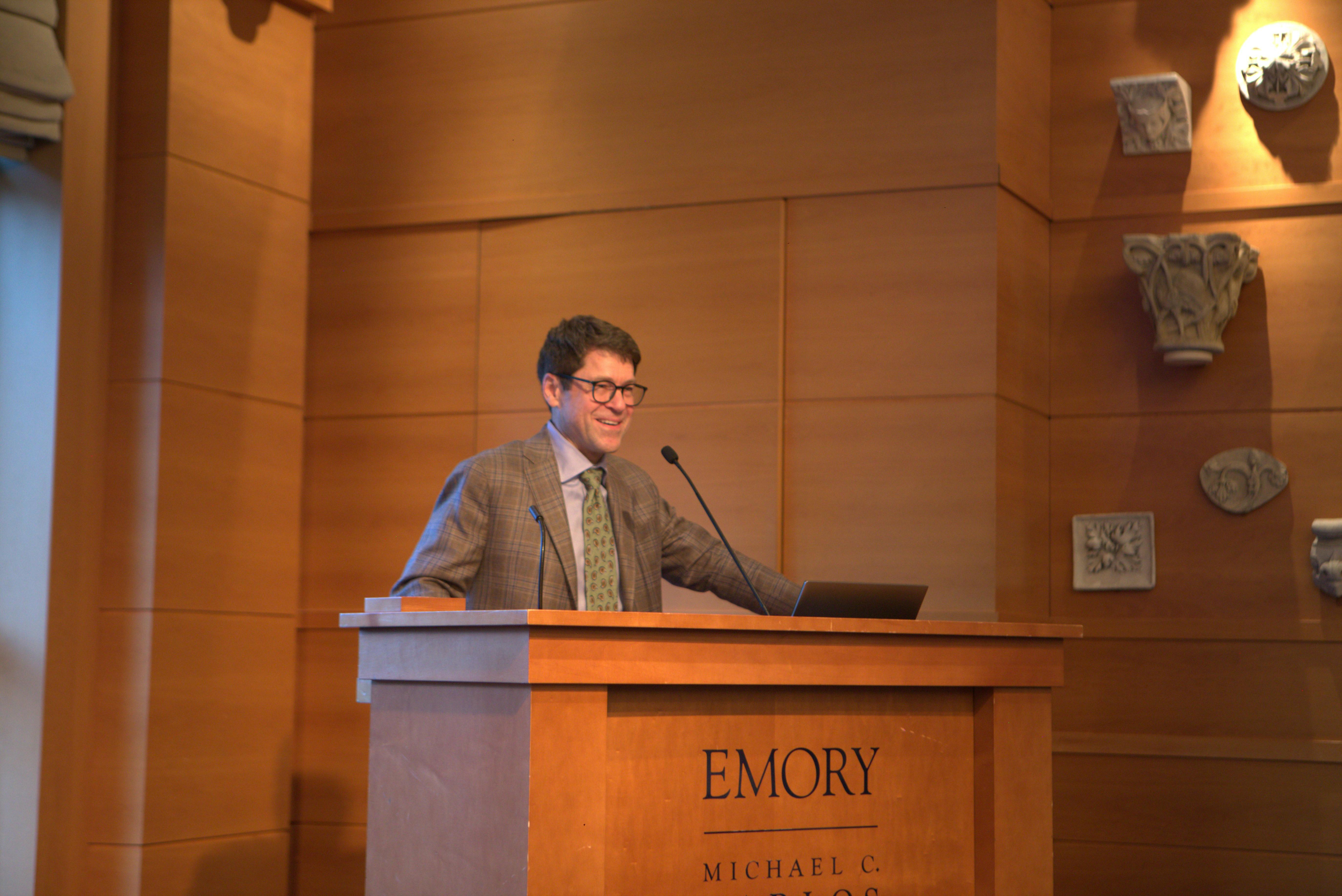
Figure 2. Dr. Hubbard was recognized during the SEVR reception at the Michael C. Carlos Museum in Atlanta, marking 25 years of hosting the conference. Image courtesy of Christina Spencer, Event Coordinator, Emory University School of Medicine.
RETURNING FACULTY
This year, we also celebrated Dr. Martin’s return to the Emory Eye Center. A graduate of the Emory Ophthalmology Residency program, Dr. Martin was a crucial part of the Emory Retina Faculty from 1993 until 2008, when he moved to become Chair of the Cleveland Clinic Cole Eye Institute. Dr. Martin currently serves as the network chair for the DRCR Retina Network and has made major contributions to the field through his research, patient care, and teaching. He will undoubtedly have a positive effect on the growth and future of the Emory Eye Center for years to come.
UNTIL NEXT YEAR
The 37th annual SEVR conference reinforced its role as a vital platform for advancing vitreoretinal care and collaboration. With its unique blend of tradition and innovation, the meeting continues to inspire excellence in patient care and surgical practice. We look forward to welcoming everyone back to Atlanta for SEVR 2026 on May 15 – 16, 2026.


