




The 53rd annual Aspen Retinal Detachment Society (ARDS) meeting, held March 1 – 5, 2025, in Snowmass Village, Colorado, included several excellent panel discussions. These are always my favorite part of the meeting because the panelists share their varied approaches to surgical and medical retina, the audience engages with the conversation, and we all learn so much. I hope you enjoy the recap below, and I look forward to seeing you at next year’s meeting, scheduled for February 28 – March 4, 2026!
– Timothy G. Murray, MD, MBA
As part of the 53rd annual ARDS meeting, experts gathered for three lively panel discussions that touched on everything from complex diabetic eye surgery and macular hole repair to diagnostic imaging, wet AMD therapies, and shifting practice patterns. Here, I summarize the key takeaways.
PANEL 1: RETINAL DETACHMENTS AND MACULAR HOLES
The first panel was moderated by Donald J. D’Amico, MD, and included Audina M. Berrocal, MD; Mrinali P. Gupta, MD; John W. Kitchens, MD; Mario R. Romano, MD, PhD; and Lejla Vajzovic, MD (Figure 1).
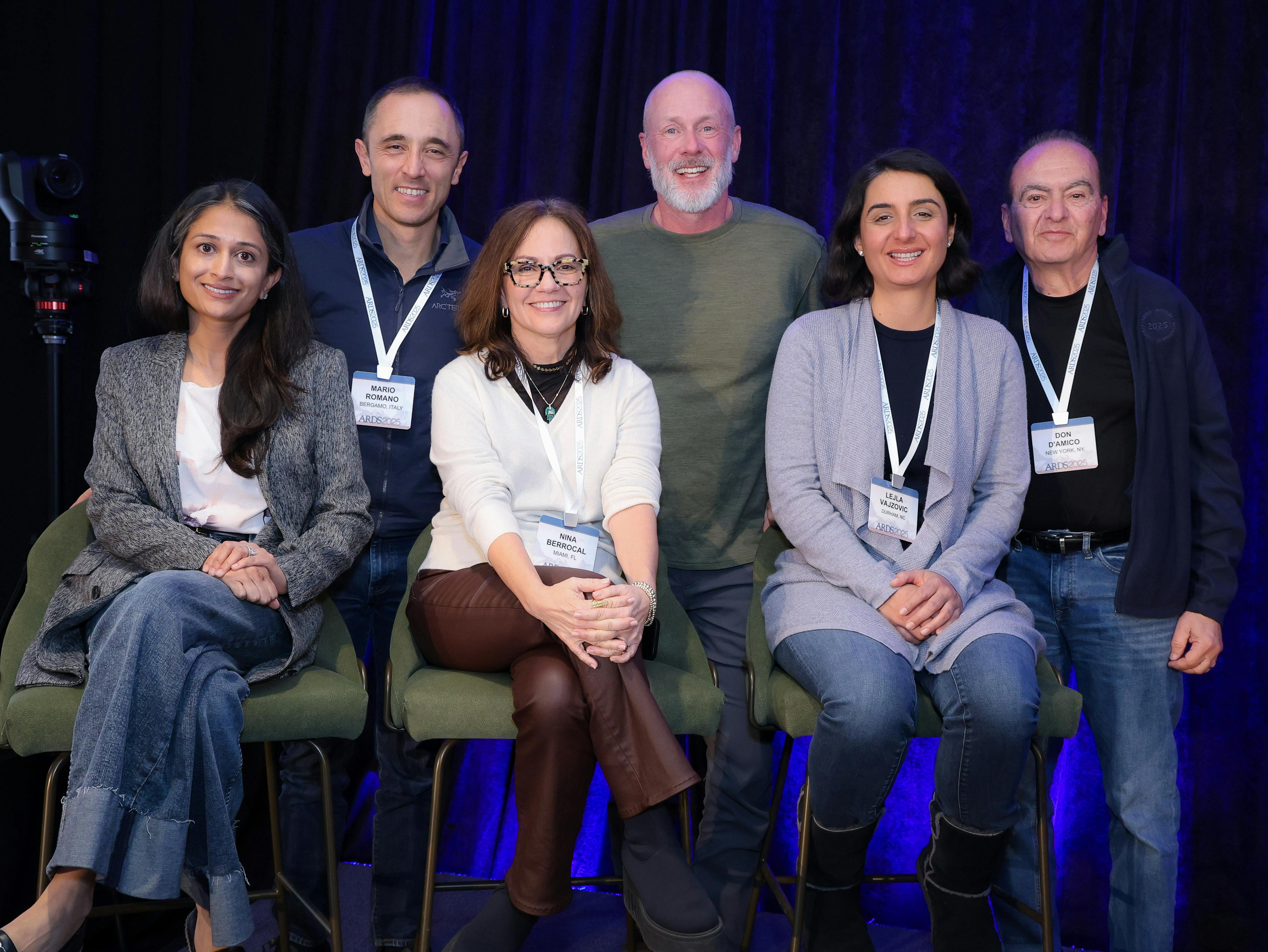
Figure 1. The “Let’s Talk Surgical Retina” panel included (left to right): Drs. Gupta, Romano, Berrocal, Kitchens, Vajzovic, and D’Amico. Image courtesy of Kevin Caldwell Photography.
The panel opened with a candid discussion of diabetic tractional retinal detachments (RDs). Across the board, panelists reported a shift toward earlier surgical intervention, favoring prompt vitrectomy in cases of persistent vitreous hemorrhage rather than prolonged observation, especially in the absence of a posterior vitreous detachment. Dr. Kitchens noted that early vitrectomy—often within 2 to 3 weeks—can reduce patient burden and potentially improve outcomes, especially with modern instrumentation and techniques.
The experts then debated the role of internal limiting membrane (ILM) peeling in diabetic tractional RD cases. While some advocated for peeling to relieve traction, Dr. Romano warned that in eyes with diabetic Müller cell pathology, ILM manipulation could induce retinal trauma and limit functional recovery. All agreed that careful case selection is critical.
In the setting of diabetic macular edema (DME), steroids were highlighted as the go-to strategy when anti-VEGF agents fail, although functional gains remain a challenge. En face OCT was noted to be a useful tool to better characterize the edema as exudative or structural and to rule out subtle traction. Surgical intervention in diffuse, non-tractional DME was generally not favored.
Macular hole surgery was another major focus of the discussion. For mid-size holes of approximately 400 µm, most panelists still favor standard ILM peeling rather than ILM flap techniques, citing consistently high closure rates. For larger holes or those in myopic eyes, ILM flaps, amniotic membrane grafts, and autologous retinal transplants were discussed; some panelists favored procedural simplicity, while others preferred techniques showing better integration on OCT. Swept-source OCT was highlighted for its utility in postoperative imaging through gas.
Looking ahead, the panelists shared visions for future innovation, including bioengineered scaffolds, platelet-rich plasma-loaded hydrogels, and tools to simplify macular buckling. Next-generation tamponades in particular were thought to be potentially transformative for surgical outcomes and patient quality of life.
PANEL 2: IMAGING AND WET AMD THERAPY
The next panel, focused on medical retina, was moderated by Timothy G. Murray, MD, MBA, and included Szilard Kiss, MD; John T. Thompson, MD; Carl D. Regillo, MD; and John B. Miller, MD (Figure 2).
This panel explored a variety of diagnostic imaging techniques for wet AMD. Dr. Thompson routinely uses fluorescein angiography (FA) at initial diagnosis, emphasizing its utility for documentation and treatment planning. Others, including Drs. Kiss and Miller, reported rarely using FA and instead favoring OCT and, selectively, OCT angiography (OCTA) in certain ambiguous cases.
While OCTA was praised for its noninvasive depth resolution, limitations in segmentation and interpretability led to differing practice patterns. Some noted that OCTA was particularly useful in pediatric cases and non-AMD conditions, such as retinal vascular anomalies and familial exudative vitreoretinopathy.
Bilateral same-day intravitreal injections for wet AMD were also discussed in depth. Most panelists endorsed this practice, citing evidence that the risk of bilateral endophthalmitis is low when separate vials and lot numbers are used. However, concerns were raised about the legal defensibility of same-lot bilateral injections, especially with compounded agents such as bevacizumab (Avastin, Genentech/Roche).
Drug selection strategies also varied. While some preferred to start all patients on second-generation agents such as 8 mg aflibercept (Eylea HD, Regeneron) or faricimab (Vabysmo, Genentech/Roche), others advocated for initial use of bevacizumab. Recent shortages and reimbursement shifts have made branded drugs more accessible in some practices, while others face increasing challenges due to rising costs and limited patient assistance programs. The panel noted that these pressures are influencing not only drug selection but also injection intervals and use of samples.
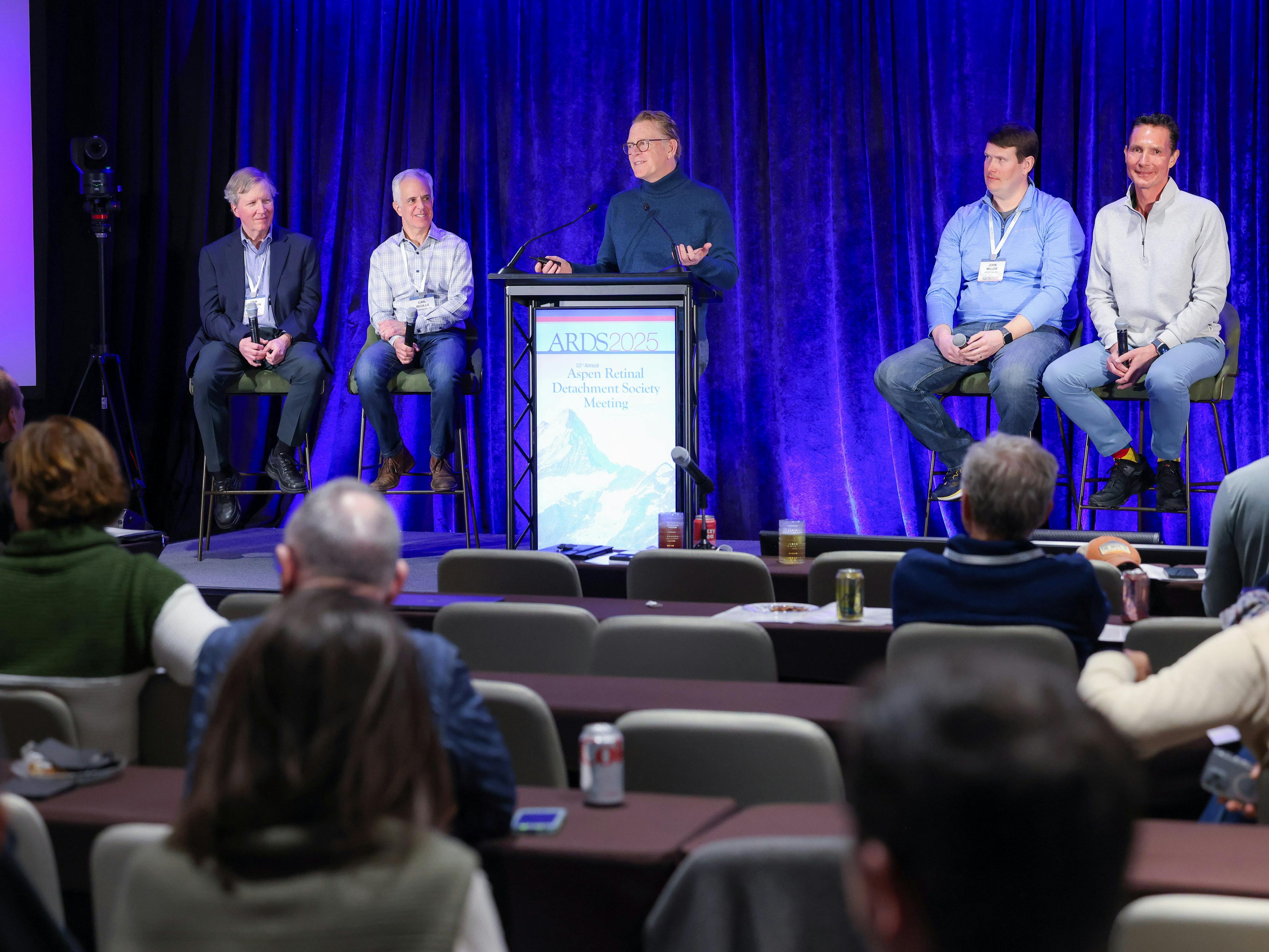
Figure 2. During the “Let’s Talk Medical Retina” panel, (left to right) Drs. Thompson, Regillo, Murray, Miller, and Kiss shared their thoughts on diagnostic imaging and wet AMD therapy. Image courtesy of Kevin Caldwell Photography.
PANEL 3: SHIFTING LANDSCAPES AND PRACTICE PATTERNS
The final panel was moderated by Dr. D’Amico and included Drs. Berrocal, Gupta, Miller, Murray, and Vajzovic. This lively discussion centered on growing concerns about declining access to ORs for emergent retinal cases such as macula-on RDs, endophthalmitis, and intraocular foreign bodies. Community hospitals are increasingly limiting OR time for retinal surgery, leading to some smaller community practices being shut out altogether. Panelists in academic settings noted that this has prompted a surge of emergent cases at their academic centers that have overwhelmed their OR schedules and created anesthesia bottlenecks.
The panelists identified declining reimbursement for complex retina surgical codes as a root cause. They explained that hospitals lose money on RD repairs and have little incentive to accommodate these cases. Some panelists suggested that office-based surgery could be a viable solution; however, logistical, regulatory, and safety concerns remain barriers to widespread adoption. Many agreed that pneumatic retinopexy may increase in prevalence to help bridge the gap until the OR is available for urgent RD repair.
The panelists agreed that these constraints may affect care delivery models, possibly encouraging the development of concierge practices and incorporating mid-level providers to increase practice efficiency. It may also affect the quality and quantity of fellowship training opportunities for the next generation of retina specialists.
There was broad consensus that organized advocacy and systemic changes are needed to address these issues. A call was made for retina societies to collect data on OR access limitations and advocate for improved reimbursement and policy change to preserve patient access to timely care.
UNTIL NEXT YEAR…
The 2025 ARDS panels showcased both the clinical advances shaping retina care today and the economic and logistical realities redefining its future. Such robust discussions allow everyone an opportunity to learn from experts in the field and help improve care across the board. Next year’s meeting, set for February 28 – March 4, 2026, is sure to deliver another set of top-notch panels to explore advances in the field and barriers to care.


_1773249222.png?auto=compress,format&w=75)


