



The 26th Annual Retina Fellows Forum, held January 30-31, 2026, in Chicago, convened second-year vitreoretinal fellows for 2 days of surgical cases and videos, networking, and lively debate. Carl C. Awh, MD, FASRS; David R. Chow, MD, FASRS; and Tarek S. Hassan, MD, FASRS, hosted a program built to sharpen clinical decision making and strengthen professional connections (Figure 1).
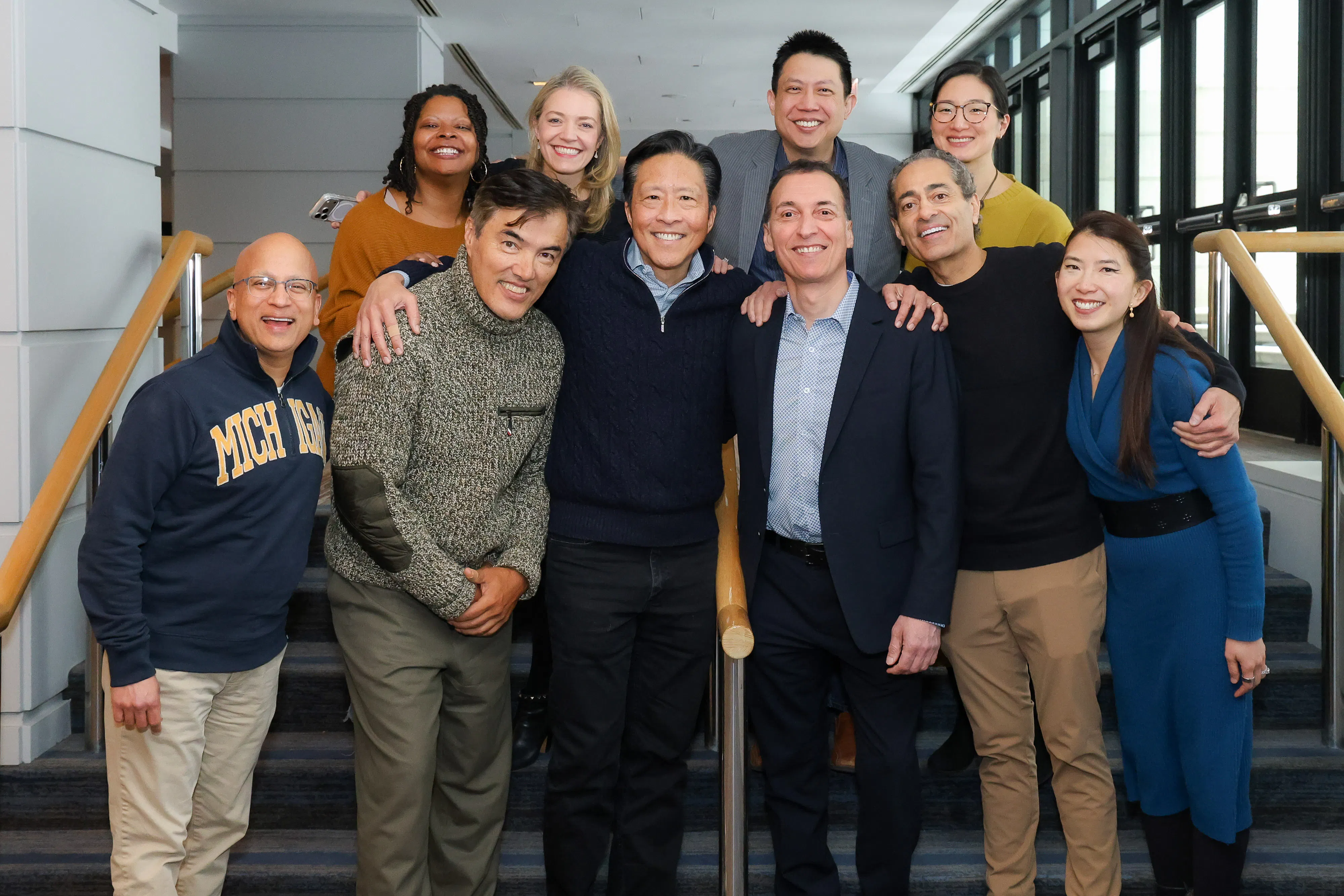
Figure 1. The 2026 meeting boasted a stellar faculty, including (left to right) Drs. Garg, Scott, Chow, Rachitskaya, Awh, Emmanual Chang, Eliott, Hassan, Chee, and Margaret Chang. Image courtesy of Kevin Caldwell Photography.
INNOVATIONS IN RETINA
For the first panel, Adrienne W. Scott, MD, FASRS, framed wet AMD therapy around durability and the widening gap between trial cadence and real-world adherence. She reviewed contemporary options such as faricimab (Vabysmo, Genentech/Roche), aflibercept 8 mg (Eylea HD, Regeneron), and the port delivery system with ranibizumab (Susvimo, Genentech/Roche), and highlighted gene therapy and tyrosine kinase inhibitor platforms as potential next-wave approaches.
The discussion then narrowed to one of the daily decisions fellows will face as attendings: when to switch a patient’s therapeutic option. The recurring pearl was to define your heuristics before the clinic day defines them for you. Margaret A. Chang, MD, MS, FASRS, emphasized the value in applying consistent criteria so these changes feel deliberate. The panel added that step therapy and payer rules may drive parts of the sequence, making clear documentation and patient-facing explanations essential.
Emmanuel Y. Chang, MD, PhD, then reviewed the management of submacular hemorrhage. He discussed everything from anti-VEGF monotherapy and intravitreal tissue plasminogen activator (tPA) with pneumatic displacement to subretinal tPA displacement with vitrectomy. Dr. Chang cautioned against relying on a single OCT cutoff to guide intervention. Instead, the panel endorsed an individualized, patient-centered approach, encouraging fellows to carefully document the clinical factors informing their decision making, including hemorrhage size and thickness, chronicity, location, baseline visual acuity, and whether the patient can position and follow-up promptly.
Surgical pearls included controlled subretinal access, gentle injection into the thickest area of the clot, and strict attention to postoperative positioning as a critical determinant of success.
EXPERT SURGICAL ADVICE
The surgical video panels, moderated by Dr. Chow and Sunir J. Garg, MD, highlighted that the success of high-expectation cases, such as symptomatic floaters and epiretinal membrane, is dictated as much by patient-reported symptoms and thoughtful counseling as it is the surgical technique itself. The faculty emphasized that careful selection, alignment of symptoms with clinical findings, and clear communication about realistic outcomes are central to surgical success and patient satisfaction.
When discussing epiretinal membrane and macular hole repair, the faculty focused on reproducible fundamentals: optimize visualization, stay tangential, and protect the inner retina. Most endorsed the use of dye and thoughtful light management, and several discussed contact lens viewing and digital visualization as safety multipliers. Tools such as the micro-vacuum pick (Katalyst) and the Finesse Flex Loop (Alcon) were mentioned as ways to reduce instrument exchanges, but the message was consistent across preferences: If the peel becomes forceful or the view degrades, re-stain, change your approach, or stop rather than risk nerve fiber layer injury.
COMPLICATIONS AS CURRICULUM
Aleksandra V. Rachitskaya, MD, FASRS, reframed complications as a shared learning tool and a leadership test. She touched on themes such as maintaining control of the surgical environment, proactively anticipating high-risk steps, and implementing small technical adjustments that reduce complication risk. When faced with a complication, the faculty emphasized the need for calm surgical judgment under pressure, including a willingness to stage a case when visualization or safety deteriorates.
Postoperative communication was treated as a critical part of complication management. Faculty advocated for direct language, ownership, and presence. The take-home for fellows was that technical competence is necessary, but composure and clarity are what preserve trust.
SURGICAL CASE INSIGHTS
The fellows’ case presentations, moderated by Dr. Margaret Chang, and Yewlin E. Chee, MD, delivered practical pearls across trauma, oncology, and complex retinal detachment. Trauma cases included glass intraocular foreign body retrieval (by Joseph C. Giacalone, MD, PhD) and post-injury retinal detachment repair (by Jonathan Lin, MD, PhD), emphasizing the value of preoperative planning, secure wound strategy, and staged surgery when appropriate. Additional presentations—including a bungee-cord injury (by Prithvi R. Bomdica MD, MBA) and a modified sutured IOL technique (by Rui Wang, MD)—reinforced that the “small” choices, such as incision planning, hemostasis, and fixation redundancy, often determine whether a challenging case stays under control.
On day 2, fellow presentations included a case of submacular hemorrhage (by Caroline C. Awh, MD), vitreoretinal biopsy planning for suspected intraocular lymphoma (by Patrick Hughes, MD), and combined tractional and exudative detachment management in hemangioblastoma-related disease (by Yuxi Zheng, MD). Abdulrahman Alotaibi, MD, discussed a pneumatic-first maneuver before vitrectomy to calm a bullous detachment in select cases. Across sessions, the faculty kept the discussion pointed: Identify the inflection point that changes management, define plan B before making an incision, and know that “doing less” can be the right first move.
Dr. Hassan’s diabetic vitrectomy pearls aligned with that mindset. Timing should follow macular threat and traction, not just visual acuity, and posterior hyaloid management remains central. Modern cutters support efficient unimanual work in many cases, but fellows were encouraged to stay bimanual-ready for dense fibrovascular disease.
BUSINESS 101
The business of retina panel led by Dr. Margaret Chang discussed how financial systems are essential aspects of vitreoretinal clinical practice. Prior authorization requirements vary by payer and change quickly, and small documentation errors can derail reimbursement and delay care. Fellows were encouraged to become knowledgeable of their clinical coding practices to prevent avoidable, high-cost errors such as treating an unauthorized eye or administering the wrong drug.
Drug inventory and reimbursement timing were framed as solvency risks for practices carrying high-cost medications. The faculty emphasized tight inventory control, accurate unit billing, and caution with newly approved drugs until coding stabilizes. The panel also noted that cost conversations have become more frequent, reinforcing the need for clear counseling and realistic planning across the year.
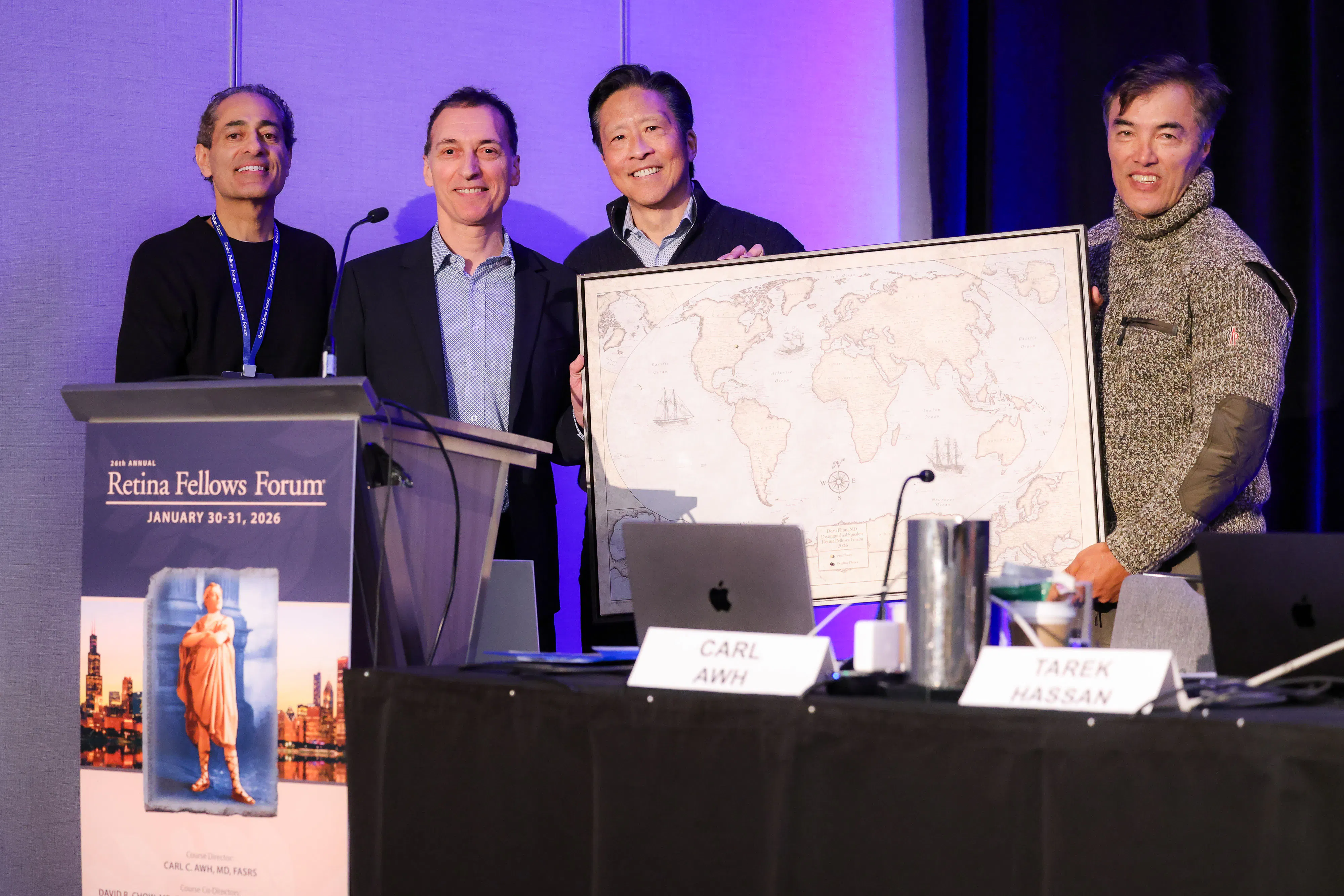
Figure 2. Drs. Hassan, Awh, and Chow, present Dr. Eliott with a gift to commemorate his talk as this year’s distinguished guest speaker. Image courtesy of Kevin Caldwell Photography.
ADVICE ON STARTING YOUR CAREER
Distinguished guest speaker Dean Eliott, MD, FASRS, delivered outstanding early-career advice with a simple premise: The first year is about stability, not heroics. Limit variables, do what is right for the patient, and know when to stop, he advised. He elaborated on the best preoperative preparations, postoperative follow-up, and managing antagonistic patients. In clinic, be a consultant who thinks deeply and always puts the patient first (Figure 2).
Closing remarks from Dr. Awh and the faculty during the “Starting Your Career: The Real World” session reframed success around sustainability and community. Dr. Awh encouraged fellows to treat location and support systems as strategic career infrastructure and to protect what refuels them, so the early-career acceleration remains durable.
Discussion tables, dinner, and bowling reinforced that the retina community is built in the lecture hall and beyond.
Through candid discussion, surgical transparency, and practical guidance spanning innovation, complications, and business fundamentals, the Retina Fellows Forum equips senior fellows with both technical confidence and professional clarity. The enduring effect of the event reflects the extraordinary dedication of its course directors and organizing faculty, whose commitment continues to strengthen each new generation of vitreoretinal surgeons joining the retina the community.


