



Patient copay assistance programs have been wonderful resources for patients who require chronic treatment with high-cost drugs such as anti-VEGF agents. However, these programs have recently experienced significant underfunding, leaving certain patients struggling to pay for their therapies. Retina Today (RT) sat down with Michael M. Lai, MD, PhD, to discuss what happened and how retina practices have been adjusting to ensure the best possible care for their patients.
RT: WHAT IS GOOD DAYS?
Dr. Lai: Good Days is a nonprofit organization that supports copays for patients with chronic conditions; in retina, the fund supports patients with chronic diseases such as AMD, diabetic retinopathy, retinal vein inclusion and, recently, geographic atrophy. Retina drugs are expensive and most patients require ongoing treatment for a long period of time, sometimes indefinitely. Programs like Good Days fill a gap to help patients who can’t afford the copay or the deductibles to maintain their treatments.
Key Takeaways
- Copay assistance programs such as Good Days fill a gap to help patients who can’t afford the copay or the deductibles to maintain their treatments. Donations to these copay assistance programs have dwindled over the years, leaving many patients without the needed financial support.
- The loss of copay assistance programs mostly affects patients with Medicare Advantage plans and other plans with high deductibles and copays.
- To address the financial strain on patients, clinicians have switched some patients to repackaged and off-label bevacizumab (Avastin, Genentech/Roche), used samples from manufacturers, and, in certain cases, try to extend the treatment interval.
These funds have been in existence for years to support patients, and the need for them has increased because there are more treatments available and the cost of these treatments have increased. At the same time, the health care system has been shifting more of those increased costs onto patients through insurance plans with high deductibles and copays, including Medicare Advantage plans.
With all these factors colliding—more treatments that cost more and insurance plans and payers shifting costs to the patient—copay assistance programs have become more important in supporting patients who now face increasing financial burden for their health care.
RT: WHY ISN’T GOOD DAYS AN OPTION NOW?
Dr. Lai: It takes more money now to support all the retina patients who have deductible and copay needs. However, donations to programs such as Good Days (typically from pharmaceutical companies) have dwindled over the years, leaving many patients without the needed financial support.
Due to complicated legal and compliance rules governing donations to charitable organizations and how such funds can be used to support drug costs, we don’t have much visibility into why certain donors cut back on their contributions. Regardless of why, the result of this reduced funding is less money to support patients. Many patients currently enrolled in these programs must re-enroll periodically, and some of them are unable to do so. For newly diagnosed patients, these assistance programs aren’t accepting new patients, leaving them with little help to cover their deductibles or high copays.
RT: WHO DOES THIS AFFECT?
Dr. Lai: It’s easier to say who this doesn’t affect. It doesn’t affect patients with traditional Medicare plus supplemental insurance, because they are fully insured and have minimal out-of-pocket costs. This does not affect patients with commercial insurances because almost every drug company has its own copay assistance program to support patients with commercial insurance. Pharmaceutical companies cannot offer copay assistance programs to patients with federal insurance plans because doing so may violate Anti-Kickback Statute.
Patients who are not in one of those two categories need some type of copay assistance or must pay out of pocket. The most likely patients to be affected by the funding shortage of Good Days and other programs are those covered by Medicare Advantage plans. Many patients who signed up for these insurance plans, which have become very popular over the years are not aware of the copay and deductible requirements that come with them. Due to Anti-Kickback Statute, independent charitable organizations like Good Days remain the only legal mechanism to support these patients.
RT: WHAT CAN RETINA PRACTICES DO TO HELP PATIENTS WHO HAVE LOST THIS ASSISTANCE?
Dr. Lai: In the short term, many retina specialists have switched some patients to repackaged and off-label bevacizumab (Avastin, Genentech/Roche). We’ve also tried to use samples from manufacturers when we can, and, in certain cases, we try to extend the treatment interval (Figure 1). We’ve even had some patients ask to skip doses because they are struggling to afford the drug. Now more than ever, we find ourselves having to balance preserving vision with the patient’s financial burden.
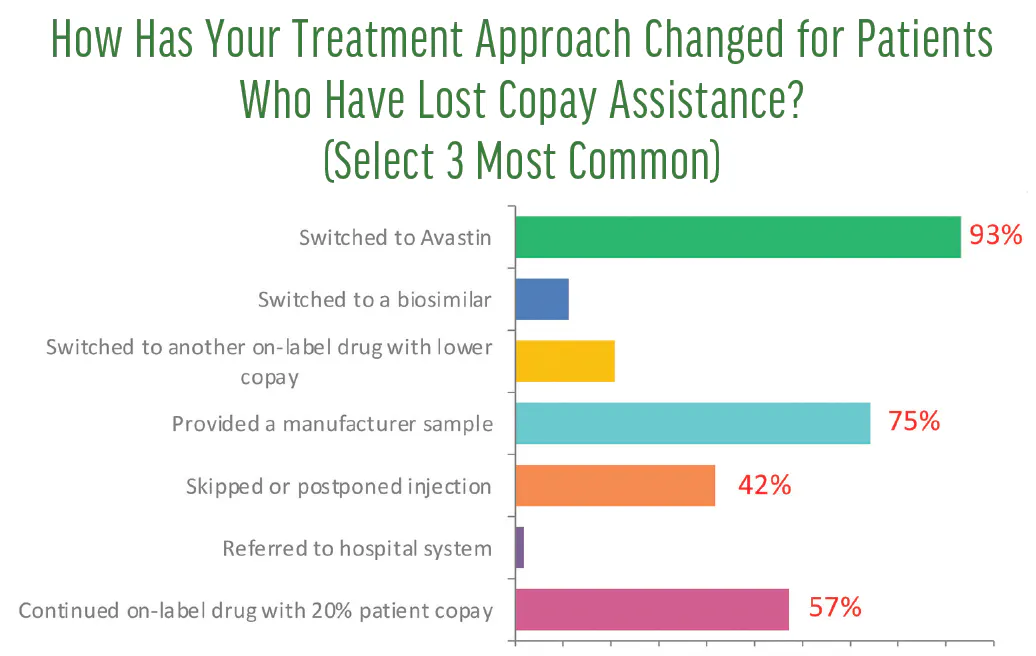
Figure 1. As part of an ASRS survey, respondents were asked to share how their treatment approach has changed for patients who lost their copay assistance. Nearly all the 455 respondents (93%) switched patients to bevacizumab.
Unfortunately, none of these short-term solutions are sustainable. For example, the bevacizumab supply chain is fragile; there are fewer compounding pharmacies available and there have been reported issues of contamination or quality-control concerns with repackaged bevacizumab.
Within my own practice, some patients haven’t done as well, clinically, after switching to bevacizumab—some have more fluid, experience vision loss, and/or require more frequent injections. In a 2025 American Society of Retina Specialists’ (ASRS) survey, many clinicians reported similar experiences with their patients (Figure 2).
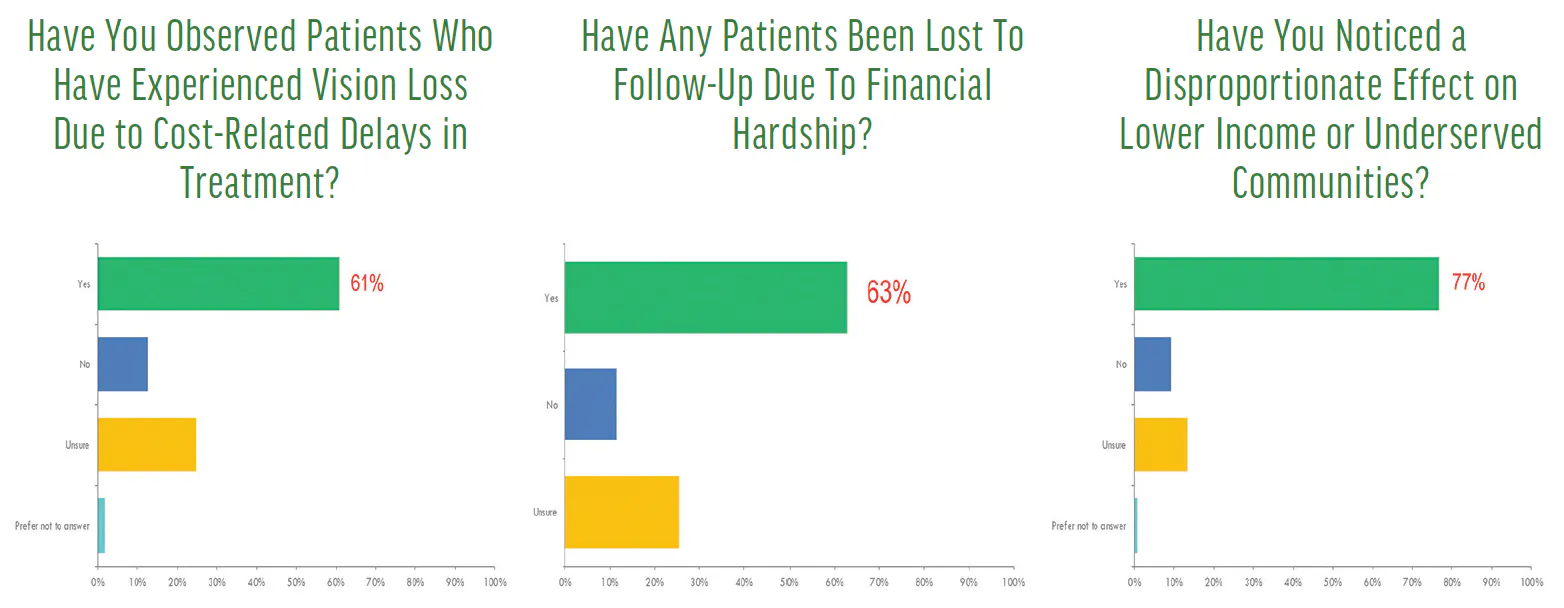
Figure 2. The ASRS survey further revealed negative visual consequences, increased loss to follow-up, and disproportionate effects on lower-income patients.
Our practice has also devoted resources to counseling patients, and staff are educating patients on their copays and deductibles and why they have a balance. In this process, we realized that many patients weren’t aware that they had deductibles as part of their health plan because they never needed to pay; that deductible was picked up by a copay assistance program such as Good Days. As more patients are becoming aware of their own financial responsibility, some of them are incorporating this deductible into their budget.
In addition, we have engaged third-party entities to educate patients on the different types of health insurance plans and guide them on selecting a plan that better supports the costs of treating their chronic retinal diseases. Over time, these educational efforts have paid off, and patients are better informed and many—but not all—can manage their deductibles and copays.
RT: COULD EXTENDED DURATION DRUGS HELP?
Dr. Lai: There are some exciting therapies in the pipeline—such as tyrosine kinase inhibitors, gene therapies, and sustained delivery devices—that may potentially allow extended treatment durations. But what’s unknown at this point is how much those new therapeutics will cost. If they cost more than our current options, that won’t help much. Also, some of these treatments under development are surgical, which brings in all of the issues we currently face regarding OR access and declining reimbursement for retinal surgery in the ambulatory setting.
RT: DO BIOSIMILARS PLAY A ROLE IN THIS?
Dr. Lai: It’s helpful to have biosimilars because they are less expensive than the reference drug, but the cost is still high enough that if someone cannot afford the copay for the reference drug, chances are there they cannot afford the copay for the biosimilar either.
FURTHER READING
A CALL FOR MORE COLLABORATIVE CARE
The treatment landscape has become quite complicated in retina, and the loss of Good Days funding has put a strain on our clinics, staff, and patients. With careful patient education, advocacy, and creative treatment approaches, we can still meet our patient’s needs. Because independent charitable organizations like Good Days constitute the only legal means to support copays and deductibles for the large number of patients covered by federal health insurance plans, protecting access to these programs and supporting their funding should be the highest priorities for all of us. I remain hopeful that we will have better therapies and policies in the future to protect our patients’ vision.


