


What made you want to specialize in pediatric retinal disorders?
As an MD-PhD student at Cornell and Rockefeller University, I studied neural development in zebrafish and became interested in the patterning and genetics of sensory tissues. This got me interested in pediatric retina as a potential clinical specialty. It just kind of clicked in my mind that this is what I should do, especially since I enjoy working with children. As I neared completion of my PhD, I reached out to R.V. Paul Chan, MD, MSc, MBA, FACS, who was at Cornell at the time, to discuss this further. In the first 5 minutes of our meeting, he emailed Thomas C. Lee, MD, at Children’s Hospital Los Angeles, to secure me an away rotation the following summer. Seven years later, I was hired by Dr. Lee to join him there on the faculty. I’m so appreciative to have had these two incredible mentors in the field.
You have an active laboratory and translational research program that is developing novel therapeutic approaches for children with diseases of the retina and vitreous. What are your goals for the next few years?
I have been fortunate enough to have received significant extramural research funding for my laboratory program, including a Mentored Clinical Scientist Research Career Development Award (K08) from the National Eye Institute and a Research to Prevent Blindness Career Development Award. I hope to capitalize on this support to identify how synaptogenesis occurs in the human outer plexiform layer, at the first synapse of the visual system. My hope is that by studying this process during development we can understand how it goes awry in retinal disease and learn how to ensure the proper restoration of synaptic connectivity following gene and cell therapies.
In 2018, you performed the first voretigene neparvovec (Luxturna, Spark) gene therapy procedure on the West Coast. What was that experience like?
There was a great deal of trepidation on my part, making sure all the logistic considerations were taken care of and ensuring that I had thought through all of the possible intraoperative scenarios. The weekend before the surgery, I went with my family to a retreat in the foothills of Ojai, California, to clear my mind and prepare. Thankfully our first patient was a pseudophakic middle-aged man with advanced disease, which relieved some of the pressure. That being said, we still offered this burly gentleman with a lumberjack beard a ride to the OR in a wagon while holding a Children’s Hospital Los Angeles teddy bear!
What new technological advances do you find particularly exciting? Which advances in the pipeline are you most enthusiastic or curious about?
We are living in an incredible era where genetic medicines are truly putting the “personal” in personalized medicine. The pharmaceutical paradigm of designing drugs meant to treat the largest possible number of patients has been completely turned on its head. The most exciting new developments are coming from the increasing personalization of our treatment strategies. Voretigene is one example—a therapy for which only patients with mutations in the RPE65 gene are eligible. But this is just the tip of the iceberg as novel strategies, such as CRISPR editing and exon skipping, are being implemented to address specific mutations or exons. It is humbling and exhilarating to be a retina specialist today and see how our specialty is paving the way for the rest of medicine.
What do you like to do when you aren’t in the office? What are your hobbies and interests?
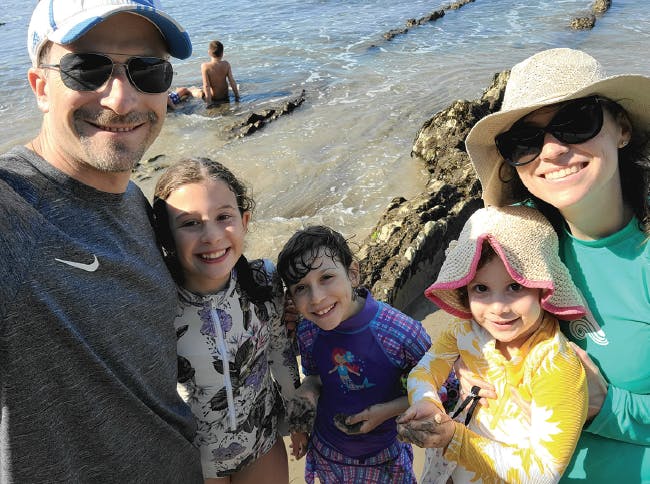
Going on outings and having fun at home with my wife and three daughters have always been big highlights of my life outside of work, especially during the pandemic when everything else seemed to come to a halt. I am addicted to the NY Times crossword puzzles app and have become a Peloton fanatic (Leaderboard name: Silpancho)—shout out to my fellow retina Peloton riders!


