


While training for vitreoretinal surgery, fellows have a lot to master, including new surgical skills and a deep-seated understanding of the underlying principles. Volumes of textbooks, often given as suggested reading, can help fellows cover this information comprehensively. There are, however, more demands on their time now; for example, they must answer patient communications via instant EHR messaging for clinics that can see up to 90 patients a day—all while building a curriculum vitae to meet the standard of their peers.
Further barriers to education exist, including mounting financial pressures due to the ballooning cost and duration of medical subspecialty training and, perhaps most important, rapid innovation in the field of retina. Although many of the core principals remain steady, there are novel surgical techniques with evolving instrumentation, driven by our field’s connection with the surgical device industry. It is difficult for print materials to remain current and generalizable in this ever-changing landscape.
Consequently, there exists a need for a modern online surgical textbook that is accessible, digestible, affordable, and malleable. Here’s how we made that vision a reality.
IMPLEMENTATION AND COLLABORATION
The task of building a high-quality retinal surgery guide requires many willing international contributors. The first step was to find a group of authors for each chapter. The goal was to have global leaders in the field record their expertise, ideas, and illustrative clinical images in one location, and we solicited those with a particular area of focus from top institutions (Figures 1-3). We provided each author a guide to help them draft their sections in a “cookbook style” to ensure their content was digestible, especially for readers restricted in time and attention span. A favorable factor was the diversity of the senior editorial group, which includes Raymond Guan, MD, BSc; Nicolas Yannuzzi, MD; Sebastian M. Waldstein, MD, PHD; and Kenneth Rohan Lee, MBBS, M.Ophthal, and we both contributed as well.
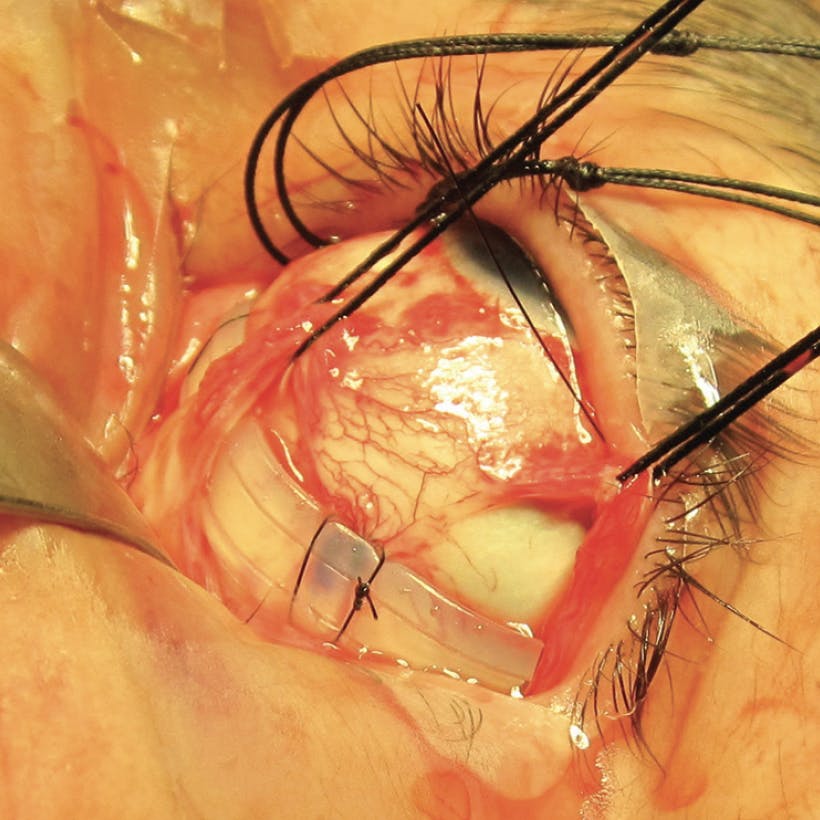
Figure 1. The scleral buckle section walks readers through every step, including the proper way to tie the nylon sutures. Image courtesy of Adrian T. Fung, MBBS, MMED, FRANZCO, and William Ross, MD

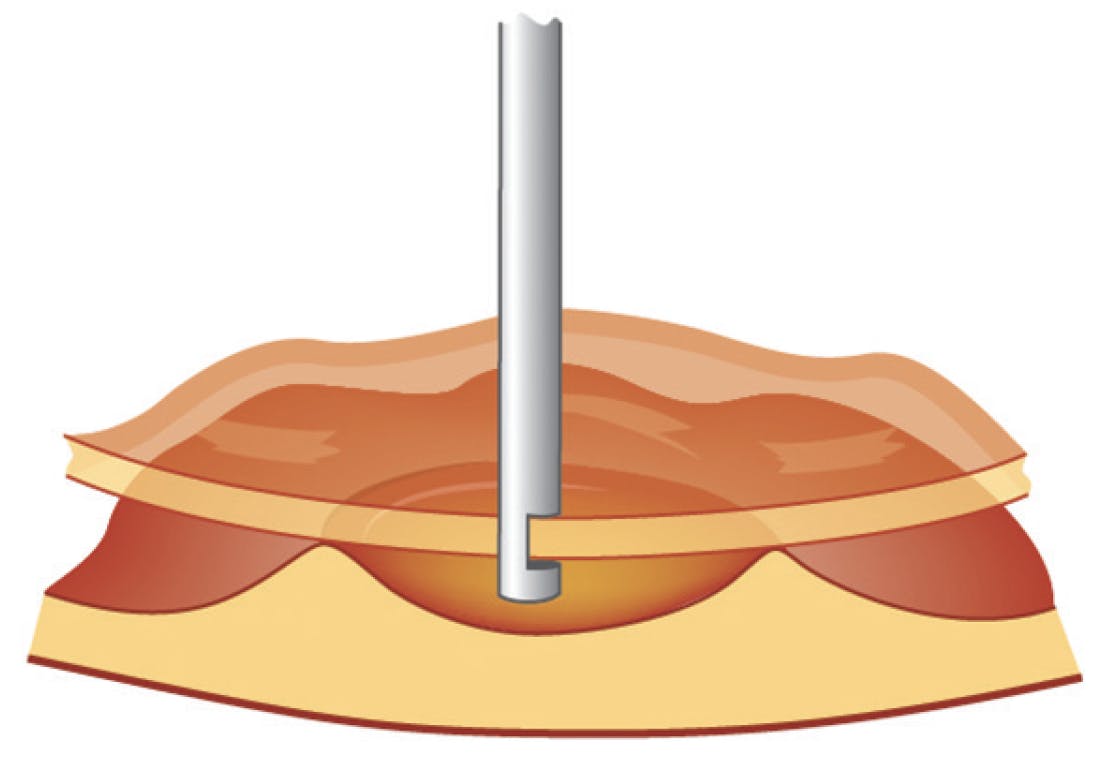
Figure 3. The vitreoretinal surgery textbook also includes schematics to help demonstrate the ways in which various surgical techniques affect membranes. This illustration depicts segmentation, which involves cutting membranes between focal retinal adhesions. Image courtesy of Abhilasha Alone Patill, MBBS, DNB , FICO(UK), FLVPEI; Jay Chhablani, MD; and Adrian T. Fung, MBBS, MMED, FRANZCO
Although planning conference calls to accommodate all the senior editors’ time zones in Australia, the United States, Austria, and Malaysia was a significant challenge, the group was able to recruit from unique networks and ultimately assemble a total of 93 authors. There were also partnerships forged with shared content from other prominent online educational platforms, including BascomPalmerLearn, CataractCoach, and EyeGuru.
Once the source documents were collected, the next step was to collaborate with a website developer to make the textbook readily available online with a user-friendly interface. The entire surgical guide was created to be searchable by key words, and the individual chapters (35 total so far) were outfitted with quick links to jump to sections of interest. Perhaps the most important development was the upgrade to mobile capability with a one-time sign on. With this feature, the textbook became reachable anytime from anywhere.
THE MISSING PIECE
As the first chapters were being submitted, it became apparent that there was a missing ingredient to bring the manual to life—surgical videos. A clear graphic demonstration is an element absent from many resources, but one that can go a long way in relating to the next generation of learners.
With the ready availability of high-definition recording equipment and editing software, it was possible to make videos a part of all relevant chapters. Although one can find certain video examples on other platforms, such as Eyetube or YouTube, it can be difficult to rapidly locate those relating to subspecialty topics. Numerous videos were contributed, and fortunately, most chapters have a variety of techniques exemplified. The formatting was standardized in terms of length and presence of subtitles. The objective was to ensure that the video could stand alone as a demonstration, with the associated text from the guide available as supplementary material if desired, or vice versa, depending on the learning preferences of the user.
INITIAL RECEPTION
The initial reception has exceeded expectations. In the first 6 weeks after launch, there were 22,000 website hits from 65 countries. The usage was split evenly between desktop and mobile devices. Although it is unknown how successful a printed book version would have been, our new virtual guide does seem to have greater potential for rapid access and dissemination.
FUTURE DIRECTION
The hope is to create lasting value as a free, open-access educational tool to serve current and future vitreoretinal surgeons globally. To achieve this goal, we are continually soliciting ideas for new chapters to add, at least on an annual basis. In addition to keeping up with the fluid subject material, is essential to be mindful of trends in media platforms. This idea began as a book, has since evolved to a website, and could one day transition into a smartphone application, or even a 3D virtual reality learning experience.
Check out the full textbook at vrsurgeryonline.com.


