


AT A GLANCE
- Many patients who present with a dislocated IOL have either paid (out of pocket) for a premium toric IOL or have significant corneal astigmatism that may benefit from a toric IOL.
- Favorable candidates for a scleral-fixated toric IOL have adequate conjunctival and Tenon capsule thickness with good mobility and minimal scarring.
- In 23 eyes that underwent secondary placement of a toric IOL, 72.7% were within 1 D and 54.5% were within 0.5 D of the planned refractive spherical equivalent target.
Cataract surgery remains the most performed surgical procedure in the United States,1 restoring functional vision, driving ability, and quality of life for millions of patients. Since Sir Harold Ridley implanted the first IOL in 1949,2 the available IOL portfolio has expanded substantially. Although most patients achieve excellent visual outcomes with monofocal lenses, many benefit from astigmatic correction with toric lenses or desire reduced glasses dependence through extended depth-of-focus and multifocal IOLs. Many of these patients are willing to invest significantly in premium IOL technologies to optimize visual performance for decades to come.
Despite modern designs and surgical consistency, IOL subluxation or dislocation may occur. When this complication arises, complex anterior segment or vitreoretinal surgeons are often required to reposition or replace the lens. Scleral fixation is among the most performed approaches in these scenarios. Many techniques have been described, including suturing the IOL to the iris, flanged haptic fixation (ie, the Yamane technique), and fixation of specialty IOLs incorporating eyelets, such as the EnVista (Bausch + Lomb) and Akreos (Alcon) lenses.3-6 Improvements in reproducibility, stability, and refractive outcomes have encouraged some surgeons to consider secondary fixation of premium optics, rather than defaulting to monofocal designs.
This article highlights several surgical considerations for scleral fixation of a toric EnVista IOL, with an emphasis on case selection, intraoperative planning, and technical pearls. Many of the techniques applied to this case can be applied to similar toric IOL designs on the market.
PATIENT SELECTION
As with any scleral-fixated IOL (SFIOL) technique, appropriate clinical screening is foundational. Favorable candidates have adequate conjunctival and Tenon capsule thickness with good mobility and minimal scarring. Ideally, no prior scleral tunnel exists in the quadrant planned for fixation; however, the toric EnVista IOL can be folded and inserted through a 2.6-mm clear corneal incision when necessary.
PREOPERATIVE MARKING
Toric alignment begins preoperatively by marking the intended axis with the patient seated upright. After sterile preparation and draping, create a 360° limbal peritomy. Place relaxing incisions at the 3 and 9 clock hours, but note that these can be modified to keep them well separated from the toric axis. This reduces the risk of postoperative bacterial migration toward the exposed suture material during conjunctival healing. Marking the intended toric axis prior to making any scleral incisions helps ensure accuracy and reproducibility (Figure 1).
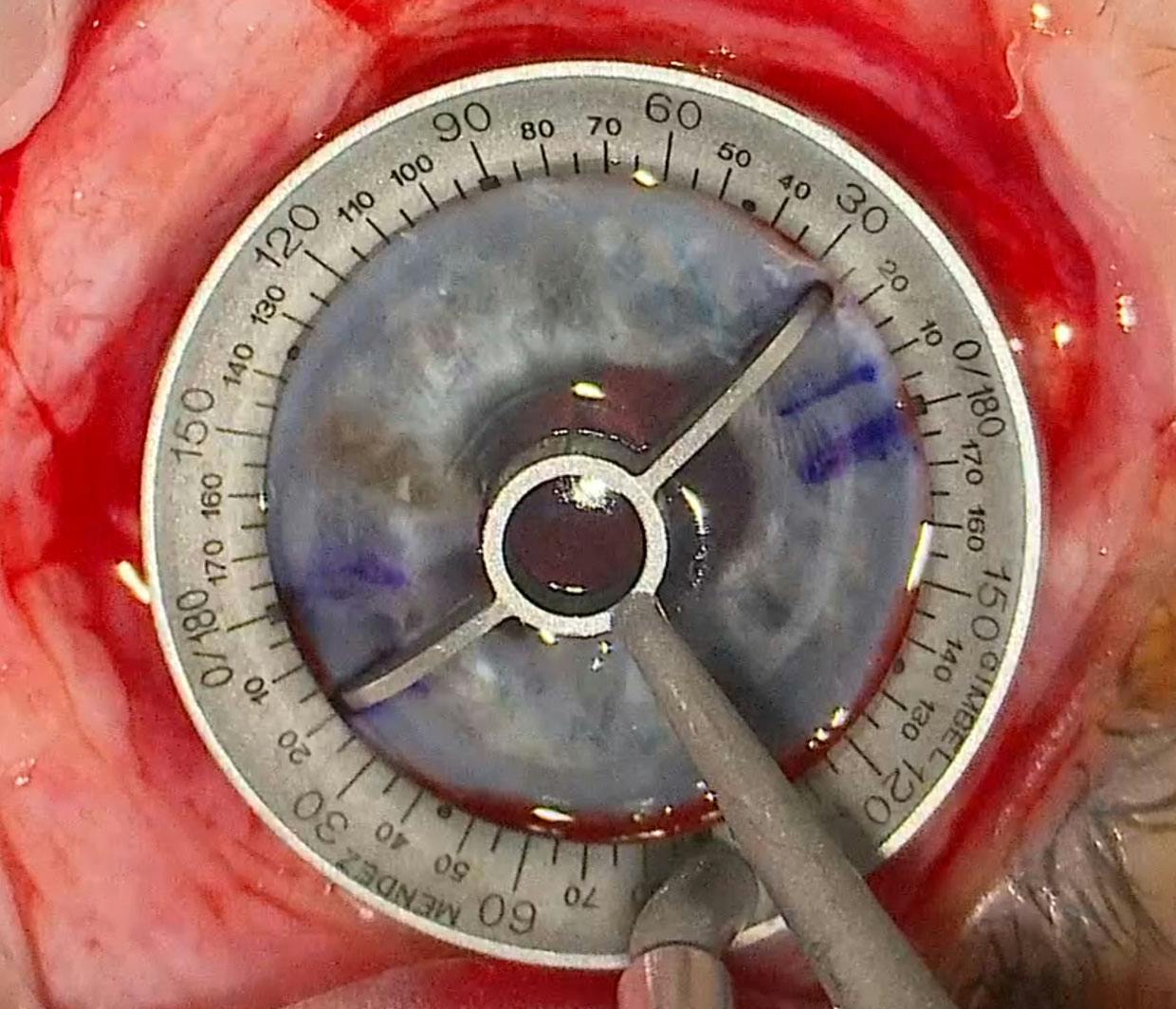
Figure 1. Mark the 180° axis and toric axis prior to any incisions to ensure accurate placement of the scleral marks.
SCLERAL MARKING AND SCLEROTOMY PLANNING
Accurate placement of the scleral fixation points is critical. For toric SFIOLs, orient the scleral marks radially from the limbus rather than the more common tangential orientation for non-toric cases, or fashion a hitch through the eyelet. This helps ensure that the IOL does not rotate away from the correct toric axis. Sclerotomy locations are typically marked in a radial fashion at 1.5 mm and 3.5 mm posterior to the limbus (Figure 2). These marks guide later suture passage; however, you do not create the sclerotomies themselves until later in the case. Depending on the toric axis orientation, an existing sclerotomy used for trocar placement may be used for suture passage.
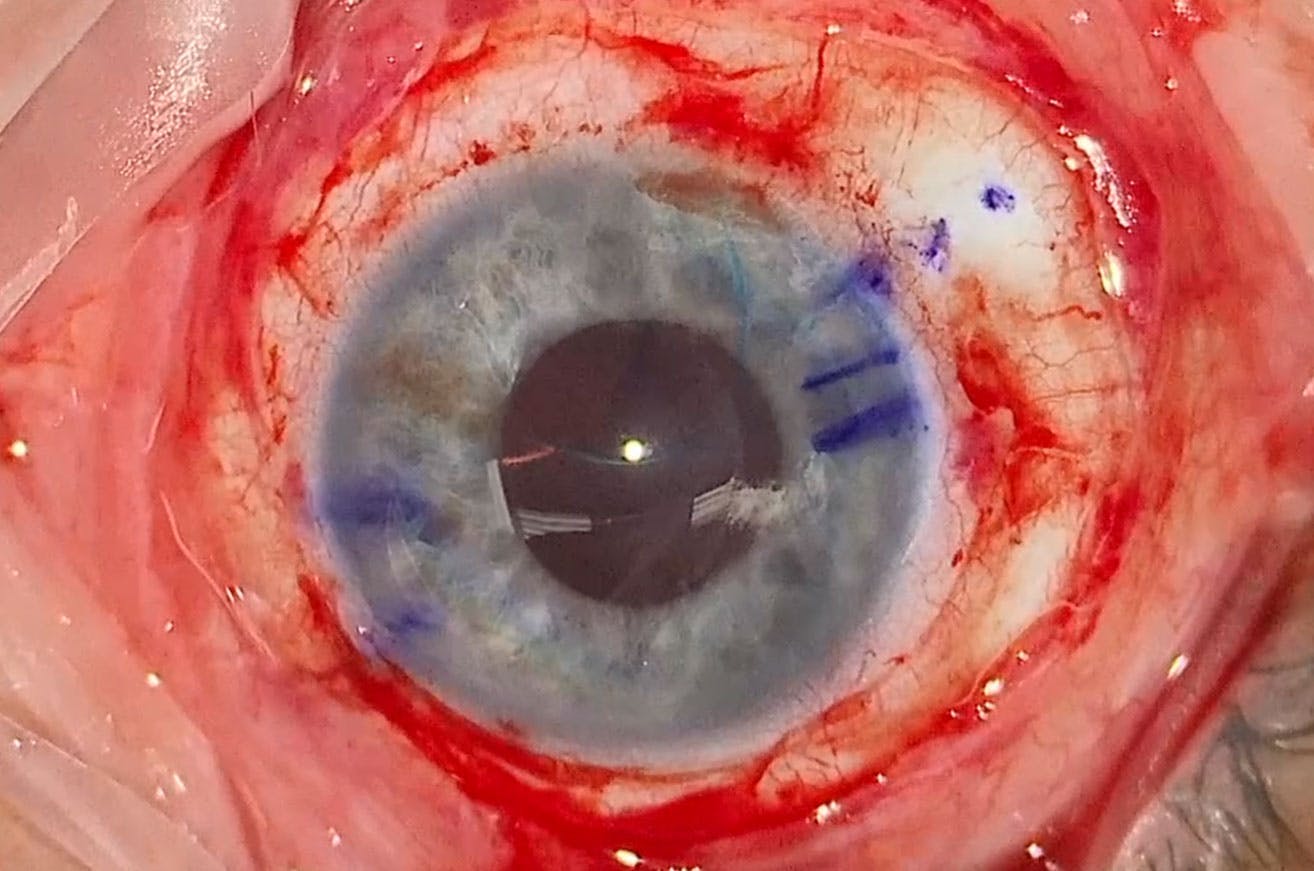
Figure 2. Surgeons should make the sclerotomy markings 1.5 mm and 3.5 mm from the limbus in a radial fashion.
SCLERAL TUNNEL CREATION AND LENS REMOVAL
Using a crescent blade, create a 6-mm scleral tunnel in the planned quadrant, stopping short of entering the anterior chamber. After a complete vitrectomy, many surgeons apply endolaser to the vitreous base to reduce the risk of retinal tears due to subluxation/dislocation of the original IOL. If the subluxed or dislocated IOL is present, maneuver it into the anterior chamber before completing the scleral tunnel using a keratome and removing the original IOL.
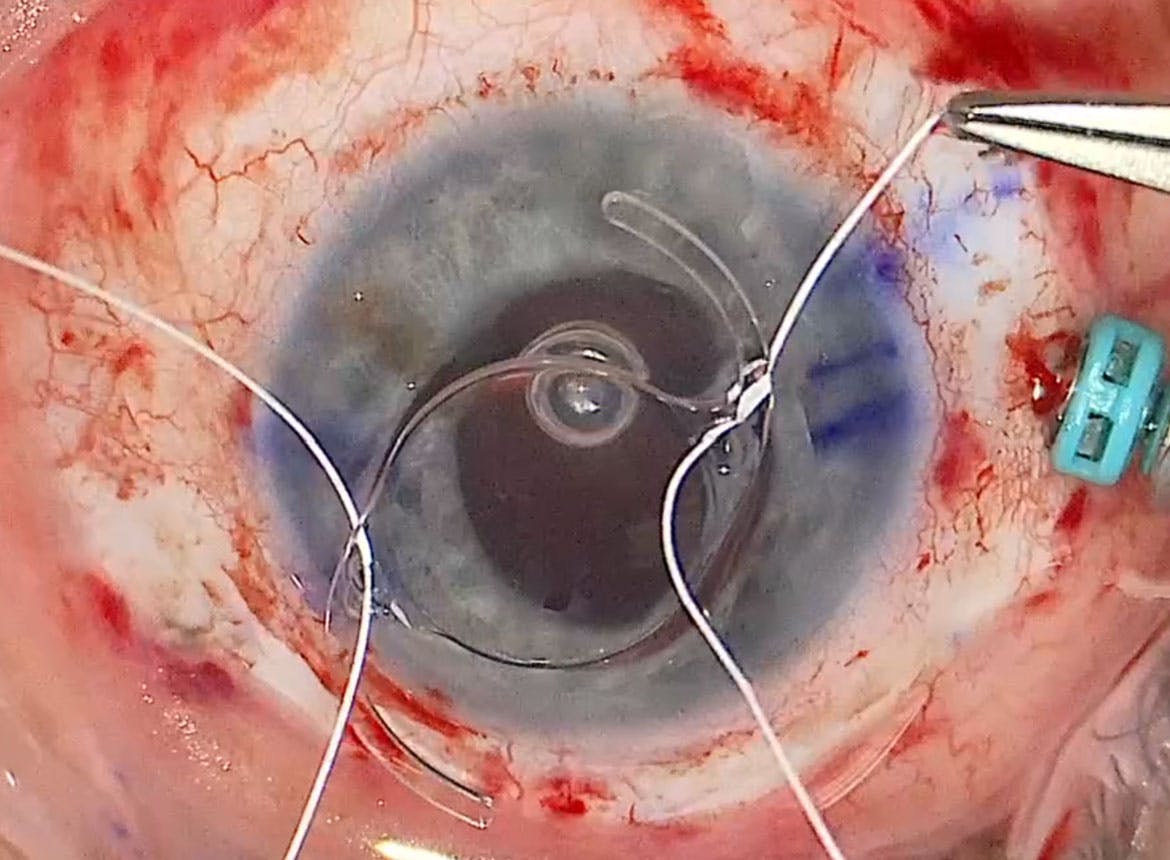
Figure 3. Place the IOL on the cornea in a “reverse S” configuration and thread the suture through the eyelets of the lens.
Next, create additional sclerotomies using the trocar inserter via a stab incision at the previous scleral markings. Adding a temporary knot at the scleral tunnel can help prevent iris prolapse when making the additional sclerotomies. At this point, some surgeons consider a peripheral iridotomy to reduce the risk of postoperative pupillary block—while rare, it can be a serious complication.
IOL PREPARATION AND FIXATION
Place the toric EnVista IOL onto the corneal surface and pass polytetrafluoroethylene (Gore-Tex, W.L. Gore) sutures through the eyelets. Unlike fixation of non-toric EnVista lenses, there is no need to alternate anterior-to-posterior and posterior-to-anterior threading through the eyelets. The radial sclerotomy configuration provides adequate rotational stability and minimizes the risk of IOL tilt.
Some surgeons will then trim the haptics to facilitate passage through the scleral tunnel; this modification is optional and based on individual preference.
Beginning with the posterior sclerotomies and using two forceps with a hand-off technique, pass the suture through the scleral tunnel, through the pupil, and out through the sclerotomy. Repeat the process for the anterior sclerotomy sites, being sure to avoid suture crossing, which could induce unintended IOL tilt or rotation.
Secure the suture ends using slip knots (not locked into place) to allow fine adjustment of centration within the pupillary axis prior to definitive fixation. Once you have confirmed centration, lock the final throws by rotating the last throw 180° and adding an additional throw. Rotate and recess the knot into the scleral wound using forceps to reduce exposure risk.
Close the scleral tunnel with nylon, when necessary, and reapproximate Tenon and conjunctiva to the limbus without tension to protect the polytetrafluoroethylene sutures and reduce erosion risk.
TIME TO FOCUS ON VISION
Scleral fixation of toric IOLs represents an expanding frontier in premium lens surgery, allowing us to preserve patients’ refractive goals even in the setting of compromised capsular support. But should we, as retina surgeons, pursue this? I would argue that we should, and our practice may evolve to include those who specialize in refractive retina.
Many patients who present with a dislocated lens have either paid (out of pocket) for a premium toric IOL or have significant corneal astigmatism that may benefit from a toric IOL. Eyes without capsular support have limited options from our anterior segment counterparts (eg, anterior chamber IOLs or aphakic contact lenses), and our ability to remove and replace the IOL during vitrectomy allows us to correct as much refractive error as possible during the case.
Correction of astigmatism allows a patient to be as glasses-free as possible, and while our results may not be as accurate as in-the-bag IOL placement, they are very good. In a case series by Swaminathan et al, 23 eyes underwent secondary placement of an EnVista toric IOL, and 72.7% were within 1.0 D and 54.5% were within 0.5 D of the planned refractive spherical equivalent target.7 With proper counseling and expectation management, correction of a patient’s astigmatism should be included in our preoperative assessment of the case, as it can lead to significantly improved vision that would otherwise be corrected with glasses.
If you are ready to dive into the world of refractive retina, start with confidence knowing that, with a small adjustment to your surgical skillset, you can correct more than aphakia. Meticulous patient selection, accurate axis marking, thoughtful sclerotomy planning, and controlled centration are keys to achieving optimal outcomes. With familiarity and refinement of the technique, surgeons can confidently incorporate toric optics into their SFIOL armamentarium and provide patients with durable, high-quality vision.
1. O’Brart D. The future of cataract surgery. Eye (Lond). 2025;39(8):1451-1456.
2. Apple D, Sims J. Harold Ridley and the invention of the intraocular lens. Surv Ophthalmol. 1996;41(4):279-292.
3. Zeh WG, Price FW. Iris fixation of posterior chamber intraocular lenses. J Cataract Refract Surg. 2000;26(7):1028-1034.
4. Yamane S, Inoue M, Arakawa A, Kadonosono K. Sutureless 27-gauge needle-guided intrascleral intraocular lens implantation with lamellar scleral dissection. Ophthalmology. 2014;121(1):61-66.
5. Stem MS, Todorich B, Woodward MA, Wolfe JD. Novel scleral fixation technique for the Bausch and Lomb enVista MX60 intraocular lens. J Cataract Refract Surg. 2020;46(5):739-743.
6. Leuzinger-Dias M, Lima-Fontes M. Scleral fixation of Akreos AO60 intraocular lens using Gore‐Tex suture: An eye on visual outcomes and postoperative complications. J Ophthalmol. 2021:9349323.
7. Swaminathan VB, Israilevich RN, Starr MR. Refractive outcomes after secondary scleral sutured toric intraocular lenses for the correction of corneal astigmatism [published online ahead of print September 2, 2025]. J Cataract Refract Surg.

%20FINAL-1_1771612597.jpg?auto=compress,format&w=70)


-1%20(1)_1769020986.jpg?auto=compress,format&w=70)

_1784132761.jpg?auto=compress,format&w=75)


