


Reviewed by John B. Miller, MD; Nimesh A. Patel, MD; Elizabeth Rossin, MD, PhD; K. Matthew McKay, MD; and Jose R. Davila, MD
KEY TAKEAWAYS
- The 16th annual Mass Eye and Ear (MEE) Vitrectomy Course, held July 10-11 in Boston, welcomed 60 fellows, eight residents, and 52 top faculty.
- A key part of the MEE Vitrectomy Course is the immersive wet labs, dry labs, and small-group instruction.
- Save the date for the 17th annual MEE Vitrectomy Course, scheduled for July 9-10, 2027, in Boston.
The 16th annual Mass Eye and Ear (MEE) Vitrectomy Course, held July 10-11 in Boston, welcomed 60 fellows, eight residents, and 52 faculty from across the country (Figure 1). The course was led by John B. Miller, MD; Nimesh A. Patel, MD; Elizabeth Rossin, MD, PhD; K. Matthew McKay, MD; and Jose R. Davila, MD. Conveniently timed at the beginning of the academic year, the course equips new vitreoretinal surgery fellows with a foundation of core principles, techniques, and decision-making skills essential for successful vitreoretinal surgical training.
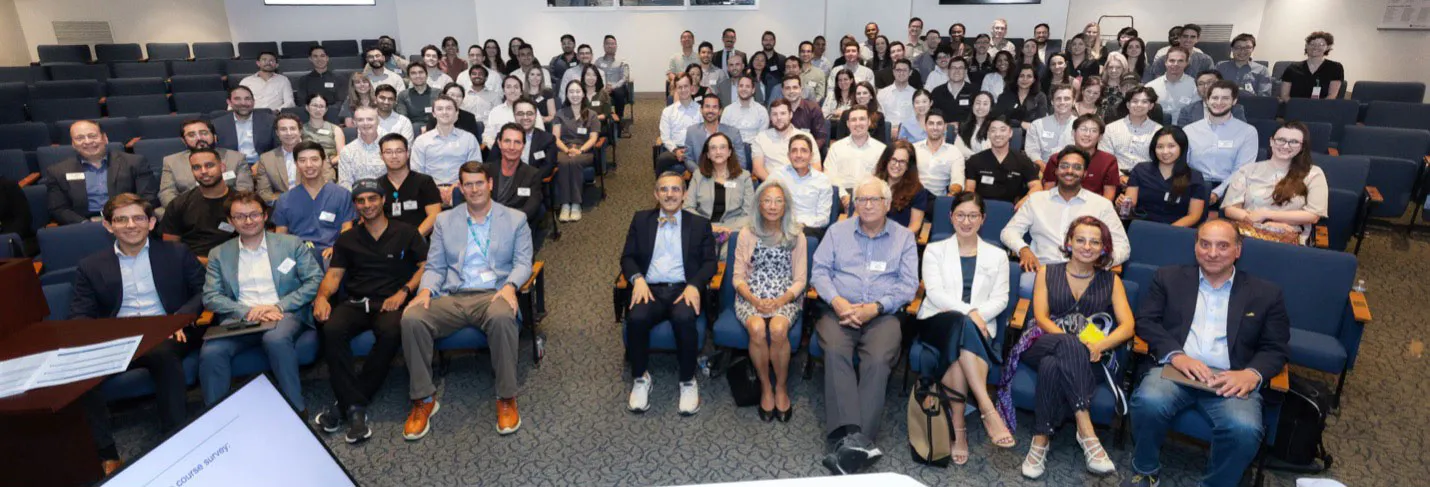
Figure 1. The 16th annual MEE Vitrectomy Course welcomed fellows, residents, and top faculty from across the country.
DAY 1: DIDACTIC FOUNDATIONS
The first day consisted of core lectures and panels focused on the fundamentals of vitreoretinal surgery. The morning session introduced the basics of managing retinal detachment (RD), beginning with Ines Lains, MD, PhD, who shared practical pearls for pneumatic retinopexy. Lucy H. Young, MD, PhD, FACS, then reviewed indications and techniques for scleral buckling, followed by Thanos Papakostas, MD, who discussed vitrectomy for primary RD and reviewed the existing literature. Yasha Modi, MD, concluded the session with an overview of intraocular tamponades and perfluorocarbon liquids, followed by an interactive audience question-and-answer discussion.
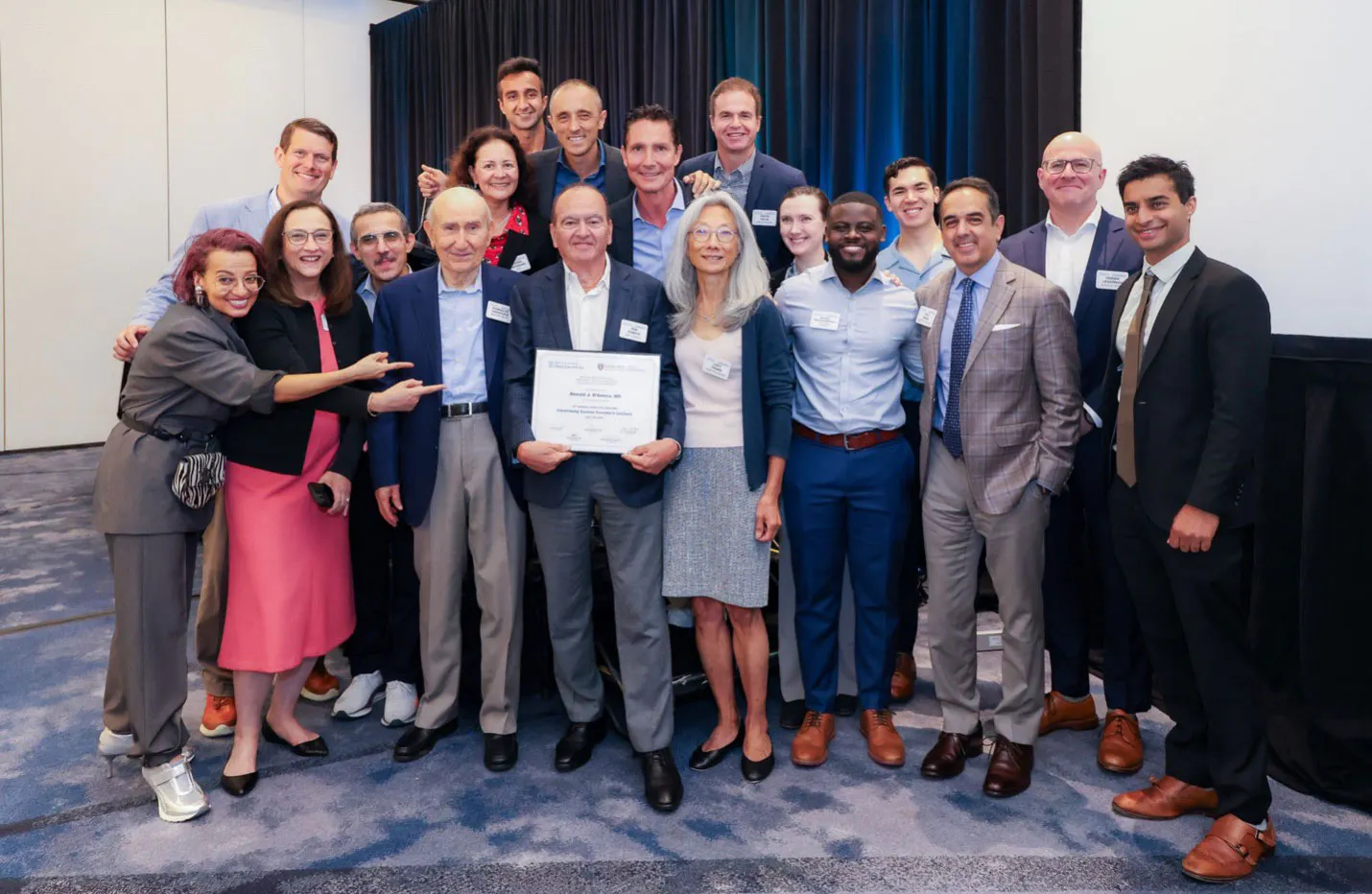
R. V. Paul Chan, MD, MSc, MBA, FACS, then recognized Donald J. D’Amico, MD, as the Founders’ Award recipient (Figure 2). Dr. D’Amico moderated an engaging expert panel on RD repair, in which Steve Charles, MD; John W. Kitchens, MD; Carl D. Regillo, MD; and Christina Y. Weng, MD, MBA, discussed their approaches to various types of RDs. Panelists explored surgical decision making, challenging cases, and technical pearls, providing attendees with a broad perspective on contemporary RD management.
In the afternoon, Robert Bhisitkul, MD, presented on ergonomics, emphasizing crucial techniques to promote surgeon longevity. Dr. Charles followed with an insightful review of vitrectomy fluidics and instrumentation, highlighting advances that improve surgical efficiency and safety. The afternoon continued with focused lectures by Sandra Montezuma, MD, on giant retinal tears, Sophie Bakri, MD, on proliferative vitreoretinopathy, and Maria Berrocal, MD, on the surgical management of diabetic retinopathy. These presentations culminated in a multidisciplinary panel on surgical diabetic retinopathy, led by Dr. Berrocal, in which Raymond Iezzi, MD; Anton Orlin, MD; Archana Seethala, MD; Dimitra Skondra, MD, PhD; and Nicolas Yannuzzi, MD, shared differing approaches to complex diabetic vitreoretinal disease.
Next, Luis Haddock, MD, reviewed the prevention and management of endophthalmitis, followed by Mario Romano, MD, PhD, who discussed epiretinal membrane surgery and Dr. Weng, who shared on macular hole repair. Dr. Kitchens discussed IOL considerations in vitreoretinal surgery, while Sumit Sharma, MD, introduced vitreous biopsy techniques and the surgical management of uveitis. Eric Nudleman, MD, PhD, concluded the educational program with an overview of special considerations in pediatric retina surgery. The program closed with a networking reception and then a fellows’ networking dinner sponsored by YoungMD Connect.
DAY 2: FROM INSIGHT TO IMPLEMENTATION
Saturday began with welcome remarks from Dr. Miller, followed by Yannek I. Leiderman, MD, PhD, who presented a practical framework for preparing for and developing expertise in vitreoretinal surgery. A panel discussion on secondary IOL management, led by Dr. Kitchens, explored strategies for complex IOL scenarios with panelists Dr. Davila, Mohammad Dahrouj, MD, PhD; Miin Roh, MD, PhD; Andre J. Witkin, MD; and Jeremy Wolfe, MD.
The majority of the day was dedicated to wet labs, dry labs, and small-group instruction. Attendees rotated through stations to practice surgical techniques, receive individual instruction and mentorship, and discuss challenging cases with expert faculty in an interactive learning environment.
The wet lab provided one-on-one sessions on essential techniques of vitrectomy, membrane peeling, scleral buckling, and intraocular foreign body removal. Stations introduced fellows to a variety of vitrectomy systems, including Alcon’s Unity and Constellation, the Zeiss Eva Nexus, and the Bausch + Lomb Stellaris, and viewing platforms, such as the SeeLuma (Bausch + Lomb), Ngenuity (Alcon), and Biom (Oculus) with the Leica Proveo microscope.
For the dry lab, fellows participated in surgical simulation with the EyeSi (Haag-Streit) and the Genentech Virtual Simulation systems, and became familiar with various injectables, including triamcinolone acetonide injectable suspension (Xipere, Bausch + Lomb), fluocinolone acetonide intravitreal implant (Iluvien, Ani), dexamethasone intravitreal implant (Ozurdex, Abbvie), and pegcetacoplan injection (Syfovre, Apellis). Alcon’s Unipexy was also featured along with an overview of intraocular tamponades.
Following lunch, two expert panel discussions addressed complex retinal surgery. The first focused on surgical strategies for proliferative vitreoretinopathy and complex RDs, led by moderator Sharon Fekrat, MD, with Xi Chen, MD, PhD; Karen Jeng-Miller, MD, MPH; Leo Kim, MD, PhD; Szilard Kiss, MD; and Aleksandra Rachitskaya, MD. The second panel explored surgical techniques for epiretinal membranes and macular holes, led by moderator Katherine E. Talcott, MD, with Marisa Tieger, MD; William Foulsham, MD; S. K. Steve Houston, MD; Deeba Husain, MD; Mehnaz Khan, MD; and Ivana K. Kim, MD. Faculty shared their approaches, technical pearls, and management of intraoperative challenges.
The afternoon concluded with hands-on lab sessions, allowing participants to reinforce newly acquired surgical skills before reconvening for a conference survey and a group photograph. In addition to hands-on experience, fellows also learned from surgical cases, where they asked questions and explored complex cases with experienced faculty members, as well as small group career mentoring sessions.
The meeting concluded with a reception and dinner, during which Ronald Gentile, MD, delivered his entertaining and practical presentation on “Top 10 Things to Keep Your Attending AND YOU Happy.”
FELLOWS SET FOR SUCCESS
The 16th annual MEE Vitrectomy Course gave fellows a comprehensive introduction to vitreoretinal surgery through didactic lectures and hands-on surgical sessions, with an impressive faculty-to-fellow ratio. The course provides an early foundation for fellows as they begin their new roles and also supports the formation of meaningful and lasting connections with faculty and peers.
SAVE THE DATE
17th Annual Mass Eye and Ear Vitrectomy Course
July 9-10, 2027, Boston


