


KEY TAKEAWAYS
- The 14th annual VBS meeting was held April 9-11, 2026, in Las Vegas.
- The meeting included educational panels, a Fellows track, Fostering Careers for Upcoming Stars (FOCUS) program, and the Fellows' Foray video competition.
- Ciro Virgolino, MD, from Fundacao Altino Ventura, won the Fellows’ Foray competition after presenting a case of accidental injection of blue dye into the anterior and posterior chamber during conjunctival tattooing.
The 14th annual Vit-Buckle Society (VBS) meeting, held April 9-11, 2026, in Las Vegas, included a trainee program packed with clinical pearls and friendly competition. Here, we highlight the educational panels, Fellows track, Fostering Careers for Upcoming Stars (FOCUS) program, and the Fellows’ Foray video competition.
AN EDUCATIONAL MORNING
The day began with a panel on professional societies, business, and personal aspirations, which included a candid discussion on what it means to succeed in retina. R.V. Paul Chan, MD, MSc, MBA, FACS, reflected on his own personal and professional challenges, including changes in his family dynamic and the pressure of raising children, especially for women in the profession (Figure 1).
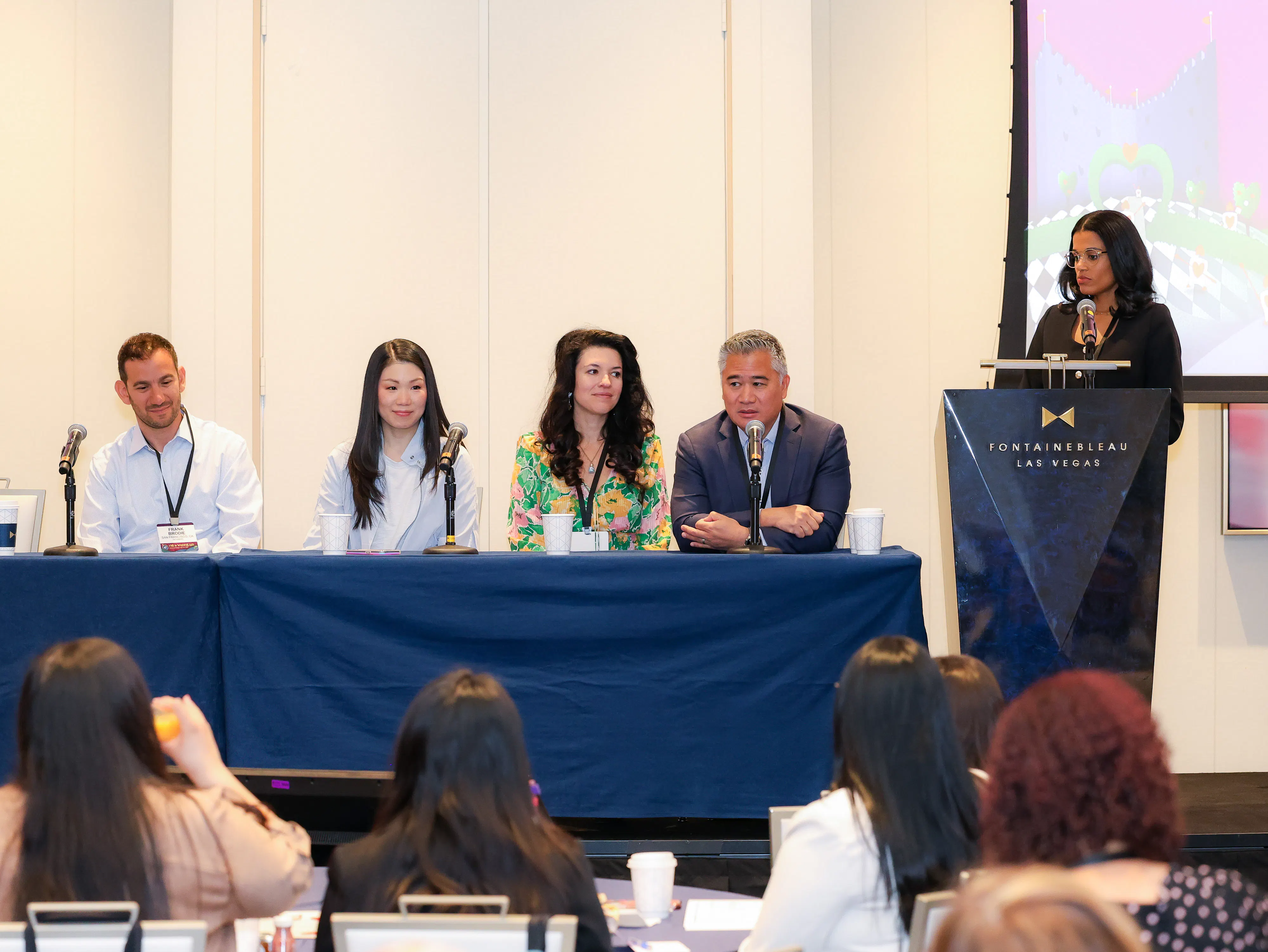
Figure 1. The Retina and Beyond panel discussion, moderated by Dr. Warren, included (left to right) Drs. Brodie, Wang, Palma, and Chan. Image courtesy of Kevin Caldwell Photography.
Camille Palma, MD, discussed the myth of a perfect work-life balance, instead framing fulfillment as meaningful patient care, teaching, and community. She also mentioned imposter syndrome, describing it as a “humble confidence” that can be turned into a positive force that encourages introspection and lifelong learning.
Christina Y. Weng, MD, MBA, encouraged trainees to get involved with professional societies early in their careers, while Frank L. Brodie, MD, MBA, shared insights from collaborating with start-ups, stressing the importance of negotiating flexibility in a job rather than focusing only on compensation. Panelists returned to themes of mentorship, authenticity, community, and learning when to say “no” to build sustainable and fulfilling careers.
During the Advocacy 101 panel, moderated by Mrinali Gupta, MD, experts touched on Medicare payment reform, prior authorizations, and step therapy. The panelists discussed the need to educate patients on the source of rising prices (ie, insurance, hospitals, and broader health care economics, not physicians). The panel also addressed Medicare Part B drug pricing, buy and bill strategies, a new proposed model to tie drug costs to an international index, OR access issues, and scope of practice.
Aleksandra Rachitskaya, MD, noted that these advocacy issues affect everyone, saying “If you are not at the table, you’re on the menu.” AAO Advocacy Ambassadors Lauren Kiryakoza, MD, and Sean Berkowitz, MD, MBA, discussed their work on Capitol Hill and how powerful trainee testimonies can be, with a call to action for all trainees to join state societies and attend the AAO’s Mid-Year Forum.
FELLOWS PROGRAM
The first Fellows program panel, moderated by Dr. Gupta, focused on navigating the transition into practice, emphasizing the importance of aligning career decisions with personal priorities, location, family considerations, and long-term quality of life. Phoebe Mellen, MD, shared that fellows should understand a practice’s ownership structure, financial decision-making, compensation models, and referral culture before signing with a practice. Rebecca Soares, MD, MPH, encouraged fellows to review the practice’s profit-and-loss statements, while Nikisha Kothari, MD, recommended fellows discuss the position with former employees and negotiate items often omitted from contracts, such as family leave. Jay Sridhar, MD, recommended fellows reach out to mentors and industry representatives in the area to learn more about a practice’s work culture.
The final session, moderated by Royce Chen, MD, and Grant Justin, MD, focused on advances in the field. Aliaa Abdelhakim, MD, PhD, spoke about gene-agnostic approaches, such as optogenetics and ultra-personalized medicine with anti-sense oligonucleotides or CRISPR. Tedi Begaj, MD, discussed emerging diagnostics and therapeutics in uveitis, including immune cell profiling and the promise of vamikibart (Genentech/Roche) as a potential interleukin-6 inhibitor for the treatment of uveitic macular edema. Steven Yeh, MD, discussed the positive results of suprachoroidal drug delivery platforms, with suprachoroidal triamcinolone acetonide (Xipere, Bausch + Lomb) injections showing no significant adverse events over the 3-year study period. Eliot Dow, MD, PhD, shared exciting AI platforms for retina, emphasizing the need to standardize real-world imaging data and expand electronic health record-based AI platforms. Finally, Durga Borkar, MD, MMCi, discussed the use of big data in retina, particularly it’s utility in trial data analysis.
FELLOWS’ FORAY
During the Fellows’ Foray, eight retina fellows competed for the audience’s votes with surgical cases, each more curious than the last. Here’s a roundup of the lively discussion among the presenters, moderators, and audience.
Caroline Awh, MD, from Massachusetts Eye and Ear, presented the case of a 17-year-old patient with von Hippel-Lindau disease complicated by hemangioblastoma-associated tractional retinal detachment (RD) and a large macular hole. Management included a scleral buckle, removal of the fibrous sheets, and diathermy to feeder vessels, ultimately reattaching the retina and closing the macular hole. The moderators highlighted the value of support from the scleral buckle, given the possible incomplete removal of traction.
Viet Chau, MD, from Associated Retinal Consultants of Beaumont, shared a case initially diagnosed as a rhegmatogenous RD (RRD) and horseshoe tear; however, the team discovered a serous RD intraoperatively. An external scleral cutdown was used to drain the subretinal fluid without making an iatrogenic break. The panel agreed that this case was an excellent example to encourage open discussion about diagnostic errors and surgical flexibility.
Christopher Chung, MD, MS, from Illinois Eye and Ear Infirmary, presented an RRD in an aphakic eye after an open globe injury and dense corneal scarring. Given the poor corneal view and dense posterior synechiae, a temporary keratoprosthesis was placed, followed by PFO to localize the breaks. After the retina was flattened, silicone oil was placed, and a penetrating keratoplasty was performed. The moderators agreed that close collaboration with the anterior segment surgeons is necessary in these complex cases.
Joseph Giacalone, MD, PhD, from Mayo Clinic, introduced his technique for a nylon suture snare to remove large intraocular foreign bodies not amenable to removal with forceps. In this case, a glass fragment was safely removed using a 5-0 nylon suture looped through a 23-gauge cannula. Drs. Capone and Gupta shared their own strategies for removing large or smooth foreign bodies and praised this approach for using materials readily available in the OR.
Tulio Loyola, MD, from Sao Paulo Federal University, presented the case of a 41-year-old patient with bilateral RDs from acute retinal necrosis. Despite a guarded visual prognosis, a bilateral scleral buckle, vitrectomy, and retinectomy led to better-than-expected vision outcomes. He supported early intervention to prevent extensive retinal necrosis that would necessitate a more extensive retinectomy.
Ravin Punamia, MD, from Nethradhama Eye Hospital, discussed a young patient with bilateral funnel RDs due to a tennis ball injury. Repair involved PFO to flatten the retina, retinectomy, and peeling of preretinal and subretinal proliferative vitreoretinopathy. The panel discussed the timing of PVR maturity and the optimal timing of repeat surgery.
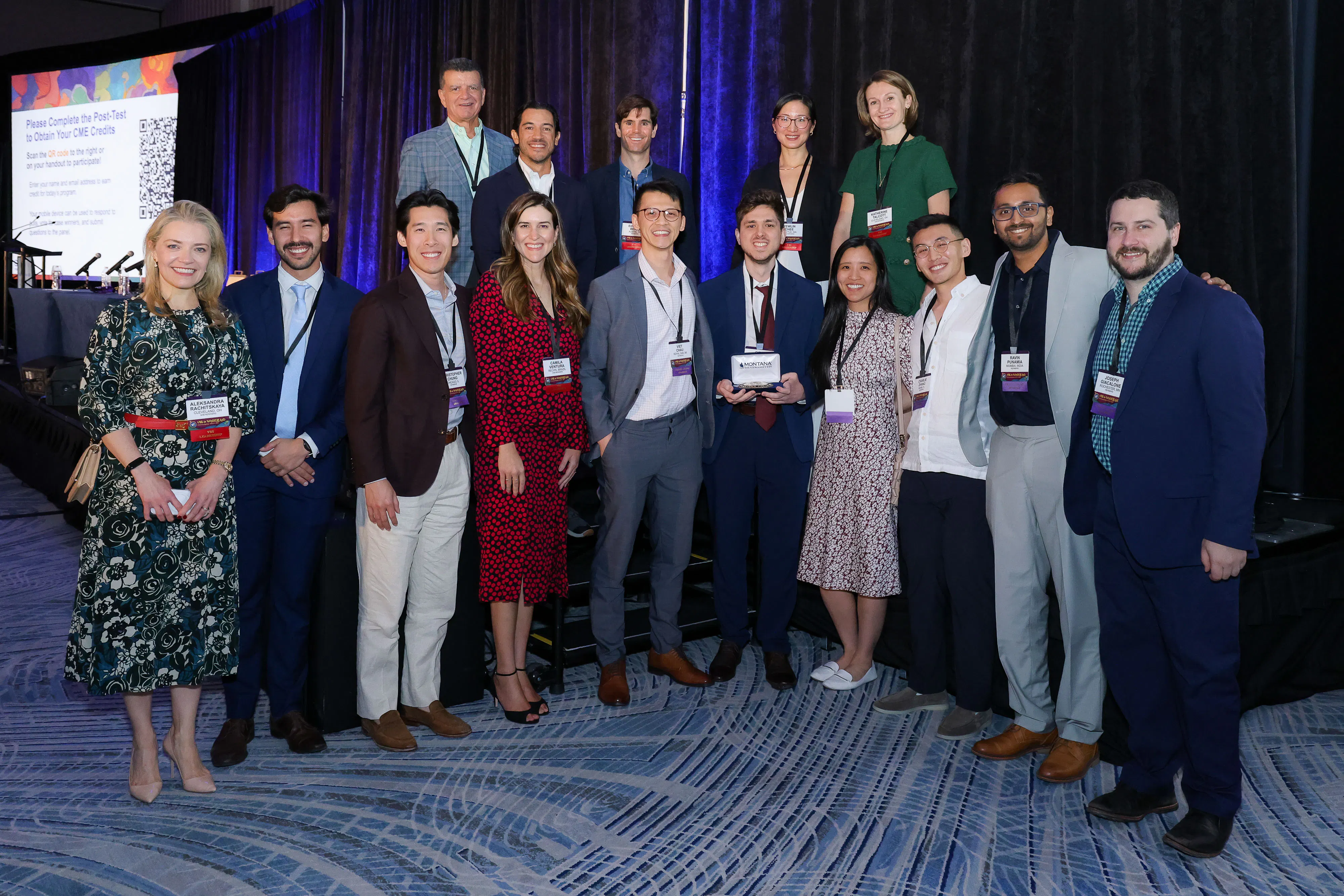
Figure 2. The Fellows’ Foray competition concluded with Dr. Virgolino (center) being crowned the winner. Image courtesy of Kevin Caldwell Photography.
Ciro Virgolino, MD, from Fundacao Altino Ventura, presented a case of accidental injection of blue dye into the anterior and posterior chamber during conjunctival tattooing, leading to severe intraocular inflammation and fibrin membrane formation within hours. Management required anterior chamber washout of pigment, gonioscopy-assisted peeling of membranes from the trabecular meshwork, vitrectomy to clear the vitreous dye, and removal of blue dye membranes from the posterior retina. The discussion centered on the risk of secondary glaucoma in these patients, many of whom ultimately require filtering surgery.
Charles Zhang, MD, from Bascom Palmer Eye Institute, closed with a case of optic pit maculopathy in a 14-year-old patient. Because the peripapillary hyaloid could not be lifted using standard techniques, he used a flex loop with radial perifoveal motions to induce a fovea-sparing posterior vitreous detachment, followed by internal limiting membrane flap inversion to close the optic pit. The panelists praised the technique for difficult pediatric cases with strong vitreoretinal adhesion to avoid further iatrogenic damage.
The audience cast their votes to crown a winner: Dr. Virgolino’s case of intraocular dye injection (Figure 2).


_1784132761.jpg?auto=compress,format&w=70)


