





KEY TAKEAWAYS
- Racial and ethnic minorities are underrepresented in clinical trial across multiple disease states, but no studies have analyzed retinopathy of prematurity (ROP) as a specific disease. In the author’s study of 51 ROP clinical trials, only a quarter of studies report participant’s race and ethnicity.
- Across all studies, several minority groups were underrepresented compared with the US Pediatric Census and ROP incidence demographics. In US-based trials, American Indian and Alaskan Native and (when assessed) individuals with more than one race were underrepresented.
- Diversity in ROP clinical trials is critical because the disease poses unique challenges in management, treatment response, and follow-up where sociodemographic factors must be considered.
Retinopathy of prematurity (ROP) is a major public health concern both in the United States and globally. Low and middle-income nations have reached the “third epidemic,” and data suggest ROP incidence rates in the United States have increased the most over the last 20 years for infants who are Black and Hispanic.1,2
Clinical trials, both domestic and international, have advanced our understanding and clinical management of ROP. However, there is ample evidence that racial and ethnic minorities are underrepresented in clinical trials across multiple disease states.3 Recently, two studies have identified limited racial and ethnic representation within pediatric ophthalmology clinical trials, including those conducted by the Pediatric Eye Disease Investigator Group.4,5 However, no studies have applied these analyses to ROP as a specific disease state to properly understand the context and generalizability of ROP clinical trial data.
In this article, we describe research characterizing the rates of race/ethnicity reporting and representation in ROP-related clinical trials from 1995 to 2023.6 After querying Cochrane, PubMed, and clinicaltrials.gov, and applying specific exclusion criteria, a total of 51 ROP-related clinical trials were analyzed (Figure 1).
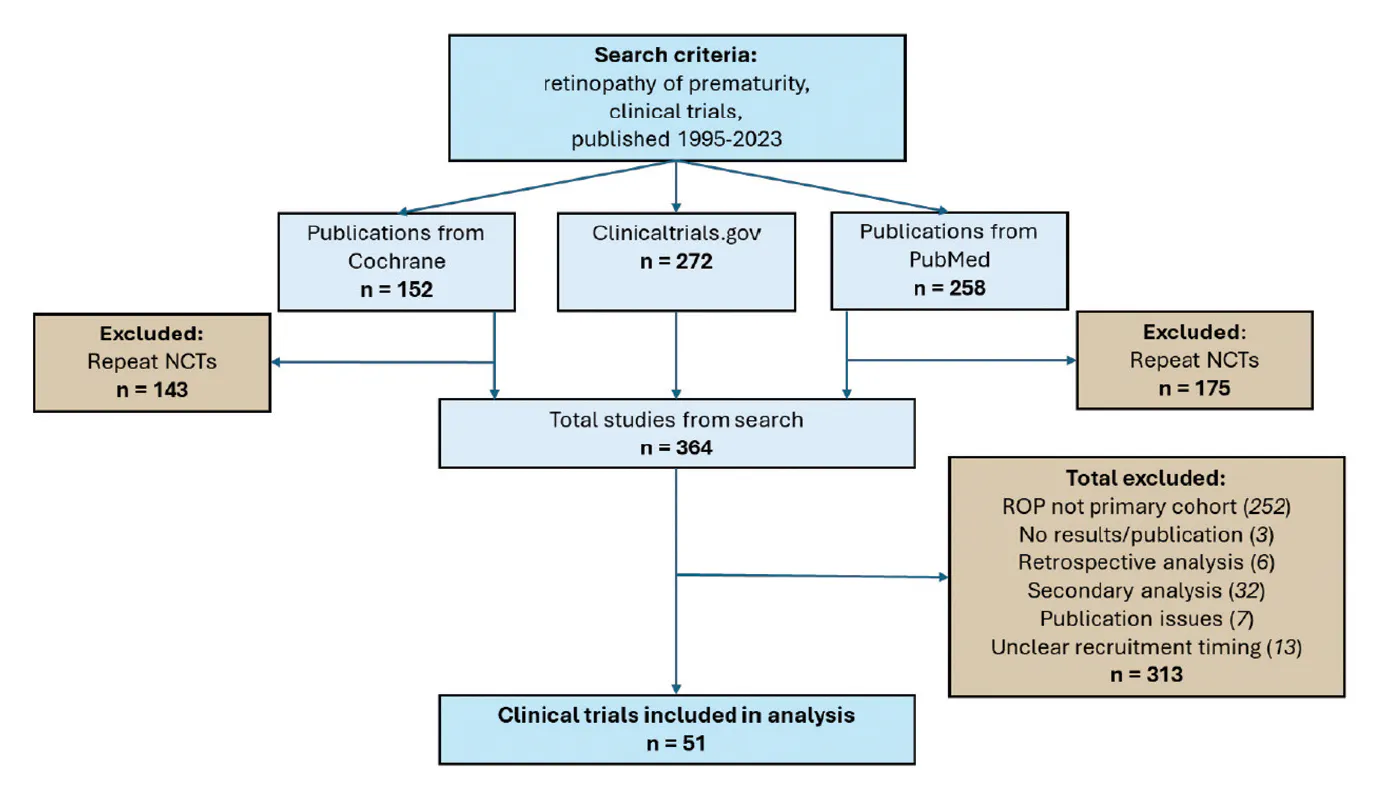
Figure 1. Clinical trial selection schematic. Manuscript in review.6 Abbreviation: NCTs, national clinical trials; ROP, retinopathy of prematurity.
REPORTING RATES
Overall, 25% of all trials and 60% of US-based trials reported race/ethnicity in their results. Study location (United States vs international vs mixed), intervention type (drug only vs procedure only vs other), enrollment size, and number of study sites were all significantly associated with reporting. US-based trials have significantly greater reporting rates than trials solely based in international settings.6
The United States not only has a more heterogenous population than many other countries, but recent policies have attempted to improve historical underrepresentation of minority groups in clinical trials. In 2017, the National Institutes of Health (NIH) required funded clinical trials to report racial and ethnic demographics on clinicaltrials.gov.7 While this benchmark in time was not found to be significantly associated with increased reporting rates in ROP clinical trials, general analyses of all studies on clinicaltrials.gov suggest possible increases.7
Policies such as the NIH mandate may have a future effect on ROP trials, and increased sample sizes will help better explore this association. Further, larger studies (either by number of participants or study sites represented) may have greater incentive to report demographics because they are more likely to have a diverse participant pool.
COMPARATIVE REPRESENTATION
Racial and ethnic representation as compared with the US Pediatric Census and ROP incidence by race was assessed by the following metrics: enrollment–census difference, enrollment–census ratios, enrollment–hospitalization differences, and enrollment–hospitalization ratios. Ratio calculations are a well-established metric for evaluating representation and are particularly useful for identifying discrepancies among minority groups that make up a smaller percentage of the population at baseline.8
Among all clinical trials, American Indian and Alaskan Native (AIAN), Black, Hispanic, and (when assessed) those with more than one race were underrepresented compared with the US Pediatric Census and ROP incidence demographics. Subset analyses of US-based trials showed AIAN and (when assessed) those with more than one race were underrepresented compared with the population and disease incidence (Figure 2).
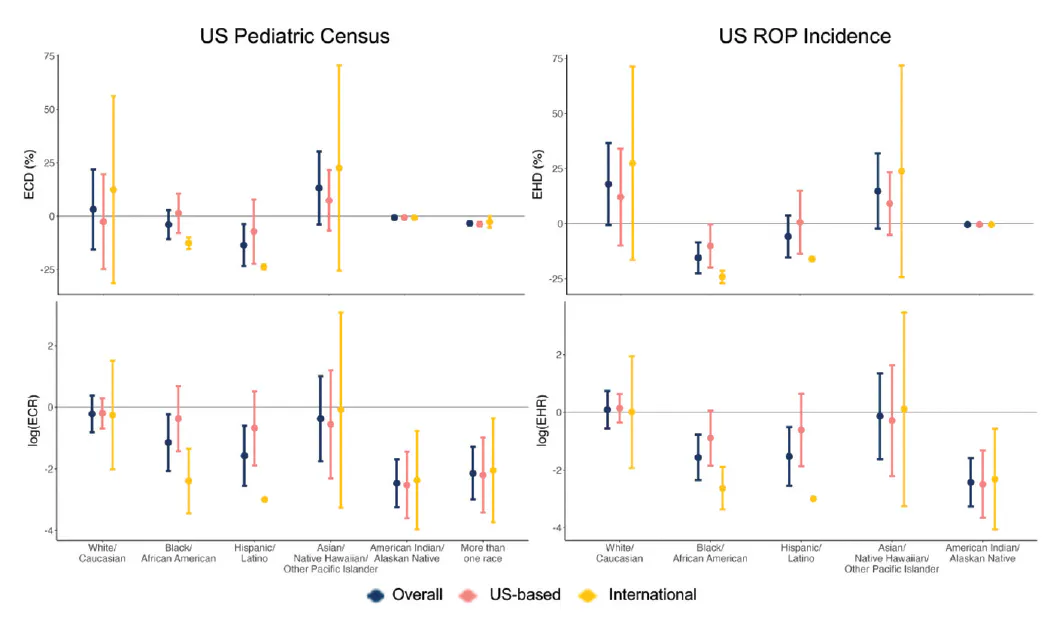
Figure 2. Racial/ethnic representation compared with US Pediatric Census (left) and US ROP incidence rates by race (right). Manuscript in review.6 Abbreviations: ECD, enrollment-census difference; log(ECR), logarithm-transformed value of enrollment-census ratio; EHD, enrollment-hospitalization difference; log(EHR), logarithm-transformed value of enrollment-hospitalization ratio.
The only racial and ethnic groups that were proportionally represented were White and Asian groups, which is not surprising based on where many of these studies are recruiting. Figure 3 demonstrates the global landscape of ROP clinical trial recruitment among studies that report study location. Studies largely recruit participants from North American, European, and Asian countries with an apparent gap in many African and South American countries.
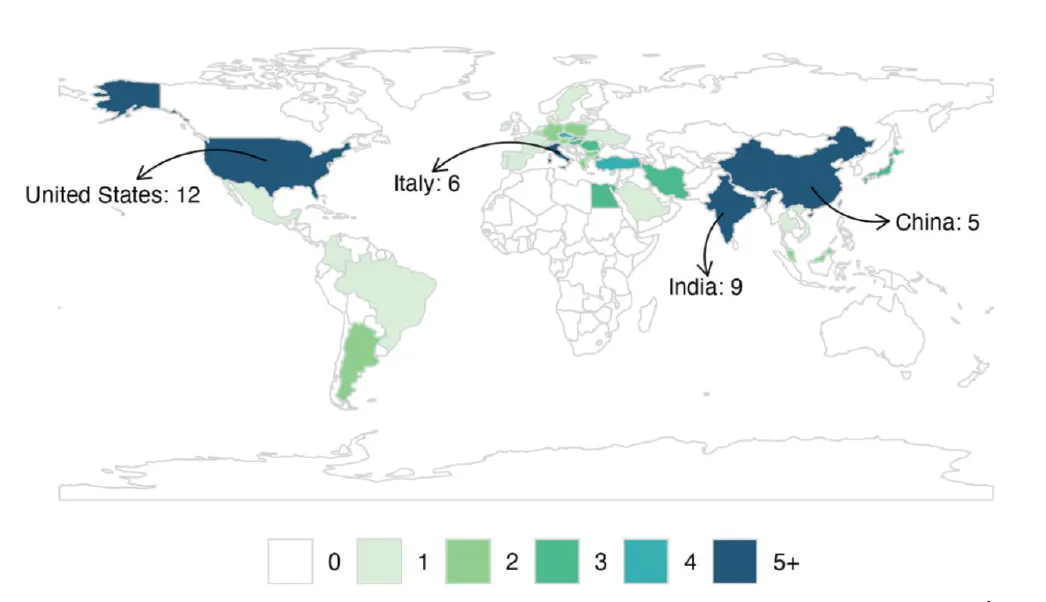
Figure 3. ROP clinical trial recruitment by country (based on 45 clinical trials that reported countries of study). Manuscript in review.6
WHY REPRESENTATION IN ROP TRIALS MATTERS
Race and ethnicity, although void of biological basis, have significant sociodemographic ramifications that may affect treatment response. While limited clinical trial diversity has been an issue across many medical disciplines, exploring ROP is critical because the disease poses unique challenges in management, treatment response, and follow-up where sociodemographic factors must be considered.3 To provide evidence-based treatment options that apply to all patients, underrepresented groups must be included.
This study only used the most common racial/ethnic groups according to the US Census: AIAN, Asian American (including Pacific Islander and Native Hawaiian), Black or African American, Hispanic/Latino, White, and those with more than one race. This study's significance continues to change as globalization increases and populations become more diverse, but it is imperative that clinical trial recruitment continues to reflect populations accordingly.
Documentation should also reflect the intersection of multiple identity groups to facilitate improved data analysis in the future, whether in hospital-level demographics or Census data collection.
The barriers to diverse clinical trial recruitment have been assessed broadly and are multifactorial, including health and research literacy, transportation, and language barriers.9 However, steps should be taken to identify specific barriers to the population affected by ROP. Caregivers may face additional obstacles unique to caring for premature infants, often with multiple comorbidities, that may limit participation in ROP-related clinical trials. Policies such as the 2017 NIH-funded trial that mandates demographic reporting have the potential to improve clinical trial diversity. The transparency from increased reporting may subsequently incentivize increased racial and ethnic representation. However, the mandate only requires reporting of racial and ethnic demographics if it is collected7; it does nothing to mandate the initial collection of this data, which may skew future analyses to overestimate the level of representation of minority groups. Lastly, community engaged methods, the creation of diverse research teams, and trial design and execution should all be prioritized to help mitigate barriers to representation in clinical trials.9,10
MORE WORK TO BE DONE
Overall, ROP clinical trials under-report race/ethnicity, with some minority groups often underrepresented. US-based studies report race/ethnicity at a higher rate and have fewer racial/ethnic groups that are underrepresented, but there remains room for improvement.
When applying clinical trial results to patient care, clinicians should consider limitations in generalizability. Future clinical trial designs should work toward improved representation by identifying barriers for minority recruitment and setting standards for minority representation in trials to ultimately provide equitable, evidence-based care for all ROP patients.
1. Bhatnagar A, Skrehot HC, Bhatt A, et al. Epidemiology of retinopathy of prematurity in the US From 2003 to 2019. JAMA Ophthalmol. 2023;141(5):479-485.
2. Wang S, Liu J, Zhang X, et al. Global, regional and national burden of retinopathy of prematurity among childhood and adolescent: a spatiotemporal analysis based on the Global Burden of Disease Study 2019. BMJ Paediatr Open. 2024;8(1):e002267.
3. Turner BE, Steinberg JR, Weeks BT, et al. Race/ethnicity reporting and representation in US clinical trials: a cohort study. Lancet Reg Health Am. 2022;11:100252.
4. Kuo A, Yazji I, Abbass N, Chong DD, et al. Lack of racial and ethnic diversity in pediatric ophthalmology clinical trials from 2000 to 2022. J AAPOS. 2024;28(2):103870.
5. Dihan QA, Alzein AF, Ibrahim OM, et al. Race, ethnicity, and sex in pediatric eye disease investigator group clinical studies. JAMA Ophthalmol. 2024;142(10):926-933.
6. Racial and ethnic representation in retinopathy of prematurity related clinical trials from 1995 to 2023. Manuscript in review. BMC Ophthalmology.
7. Fain KM, Nelson JT, Tse T, Williams RJ. Race and ethnicity reporting for clinical trials in clinicaltrials.gov and publications. Contemp Clin Trials. 2021;101:106237.
8. Brewster RCL, Steinberg JR, Magnani CJ, et al. Race and ethnicity reporting and representation in pediatric clinical trials. Pediatrics. 2023;151(4):e2022058552.
9. Reopell L, Nolan TS, Gray DM 2nd, et al. Community engagement and clinical trial diversity: Navigating barriers and co-designing solutions-A report from the “Health Equity through Diversity” seminar series. PLoS One. 2023;18(2):e0281940.
10. Bains A, Osathanugrah P, Sanjiv N, et al. Diverse research teams and underrepresented groups in clinical studies. JAMA Ophthalmol. 2023;141(11):1037-1044.


_1784132761.jpg?auto=compress,format&w=70)


